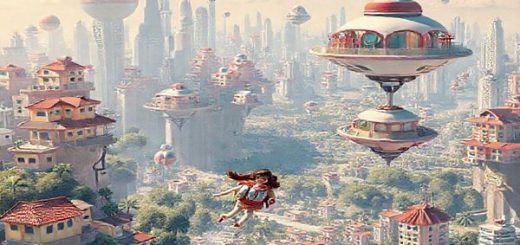
From Robots to Remote Work: How the 1950s Envisioned the Future of Labor—and What Truly Unfolded
In the midst of post-war optimism, the 1950s was an era buzzing with dreams of a promising future. With technological innovation steaming ahead and newfound economic prosperity, people began to imagine a world unlike any they had known before. One of the most tantalizing vistas of future potential was in the realm of work and the labor market. These visions were shaped not only by technological advancements but also by vivid imaginations that brought both hope and a sprinkle of anxiety. Today, we stand at a different vantage point, looking back at predictions that now tell us as much about the era they were conceived in as they do about the future they envisioned.
The Golden Age of Automation: Imagining Tomorrow’s Work
In the 1950s, the air was thick with the thrill of industrial innovation and America was basking in the glow of economic triumph. This cultural moment fostered a belief that technology was a magic chariot, poised to carry society into a brighter and easier tomorrow. Within this framework, futurists foresaw a labor market revolutionized by automation and the blossoming potential of early computers. The expectation was that machines would soon take over the drudging work, promising not only unparalleled productivity but also significantly shorter work weeks for humans.
General Motors and other titans of industry were pioneering automation on the assembly lines, and public fascination with this advancement was mirrored in the growing genre of science fiction. Writers and filmmakers envisioned robots seamlessly integrating into workplaces, suggesting a symbiotic future where man and machine would collaborate. Movies like “Forbidden Planet” and TV shows such as “The Jetsons” presented a jet-powered dream of the future, with humans working less, luxuriating in leisure and abundant free time. In pop culture depictions, the skies were filled with flying cars, and homes were servile to computers’ whims.
In conversations at the dinner table or the assembly line, workers and families shared mixed feelings about the predicted transformation. There was optimism about the prospect of working fewer hours for the same pay, freeing time for personal fulfillment and family. The optimism of mid-century America was dappled with concern, though: what exactly would humans do with all their leisure time, and how would families adjust to a society where traditional labor roles were rapidly shifting?
Professional discussions revolved around the potential of then-nascent fields like computer technology. Thought-provoking articles in magazines like Popular Mechanics were brimming with speculations on the desk jobs of the future – no longer confined to rows of clerks under fluorescent lighting but instead managed by computers in ergonomically designed spaces. Economists warned that workers would need to be retrained, heralding a future where intellectual labor would eclipse manual toil.
The Reality Unfolds: A Different Journey
As the decades rolled on, the labor market did indeed transform, though not quite as tidily or rapidly as 1950s futurists anticipated. Automation and computers have dramatically altered how we work but not solely in the ways predicted. Rather than leading to widespread mass leisure, the technological advancements of subsequent decades have seen the nature of work evolve in more fragmented and nuanced ways.
The rise of the personal computer and the internet revolution in the late 20th century reshaped office work, propelling an unforeseen growth in the service sector. Where automation in the 1950s was mostly seen as the domain of the factory, today’s machines have replaced tasks ranging from customer service to complex data analysis. Yet rather than surrendering to endless leisure, humans have found different work to fill their time.
Interestingly, the prediction of a shortened work week has not come to fruition. While productivity has soared, many people work more hours than ever, entangled by the allure and demands of constant connectivity afforded by smartphones and laptops. The expected decline in blue-collar jobs due to automation did occur, yet simultaneously, a gig economy emerged, exemplifying flexibility but also heralding new uncertainties.
Against these backdrops, some earlier predictions were eerily prescient. The need for worker retraining in the face of automation was not only accurate but remains a pressing issue. The anticipated growth of intellectual and creative jobs did materialize, taking center stage in industries like tech and media. Conversely, the idea that machines would rid humans of much manual labor underestimated the complexity of tasks that machines couldn’t quite master.
Lessons from the Past: Rethinking Work and the Future
Reflecting on the 1950s visions and their divergence from reality reveals intriguing aspects about human nature and the evolution of work. Our dreams for the future often magnify the motifs of the present – the era’s tangible excitement about automation and economic growth seeped into convictions about the inevitability of a leisurely future labor market.
The narrative teaches us about the directional forces of history and our tendencies to assume that current trends will accelerate linearly rather than evolve unpredictably. Human capacity for adaptability is another lesson grounded in the labor market’s trajectory. As machines took over some tasks, people created new types of work, showcasing our perennial ability to innovate and redefine.
The workplace transformations also shed light on the social and emotional underCurrents that were perhaps under-examined by 1950s optimism. Leisure, it turns out, doesn’t automatically equate to happiness, nor does liberation from some work obviate the need for purpose and productivity. The human spirit craves engagement, creativity, and, in many ways, labor – a truth that adds depth to any discussion about the future of work.
Understanding past predictions vis-à-vis reality not only tempers our expectations for the future but also invites us to craft visions of progress that are inclusive and adaptable. It reminds us to remain curious and open-minded about the changes to come. Today’s labor market looks different from the dreams of flying cars, yet it reveals the enduring truth that while technology will continue to transform work, the essence of human aspiration remains intriguingly constant.
Our exploration of these predictions and realities enriches our appreciation of the complex dance between humans, their tools, and the inexorable march towards tomorrow. As we stand on the precipice of even more profound technological shifts, this historical perspective beckons us to imagine once more – cautiously, creatively, and with a generous measure of humility.