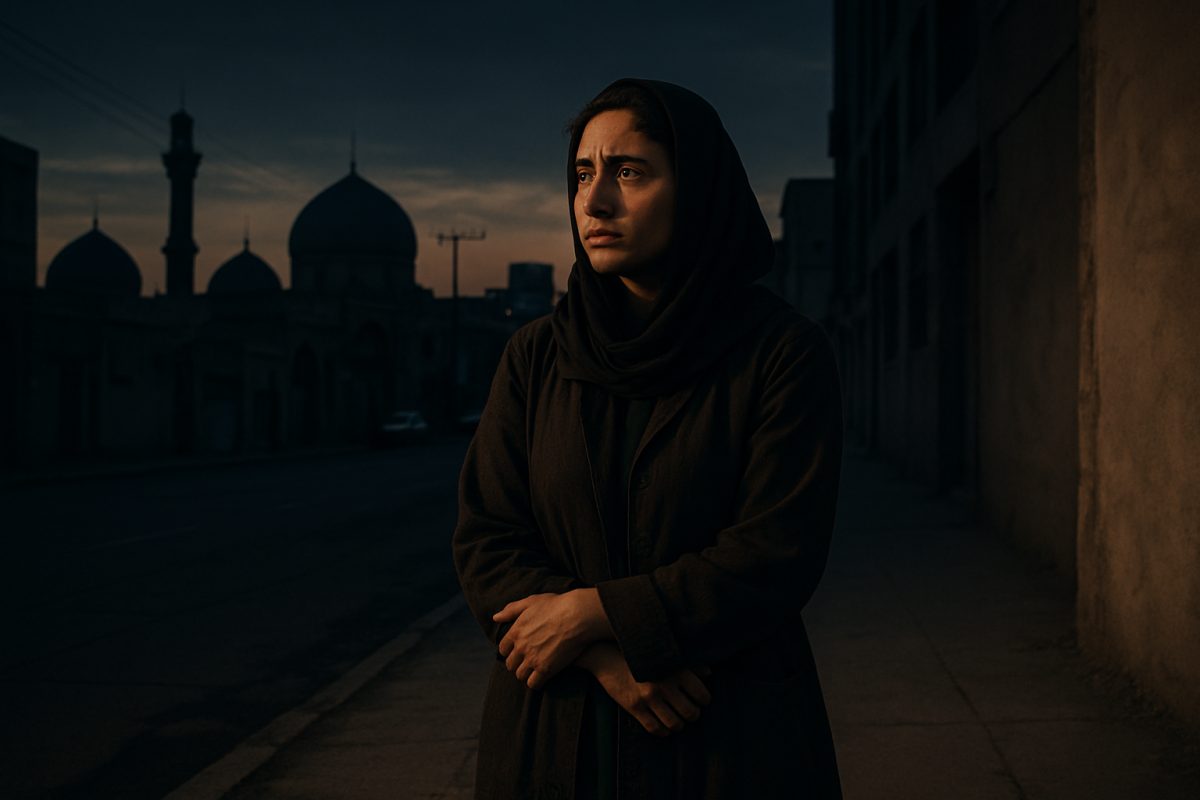
New Study Reveals Dark Twist on Romance Scams in Iran: Targeting Women for Control, Not Cash
A Cultural Puzzle Unfolds
While romance scams are familiar territory in the realm of online threats, they are typically understood as ploys centered around financial exploitation. The common narrative involves manipulative scammers extracting money from unsuspecting victims through fabricated romantic entanglements. Yet, in a compelling turn of focus, researchers Amirkhani, Alizadeh, Randall, Stevens, and Zytko have shifted their gaze to Iran, unraveling a scenario where the pursuit is not material wealth but something starkly different.
The impetus for this study arose from a curiosity about what romance scams might look like when transplanted from their conventional Western contexts into the Iranian cultural landscape. This curiosity speaks to a broader goal of understanding how deeply embedded cultural paradigms shape even the darker aspects of online interaction. The researchers asked: What happens when the typical objectives of romance scams are overturned by local dynamics, focusing on control over women’s bodies rather than financial deceit?
Unveiling “Body Scams”
Conducted through interviews with 20 victims of romance scams in Iran, this study embarked on a journey to uncover the unsettling layers of victimization in these interactions. What emerged was a disturbing pattern termed “body scams,” where the ultimate goal was securing sexual access to women under the guise of promised marriage. These interactions manipulated social and legal frameworks that put women at risk for merely engaging in premarital relationships, leading to a cycle of silence and victimization.
In the Iranian context, where powerful cultural and legal instruments can severely punish women for premarital sex, scammers exploit these realities. By feigning intent to marry, these online predators circumvent economic motivations typically associated with scams. The stakes are decidedly higher, with emotional devastation and societal repercussions looming over the victims more than the loss of monetary assets.
Cultural Dynamics: A Double-Edged Sword
The crux of this research lies in how local cultural and legal norms serve as enablers in these scenarios. Society’s implicit—and sometimes explicit—encouragement of punitive measures against women who step outside prescribed boundaries plays an integral role. The chilling phrase “society encourages the killing of girls like me,” referenced in the study, encapsulates the extreme consequence these women fear, which in turn coerces them into silence.
Here, the researchers shine a spotlight on the necessity of expanding definitions and understandings of romance scams to encapsulate the full breadth of how they unfold across diverse cultural contexts. The stereotypical image of a scammer as a cash-hungry swindler is insufficient when considering non-Western locales where cultural mores can intensify the exploitation of women in horrendous ways.
Implications Beyond Borders
As a science journalist, I see this study as a reminder of how technology and human behavior interlace with cultural specificities to manifest unique threats. In an era of global communications and intercultural digital interactions, nuances of local traditions can severely impact the way online threats operate and are perceived. This research is a call to action for policymakers, digital platform designers, and activists to consider the cultural contexts in which these scams occur and to develop nuanced prevention strategies that align with local realities.
This Iranian narrative raises broader questions about how we understand consent, agency, and victimhood across varying societal norms. It challenges us to consider the role of cultural dynamics in shaping digital interactions, shedding light on the potential for online tools to be used both as instruments of empowerment and as means of control and manipulation.
Understanding the Bigger Picture
Reflecting on this study, the dark twist in romance scams in Iran becomes a mirror showing hidden dimensions of power imbalance that exist within digital spaces. It compels us to explore further not just the motivations behind these scams but also the structural and cultural conditions that allow them to thrive. These insights are invaluable as we navigate a digital age where cross-cultural interactions are ubiquitous yet fraught with complex layers of ethical and moral considerations.
The findings of the study remind us that while technology shrinks distances, it does not flatten cultural landscapes. Our approaches to handling online deception and exploitation need to integrate cultural sensitivity as part of their core. This will ensure that solutions are not only effective but also respectful and deeply rooted in an understanding of local dynamics and individual dignity.
Reference
Amirkhani, S., Alizadeh, M., Randall, D., Stevens, G., & Zytko, D. (2025). “Society Encourages the Killing of Girls Like Me”: Layers of Victimization in Online Dating Romance Scams in Iran That Target Sexual Access Over Financial Gain. Proceedings of the ACM on Human-Computer Interaction, 9(7), 1-25.