On Fluid Gender Roles: a feminist review of Bullet Train (2022)
A Kinetic Dance of Chaos and Collaboration
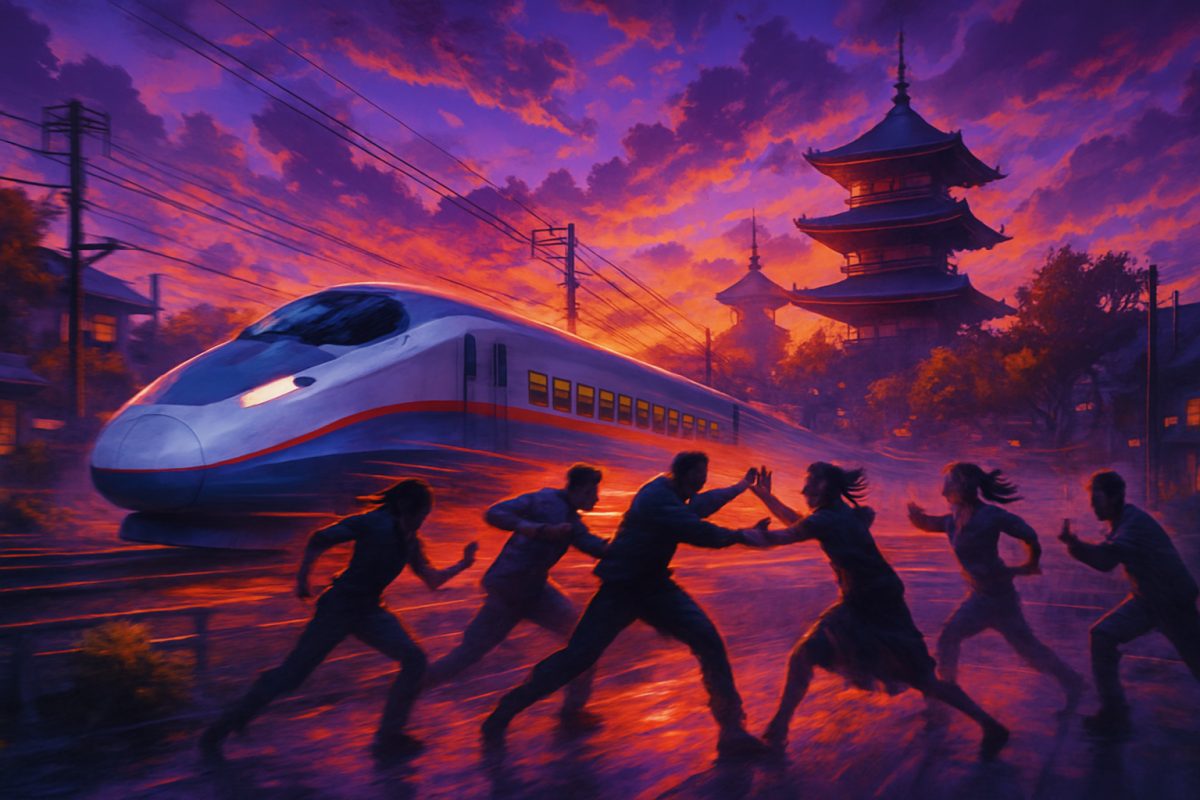
Bullet Train, helmed by director David Leitch, is a high-octane exploration of action-comedy, a genre known for its macho stylings and breakneck pace. Yet within this explosive narrative, the film allows room for moments of visually arresting beauty and kinetic choreography that make every scene feel like a delicate dance of chaos. The cinematography captures an astounding array of colors and angles, weaving them into a spectacle that never loses sight of its own visual cohesion.
At first glance, Bullet Train may appear to perpetuate the classic action movie formula, dripping with testosterone and peppered with archetypal characters. But peel back the layers, and a richer tapestry emerges, revealing a narrative framework that confronts conventional masculinity. This train, speeding through Japan’s landscape, becomes a microcosm where traditional gender roles are both embraced and subverted in delightful and unexpected ways.
Gender Archetypes: Embraced and Subverted
Women are often relegated to secondary roles in action-heavy narratives, but Bullet Train threads its female characters with as much complexity and agency as its male counterparts. Take, for example, Joey King’s portrayal of The Prince. She embodies ambition and manipulation with a chilling grace, wielding her femininity as a weapon rather than a weakness. In a film that juxtaposes brute force with cunning intellect, she challenges the assumption that power must reside in physical strength.
Unfortunately, the movie at times leans into familiar tropes — such as offering a backstory that limits female characters’ motivations to revenge. However, where the script falters in depth, the performances patch the cracks, pushing against the boundaries of two-dimensional stereotypes. It’s a dichotomy that reflects the film’s engagement with gender — an exploration rather than a definitive statement.
Interpersonal Dynamics and Gendered Communication
Bullet Train is an ensemble piece with performances that seamlessly mesh together in a cacophony of cross-purpose dialogue. Yet amid this sprawling cast, the film faces challenges in creating meaningful interactions that transcend gendered stereotypes. Male characters dominate conversations through banter steeped in a language of violence and competition. However, women’s dialogues — less frequent but no less impactful — often exhibit a quieter yet potent intensity, revealing different layers of manipulation and ambition.
In the rare exchanges where women interact, the conversations, though few, reflect a nuanced understanding of sisterhood and rivalry. In particular, the scenes where women manipulate men speak volumes about the gender dynamics at play. The film’s sharp editing enhances these dynamics, cutting between contrasting conversational energy and maintaining an engaging pace that showcases the vast emotional terrain navigated by its cast.
Familial Ties and the Question of Loyalty
At its heart, Bullet Train is propelled by themes of family and loyalty, though not always through a lens traditionally associated with warmth or unity. The familial bonds are complex and fractured — marked more by betrayal and dysfunction than by harmonious connection. This familial tension is most pronounced among the male characters, whose expressions of loyalty often lead to explosive and destructive outcomes.
In contrast, the film positions its women against this backdrop of male volatility, orchestrating complexity that criticizes the oversimplification of gender roles. They operate not merely as pawns but as players aware of the board, adapting to and exploiting the male-centric lens to further their aims. In these moments, Bullet Train moves beyond binary notions of gender, suggesting that familial loyalty is both a personal and political endeavor, one that defies easy categorization.
Aesthetic Bravura and Thematic Resonance
Even as Bullet Train thrives in its visual splendor, driven by a relentless energy that mimics the forward momentum of its titular locomotive, its thematic endeavors — while ambitious — occasionally stumble into the domain of cliché. The reliance on visual over narrative nuance suggests a lingering hesitance to fully disrupt the genre’s patriarchal foundations. And yet, the film’s aesthetic bravura often compensates for its conceptual hesitations, providing viewers with a dazzling sensory experience.
Ultimately, Bullet Train succeeds in creating a space where cinema’s artistry and social discourse intersect. The film does not fully smash the glass ceiling of gender norms, but it certainly adds a few more cracks. As the train hurdles towards its explosive resolution, it leaves in its wake a provocative meditation on the fluidity of gender roles, lingering just long enough to prompt reflection. It’s a cinematic journey that tantalizes as much as it entertains, compelling its audience to question the status quo while delighting in the spectacle it unfolds. And in a genre that so often takes itself too seriously, Bullet Train embraces its audacity with colors blazing and engines roaring.