From Space Age Promises to Multicultural Festivals: The Surprising Evolution of 1940s Community Rituals
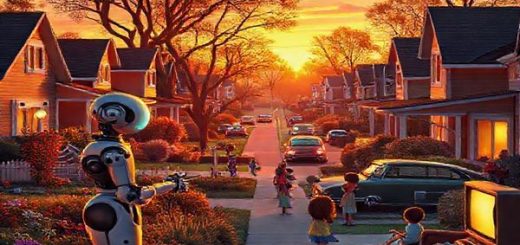
In the flickering light of a 1940s living room, families would gather around their radios, spinning tales from a world that was both familiar and tantalizingly different. It was a decade characterized by both turmoil and hope. The aftermath of world wars and the dawn of technological advances painted their visions of the future in bold strokes. Caught in this maelstrom of change, people turned their eyes to a future where community rituals – those special events that punctuate our social fabric – could transform as dramatically as the world they inhabited.
The Future Envisioned in the 1940s
During the 1940s, the concept of the future was imbued with the dual spirits of optimism and caution. As humanity reeled from the devastation wrought by war, there emerged an earnest desire for a world defined by unity and peace. Community rituals, so pivotal in fostering connections, were seen through the lens of these aspirations.
Futurists of the time, drawing from the era’s technological marvels, envisaged community rituals that would harness the capabilities of emerging technologies. Pundits imagined vast public gatherings, synchronized nationally via radio waves or television broadcasts. Some even speculated about the role telephone networks might play in linking dispersed communities into a single, shared experience, allowing for rituals that embraced inclusivity like never before. This idea was potent in a world where even the basic act of speaking to someone miles away had only recently become practical.
The echoes of these futuristic visions permeated popular media. Films of the time sometimes depicted societies where community bonds had been reinforced by technology. The thought of beaming into homes and gathering families around this virtual hearth was more than fiction – it was an aspiration. Magazines and newspapers included articles speculating how video communication might transform personal and communal interactions, although this idea seemed fairly futuristic for the average reader.
In everyday life, these ideas found a receptive audience amongst people whose communities were often disrupted by wartime displacement and migration. The hope that rituals – weddings, harvests, religious ceremonies – could transcend geographical distances must have provided solace. This widespread yearning for connection reshaped conversations, where families would dream aloud about reuniting despite distances, weaving dreams of dancing with loved ones projected through the wonders they could barely comprehend.
Professional circles, particularly sociologists and anthropologists, discussed community rituals from the standpoint of preserving cultural continuity in a rapidly changing world. The theme was the eternal balancing act between holding onto tradition while embracing novelty. Scholars pondered whether technology would homogenize rituals or birth new forms altogether.
All these views from disparate corners converged on a singular theme: the future was a tapestry interwoven with technology and tradition, promising a world more interconnected and harmonious than ever before.
The Reality of Community Rituals’ Evolution
Jumping ahead to the present, the landscape of community rituals bears testament to some of these 1940s expectations, while diverging significantly in unexpected directions. Initially, the path was neither straightforward nor devoid of surprises.
Television did rise to prominence, yet instead of knitting communities in unified ritualistic embrace, it often catered to fragmented interests, offering different kinds of rituals – nightly news or must-watch weekly shows – that glued some families together but not communities as a whole. For a considerable period, face-to-face community gatherings continued much as they had in the past.
But then came the internet, a game-changer the 1940s visionaries wouldn’t have fully foreseen, yet eerily resonant with some of their aspirations. Online platforms began hosting virtual gatherings, reconnecting far-flung communities. Social media emerged as a communal ground where rituals like ceremonies, festivals, or even grassroots movements found new life. In many ways, the internet realized the ambition of transcending space, but its execution differed – it was more democratized, scattered across platforms not dominated by any single medium like the radio or television.
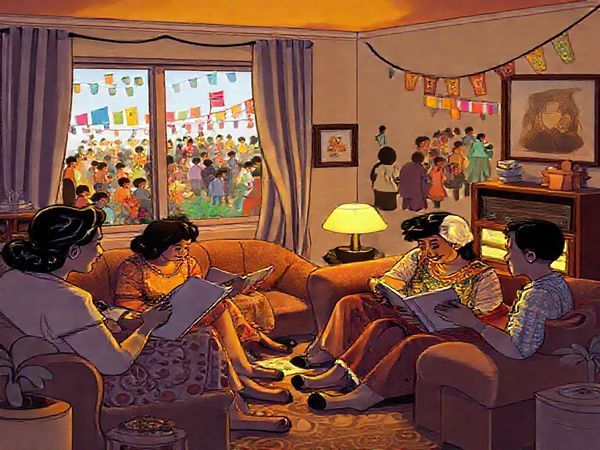
And yet, the community rituals remained deeply rooted in the essence of in-person connection. Reality showed that technology could supplement but not replace physical presence’s significance in sharing experiences. Despite innovations, human proximity retained its charm. Surprising to some was the resurgence of local, unplugged gatherings, suggesting a strong nostalgic pull towards tangible interactions.
The comparisons between expectation and outcome illuminate fascinating themes. Where past predictions focused on centralized, large-scale unification, reality favored a mix of the local and the digital. The rise of the global culture clashed and danced with hyper-local trends, showcasing the complex interplay of continuity and change.
Learning from Yesterday and Today
As we reflect on these evolutions, several insights emerge with clarity. The 1940s dream of connectedness through technology mirrored their longing for peace and camaraderie post-war. This forecast highlights how people view the future through the lens of present desires and fears. Often, imagined futures are less about predicting what’s to come and more about articulating what the present moment yearns for.
The unexpected resilience of traditional rituals, alongside their digital counterparts, reveals a profound truth about human nature. It seems we crave the familiar even as we embrace the novel. Rituals serve a need that transcends technological shifts – the need for connection, meaning, and continuity. This duality shows that even as society races toward the future, the roots hold firm, growing but never entirely departing.
Furthermore, the divergence between expectation and reality emphasizes the unpredictability of technological impact. Changes often manifest in ways that deviate from original intentions, shaped by varying factors. This speaks to the flexible, ever-changing nature of cultural practices.
In drawing lessons from this dance between past visions and present realities, we understand that technologies facilitate change, but it’s the human element that anchors rituals in continuity. This dynamic blend complicates and enriches our understanding of community transformations.
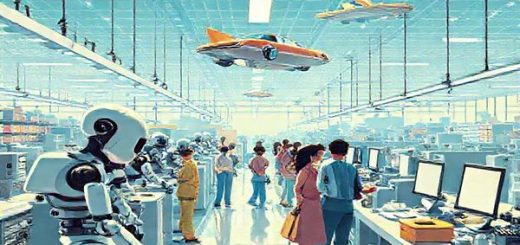
Whether imagining flying cars or interconnected rituals, our predecessors remind us that the future is as much about dreaming as it is about anticipating. Perhaps this narrative weaves a deeper appreciation for the traditions that bind us, despite the advancing march of time.