“From Neon Dreams to Virtual Scenes: The 1980s’ Party Predictions and Today’s Reality”
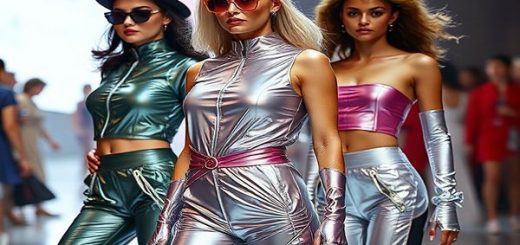
As the neon glow of the 1980s dawned, a decade defined by vibrant colors, synthesizers, and a hopeful optimism for technological advancement took hold. This was the era when hairstyles towered as high as expectations, and the future seemed like a realm of endless possibility. Among the many things people speculated about during this time were the social gatherings of tomorrow – parties that would blend technicolor dreams with cutting-edge innovations. Imagine stepping into this world where the boundaries of reality and fiction began to blur, teetering at the precipice of what seemed like a fantastical and imminent future.
The Futuristic Party: An 80s Vision
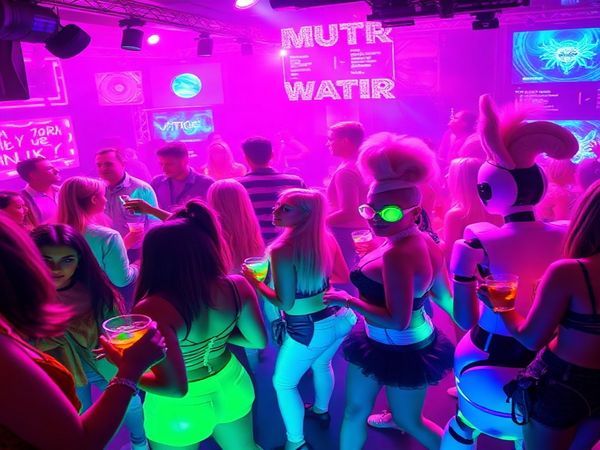
In the 1980s, the future was not only anticipated but actively celebrated. Pop culture was saturated with images and ideas of what was to come, and parties were no exception. The movies and TV shows of the time provide a fascinating window into these imaginings. Films like “Back to the Future” and “Blade Runner” painted a universe where gatherings were filled with holograms and technology that intertwined seamlessly with daily life. The influence of science fiction depicted parties as somewhere between a discotheque and a spaceship, where guests might sip cocktails served by robotic waiters under a cascade of laser lights.
This high-tech vision of future parties was fueled by the rapid technological advancements occurring in the everyday world. The appearance of personal computers and videogames sparked fantasies of interconnectedness, even as dial-up modems and floppy disks hinted at the vast potential of cyberspace. Conversations around dinner tables and at water coolers alike were abuzz with talk of cities within computers where people could meet, socialize, and celebrate without ever leaving their living rooms.
Meanwhile, futurists of the era wrote about virtual reality equipment revolutionizing socialization, imaging spaces where physical limitations were transcended. People imagined donning VR suits that would transport them to parties oceans away, or indulging in entirely digital wild-haired escapades at the touch of a button. In this world, distance mattered less, confined only by the capacities of silicon and circuit.
Reality of Parties: From Expectations to Evolution
Fast forward to the present, and the story of how parties actually developed is a curious one. The grand visions of holograms and ubiquitous robots have not materialized in the way many fantasized. While some technological elements, like LED lighting and music replete with synthesized exuberance, have indeed arrived, they are more subtle than the radical transformations once expected.
The real game changers in party culture have been the internet and mobile technology. Social media platforms have reshaped how people connect, often serving as the architects of spontaneous gatherings. Apps take the place of printed invitations, while virtual meeting spaces have transformed the notion of togetherness itself. Platforms like Zoom and Discord became unanticipated centers for hosting everything from simple hangouts to extravagant virtual celebrations. These adaptations became strikingly central during the pandemic era, shining a light on just how seamless yet profoundly different our interactions had become.
Ironically, one of the predictions of the past did come true with an unexpected twist – the focus on personalization and curated experiences. Modern parties lean heavily into creating unique, immersive environments, though often focusing more on artistic expression than electronic extrapolation. Silent discos and pop-up dinners provide bespoke experiences, where the novelty lies not in the hardware but in the celebration of individuality and sensation.
Learning from Futuristic Fantasies
The juxtaposition of expectation and reality when it comes to parties reveals much about human nature and our relationship with the future. The technicolor dreams of the 80s reflect a desire for connection and the novel experiences technology promised to provide. But what actually emerged over time underlines a consistent theme throughout human history – that it’s not technology itself that transforms our gatherings, but how we choose to use it.
Our visions of the future often mirror our current aspirations or anxieties more than they predict what will actually come to pass. In the 80s, amidst the anxieties of a rapidly changing digital landscape, vivid technophilic parties symbolized deeper hopes for unity and shared experiences. Yet, despite the mixed reality, the core desires remain similar today, pursuing meaningful connection albeit through different means.
This examination also highlights the adaptable spirit of human nature. When faced with a future that diverges from expectation, people reimagine what is possible and creatively navigate their way through it. The parties of today, with their blend of tradition and tech, illustrate how human joy remains constant even as the tools and settings evolve.
Reflecting on these insights may leave us with a simple but profound understanding – while technology continues to advance, enriching the way we interact, the essence of why we gather remains timeless. The space-age parties of the 80s may exist only in popular fiction, but the inspired efforts to forge connection and celebrate life in novel and uplifting ways are undeniably real. That enduring desire binds the thread between past fantasies and our present reality, reminding us that the future is not something that merely arrives but something we actively craft together.