Fate vs. Free Will: How 1950s Predictions About Our Future Missed the Mark and What We Gained Instead
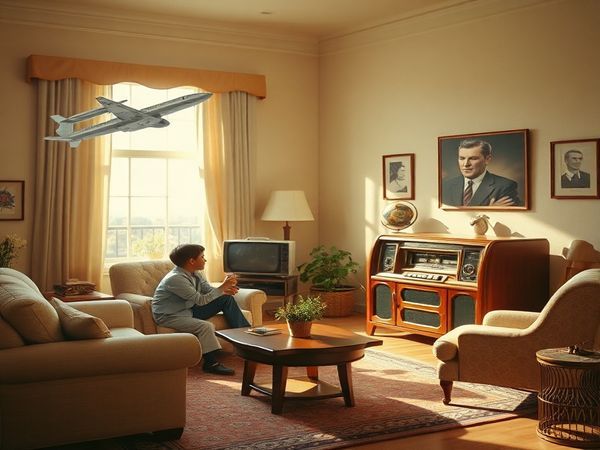
Imagine walking into a pastel-hued living room in post-World War II America. A gleaming, wood-encased radio hums with the baritone of a newscaster, while a family sits in anticipation not just for the present day’s stories, but for the tantalizing promises of tomorrow—the world of 1950s imaginings. The era was a cauldron of dreams and possibilities, particularly when it came to understanding the timeless battle between fate and free will. Just as the fabric of daily life was being reshaped by technological advances, the concepts of destiny and autonomy were also being reimagined in fascinating ways. The optimism and anxieties of the 1950s painted a complex picture about what the interplay between fate and free will might look like in the coming decades.
The 1950s Vision of Fate and Free Will
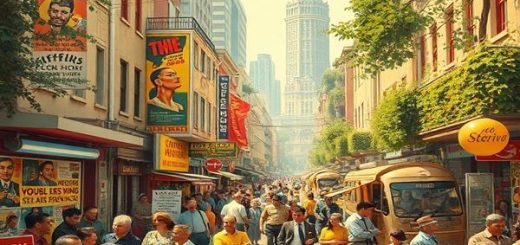
In the Atomic Age, fate and free will were subjects woven into the tapestry of a rapidly transforming society. The 1950s was a critical decade, marked by technological inventions and a collective fixation on the future. People often pictured a world dominated by technology, where even the most whimsical dreams could be engineered into reality. This optimism was juxtaposed with the dread of nuclear annihilation – a shadow hanging over daily life, reminding everyone of humanity’s potential for self-inflicted fate.
Futurists of the time, eminent scientists and whimsical science fiction writers alike, speculated that technology would eventually grant individuals supreme autonomy. Machines capable of handling domestic chores would free humans to explore intellectual endeavors, unfettered by mundane tasks. This vision of free will was expanded even further in popular films of the day like “Forbidden Planet” and “The Day the Earth Stood Still.” These cinematic ideas flirted with alien contact and technology that could transcend human limitations, subtly probing whether humanity’s destiny remained ultimately in its own hands or if other cosmic forces would step in.
Societal discussions on college campuses and in suburban living rooms reflected both fascination and concern. In professional circles, philosophers debated whether advancements like the computer would liberate human potential or merely alter the pathways of predestination. Ordinary people wondered aloud, often through their hopeful comments and earnest community debates, whether technology would truly free them or if reliance on machines was forging invisible chains. Notably, Aldous Huxley, in his essays and lectures, nodded to a future where choice was abundant but potentially shallow.
A layer of cultural fabric often overlooked was the existential philosophy that gained ground during this time. After the devastation of WWII, many grappled with the concept of fate on a personal and national level. It was not uncommon to ponder whether an overarching destiny led humankind to a nuclear brink or if it was the sum of innumerable individual choices. That decade, perhaps more than any other, embodied a dynamic wrestling between asserting control and surrendering to an inescapable fate.
The Evolution and Reality of Fate vs. Free Will
Fast forward to today, and the landscape of fate and free will has morphed in unexpected ways. While technology has indeed freed many from the drudgery of repetitive tasks, it paradoxically introduced new questions about autonomy and control. The Internet is a mighty tool of liberation, theoretically offering endless information and connectivity, yet it also binds us with its own wires – dictating algorithms that invisibly shape our desires and decisions.
Unlike the 1950s expectations of a technological utopia, today’s reality shows that while technology has broadened our capabilities, it simultaneously constrains us in unforeseen ways. Consider the uncanny world of predictive data analytics. Many apps and online services anticipate our needs to an eerie degree. They seem to offer choices, but subtly steer us down predetermined paths. Shopping online, discovering news, and even finding love can feel unnervingly orchestrated by unseen hands. This is a curious evolution of the 1950s notion of free will – a landscape where choices are plentiful but perhaps less genuine.
As for the philosophical underpinnings of fate, the narrative has taken shifting turns. Modern existential debates have shifted towards the implications of AI and the ethics of genetic engineering. These domains reintroduce questions of deep significance – to what extent do humans have the right or the wisdom to redefine destiny? Here lies a compelling element of surprise; while 1950s dreamers imagined technology as a vessel for liberation, the burgeoning realities invite both reverence and caution.
Surprisingly, certain 1950s predictions have emerged with greater accuracy than we often acknowledge. The ability to instantly communicate with someone across the globe was a whimsical idea featured in science fiction; today it’s taken for granted with smartphones and the internet. This brings a twist to the notion of free will, as our connectedness amplifies our actions and decisions, intertwining personal fate with global repercussions.
Lessons from Expectations and Outcomes
Exploring the imaginative leap from the 1950s to today unravels rich lessons about human nature and our enduring quest to navigate the intricate dance between autonomy and destiny. One of the profound insights is that our visions of the future often mirror contemporary hopes, fears, and values rather than an objective trajectory. The optimistic assumptions of the past reflected the post-war hope for peace and prosperity, while the real challenges of today reveal that each era creates its own complexities.
The journey from expectation to reality paints a picture of human adaptability. Despite being constrained by technology’s emergence, people continually assert agency in profound ways – reshaping norms, creating culture, and challenging ethical boundaries. Today’s dilemmas regarding digital privacy and AI ethics echo age-old questions but through new lenses.
The enduring narrative of fate versus free will highlights a fundamental truth: humans are by nature dreamers and doers – perpetually in flux. We envision futures where we exert control or surrender to greater forces, yet often stumble into configurations that blend both. This duality is a crucial pattern across generations, showing how deeply intertwined our creations are with our humanity.
Reflecting on how mid-century imaginings compare to modern realities reminds us that while destiny and autonomy battle in philosophical theory, they are lived and experienced in the mundane everyday decisions we all make. As such, the interplay of fate and free will remains central to our shared human story, intricately defined not only by the paths we tread but also by the choices we conceive.
The story from past speculation to present reality serves as a compelling tapestry detailing how humanity’s understanding evolves together with its ambitions. It underscores the perpetual dance between possibility and limitation, inviting us all to be conscious architects of our futures.