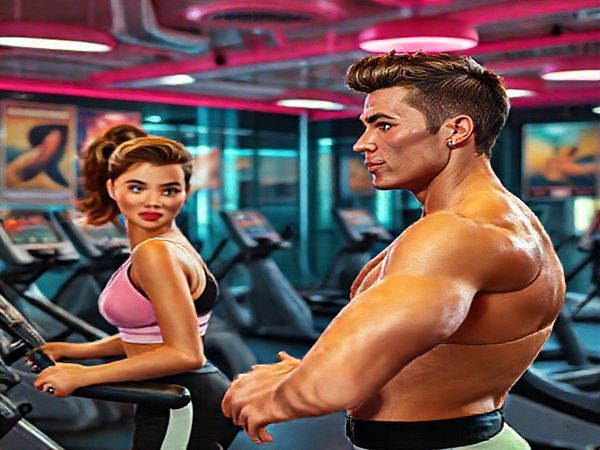
From Space Gyms to Smartwatches: How 1950s Fitness Dreams Stack Up Against Today’s Reality
In the aftermath of World War II, as the 1950s unfurled with a mix of optimism and ambition, the world seemed poised for transformation. Prosperity spread across many countries, scientific achievements promised a new age of convenience, and the future glimmered with potential. Among these sparkling visions of tomorrow was the idea of personal fitness, a concept that began to capture the imagination not only of health enthusiasts but of the broader public. As we step into this nostalgic realm, it is fascinating to unravel how the people of the 1950s imagined the future of fitness and to reflect on how their visions stack up against our current reality.
The Fitness of Tomorrow: 1950s Predictions
In the 1950s, fitness was undergoing a subtle revolution. During this era, the public’s perception of health was being reshaped by a blend of cultural, technological, and social currents. The Baby Boom generation was coming to life, and with it, the idea of a more active lifestyle took hold. Many believed that the prosperity and technological advancements of the time would not only make life easier but would also redefine the very essence of physical well-being.
Hollywood played a substantial role in shaping these expectations. In movies, chiselled heroes and glamorous actresses embodied the epitome of fitness, not through intense physical regimens but through mythical attributes and effortless grace. Such representations reinforced the belief that the future of fitness might lie in effortless enhancements rather than gritty training – perhaps a world where fitness could be achieved through new scientific breakthroughs rather than grueling exercise.
Meanwhile, futurists and visionaries saw the advent of exercise technology swirling through their predictions. Devices that could measure heart rate or calculate calorie expenditure seemed like the realm of science fiction. Media of the time, while sometimes leaning into fantastical portrayals of push-button living, began sowing seeds of expectation that machinery might one day assist, augment, or even replace the need for direct physical labor in maintaining health.
In everyday life, this shift was evident, too. Conversations about health started to include ideas about diet and nutrition, tying them to technological advances in food production and understanding of human physiology. People began thinking about their bodies in terms of inputs and outputs – a machine-like metaphor that was beginning to dominate both scientific thinking and domestic life. It was a time ripe with belief in progress. The gymnasium wasn’t yet king, but there was a growing awareness that movement mattered, and the world awaited what wonder science would bring to support it.
The Unfolding Reality: Fitness Through the Decades
The journey of fitness from the 1950s to today is a tale of unexpected turns and remarkable transformations. The technology-driven future foreseen by 1950s thinkers largely came to professional and medical fields before finally seeping into the consumer world. In the 1960s and 70s, the fitness movement gained momentum with figures like Jack LaLanne pioneering public consciousness through television. LaLanne, known as “the godfather of fitness,” exemplified how media could merge with the fitness journey, paving the way for an explosion of health-focused communication.
The 1980s saw fitness boom as part of everyday culture with aerobics, spandex-clad stars like Jane Fonda, and a legion of enthusiasts flocking to gyms and community classes. Throughout these shifts, technology began to creep into personal fitness, but not quite in the futuristic form the 1950s might have anticipated. Instead, treadmills, personal trainers, and fitness tapes became household items, propelling the fitness industry to new heights.
Fast forward to today, and the imagined world of heart rate monitors and calorie-counting devices has indeed arrived, albeit after several decades’ delay. We now have smartwatches, digital coaches, and an abundance of online fitness platforms, offering a level of personalization and tracking that was unimaginable in the post-war decade. Fitness today is a blend of the analogue and the digital, the physical and the virtual – a hybrid endurance test of how far technology and human aspiration can coalesce.
Yet, the notion that machines might wholly replace the effort of fitness has not materialized. Instead, the trend has gone towards personalization and enhancement through technology rather than replacement. Equipment doesn’t exercise for us; rather, it helps optimize our performances or ensures our safety. Here lies a divergence from the slightly utopian 1950s view – modern fitness still demands effort and human determination, but it’s equipped with more tools than ever to support those endeavors.
Recognizing Patterns and Insights
Observing these changes, we learn that our visions of the future often mirror the desires and fears of the times in which they are conceived. The 1950s thirst for effortless fitness echoed broader themes of reclaiming time and easing the burdens of life that loomed large in a post-war era. Yet, as history has shown, the aspiration for health intertwines inevitably with human effort.
The enduring message from this comparison is that fitness, at its core, remains a human venture. Tools change and improve, but the need for personal commitment does not wane. It says much about human nature – always seeking shortcuts to health while realizing, time and again, that the joy and fulfillment of fitness lie not just in achieving an end goal but in the journey itself.
Furthermore, the evolution of fitness underscores a broader theme: adaptability. Our understanding and practices are shaped by contemporary culture just as much as they shape culture. While we can project and plan, the future aligns less predictably with existing patterns and more with the unforeseen needs and motivations that emerge as we grow.
These reflections remind us that as we envision the future of fitness, or any discipline, our dreams will inform tomorrow’s innovations, even as reality bends those dreams to match the complexities of human life. And it is through this complex dance of expectation and realization that we continue to forge paths into uncharted futures, ever determined to balance the advancements we hope for with the realities we face.