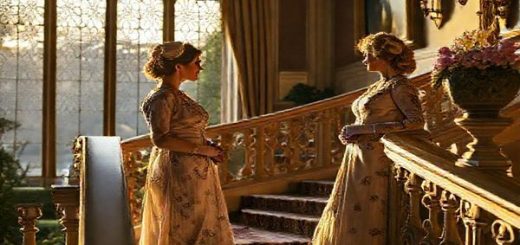
Epic Grandeur and Gender Gaps: a feminist review of Napoleon (2023)
Epic Grandeur and Gender Gaps: A Feminist Review of Napoleon (2023)
The Sweep of Grandeur and the Shadow of Authority
Ridley Scott’s Napoleon (2023) arrives like a cinematic juggernaut, sweeping audiences into the thunderous age of empires, warfare, and relentless ambition. Joaquin Phoenix’s portrayal of Napoleon Bonaparte is both mesmerizing and conflicting, compelling us to witness the turbulent life of history’s infamous tactician in all its fiery eloquence and calculated ruthlessness. Scott’s direction, matched with Adam Arkapaw’s evocative cinematography, lavishly reconstructs the grandeur of Napoleonic exploits – sprawling battle sequences and intimate scenes of political maneuvering unfold with a visual splendor that feels both intimate and operatic.
Yet within this epic scale lies a dictation of who and what fills the landscape of importance. While the film meticulously charts Napoleon’s meteoric rise and catastrophic fall with visual flair, it does so through a distinctly patriarchal lens, relegating female narratives to the peripheries of history’s stage. Here, glory and horror are primarily experienced through a singular, predominantly male gaze, casting long shadows over the few women who enter his orbit.
Revolutionary Women or Decorative Pawns?
In the shifting corridors of power, women in Napoleon often feel like exquisitely painted cogs in a monumental historic machine rather than agents of meaningful change. At the epicenter, Vanessa Kirby’s portrayal of Empress Josephine demonstrates an enigmatic charisma capable of rivaling Napoleon himself. Her interpretation of Josephine hints at layers of complexity, moving beyond the reproachful simplicity of a sovereign’s wife. However, these potentialities are mostly hinted at rather than explored. Josephine’s arc is largely defined and confined by her relation to Napoleon – her voice and ambitions contoured by the gravitational pull of his life, her personhood often a reflection of his desires and aspirations.
Dialogue between women is rare and often stilted, rarely transcending the realm of the domestic or the decorative. Josephine’s exchanges with other female characters seldom propel the narrative or open vistas unexplored by Napoleon’s trajectory. Instead, they perfunctorily underline her role within the personal realm, hinting at lost opportunities for a more nuanced exploration of female intelligence, agency, and ambition. In this regard, Napoleon acquiesces to historical accuracy at the expense of dramatic innovation, missing a chance to dramatize the complex webs of power women historically navigated.
Battlefields and Boudoirs: Gender Roles Entrenched
The film’s narrative architecture reinforces traditionalist motifs of ambition and authority as inherently masculine pursuits. Battlefields capture attention with arresting choreography and intense soundscapes, purposefully juxtaposed against more intimate moments curiously devoid of the same urgency. The implications of such choices are profound – that the weight of legacy, ambition, and power are endured principally by men. While male characters grapple with politics, warfare, and existential impasses, female presences signal docility, adornment, or maternal nurturing.
Scott’s piece does assemble an intricate tableau of societal expectations prevalent during the Napoleonic era. However, by failing to meaningfully incorporate narratives of women as partners in Machiavellian intrigues or architects of their destinies, the film marginalizes their societal roles as more ironically subversive and complex than portrayed. It inadvertently yet persistently equates male dominance with historical significance, leaving feminine presence as an aside instead of a partner to the colossal events at center stage.
Cinematic Beauty, Historical Shadows
Aesthetically, Napoleon stands as a testament to Scott’s mastery over the epic cinematic form, crafting scenes that are both breathtakingly large and quietly personal. Vibrant palettes and masterful orchestration of light and shadow imbue each frame with an almost painterly quality, nodding to the grandeur and tumult that defined Napoleon’s Europe. Martin Phipps’ musical score, sweeping yet intimate, merges seamlessly with the film’s visual poetry, anchoring the emotional stakes amid narrative valleys and peaks.
However, these strengths cannot entirely eclipse the film’s gendered shortcomings. The artistic brilliance of Scott – a historical storyteller par excellence – is a conduit for displaying the pageantry of male accomplishments without interrogating the potential for an equally captivating narrative of feminine resistance or perseverance. Directors and screenwriters wield the power to transcend the boundaries of history, offering pages unwritten and voices unheard, yet Napoleon wavers in grasping this potential fully.
Conclusion: Majesty and Male-Centered Memory
In Napoleon, Ridley Scott has crafted a richly woven tapestry that glows with grandeur yet lacks the comprehensive hue of gender inclusivity. The film’s resplendent surface begs a broader, deeper conversation about representation and narrative authority. Can the resplendent retelling of one man’s history be truly epic without the equally substantive exploration of those around him? By confining female agency to the narrative’s fringes, Napoleon invites us to appreciate its aesthetic prowess while acknowledging the historical stories left untold.
As much as we revel in a visually stunning reconstruction of a pivotal era, it is with a discerning reminder of cinema’s capacity to either reaffirm past hierarchies or question and redefine them. It is this duality – beautiful in its ambition yet incomplete in its reach – that makes Napoleon a film of grandeur and gaps, epic in its scope but partial in its telling.