Carved New Perspectives: a feminist review of Guillermo del Toro’s Pinocchio (2022)
The Artistry of Animation
Guillermo del Toro, with his unmistakable touch for blending fantasy with depth, serves us a reimagining of the classic tale of “Pinocchio.” This film is an animated odyssey that marries the macabre with the marvelous, inviting both children and adults into a world teeming with rich textures and lively storytelling. From its delicate stop-motion animation to its vivid characterization, every frame is a testament to del Toro’s painstaking artistry. Yet, beyond this visual splendor lies a narrative that challenges us to revisit themes of family, identity, and moral integrity with a new lens.
The visuals are a feast for the eyes, capturing an intricate world that is both magical and haunting. The painstaking detail in every character movement and landscape is imbued with the essence of classical storytelling, inviting viewers to lose themselves in a tapestry of colors, shadows, and light. This mastery of animation is not mere flourish but serves as a vessel for deeper thematic exploration. Del Toro uses his exquisite craft to delve deep into the very nature of creation and parental expectation – themes that are as timeless as they are timely.
A Re-Imagined Family Structure
At the core of del Toro’s retelling is a reevaluation of family dynamics. The archetypal narrative of a father’s wish for a son is reframed with poignant complexity. The story retains its fundamental premise but layers it with a nuanced exploration of loss and longing. Geppetto, portrayed as a grief-stricken craftsman, creates Pinocchio not out of mere whimsy but a desperate yearning to fill a void left by his deceased son. The film does not shy away from exploring the emotional tumult of grief, representing it as a force of both creation and destruction.
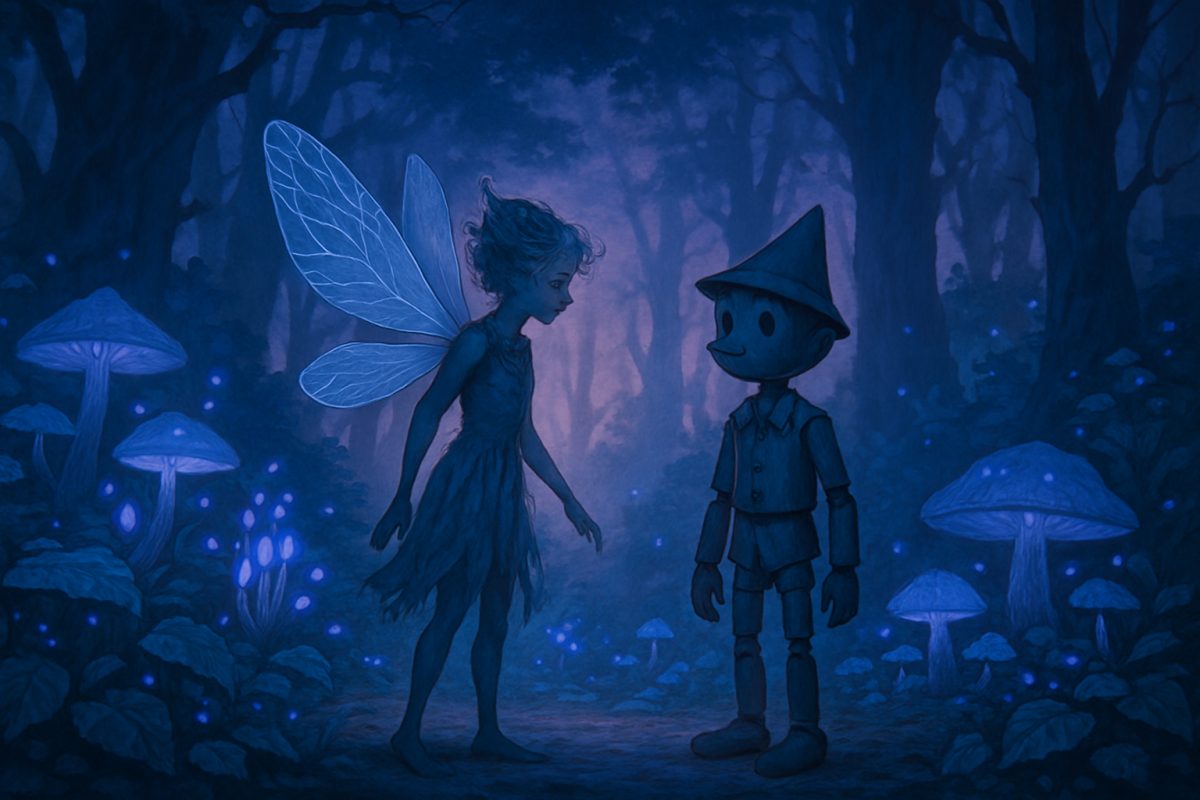
However, the film subtly questions traditional father-son dynamics. While Geppetto’s journey is central, it is interesting to note the presence – and often absence – of nurturing maternal figures. Despite the absence of flesh-and-blood women in this patriarchal tale, the film gives voice to the nurturing forces embodied by characters like the wood sprite and the whimsical circus companion. They guide and protect Pinocchio, subtly challenging the often male-centric narrative.
Women of Agency in a World of Puppets
Within this narrative, the presence of female characters is sparse yet significant. Despite a story centered around male creation and experience, women in this film are not mere appendages but entities of wisdom and catalyst. The wood sprite, along with her paradoxical sister, the spirit of death, wield power in realms beyond the mortal, symbolizing the dualism of life and afterlife, creation, and destruction. Their presence, though ethereal, holds a gravitas that disrupts the patriarchal dominance often found in folklore.
These women speak not only to Pinocchio, but also to the viewers, compelling us to reconsider our understanding of care and guidance beyond the conventional familial structures. They offer agency not through overt assertion, but through wisdom and support, subverting the traditional roles that may seek to diminish them. While their interactions with Pinocchio are limited, they are pivotal to both plot and philosophical introspection, marking a departure from being mere narrative tools to becoming shapers of destiny.
Narratives Woven with Emotional Precision
Del Toro masterfully articulates the emotional layers of journey, ambition, and the pursuit of “real” identity with poetic precision. Pinocchio’s misadventures bring forth themes of authenticity and acceptance, echoing through both his wooden heart and the human souls surrounding him. Each encounter becomes a poignant teaching moment, shedding light on social expectations and the true nature of rebellion and conformity. What does it mean to be “real” in a world that constantly seeks to mold us?
The soundscape, fused with Alexandre Desplat’s emotive score, transports audiences through a journey of tonal shifts that reflect the film’s deep emotional undercurrents. From moments of serene introspection to crescendos of conflict, the auditory experience is crafted to immerse viewers into Pinocchio’s world, enhancing narrative nuances.
Concluding Thoughts on Storytelling and Social Reflection
Del Toro’s Pinocchio is a triumph not purely because of its breathtaking animated canvas or its skillful storytelling, but in its ability to invoke introspection on the constructs of gender and identity. It carefully unpacks the complexities of love unfettered by form, the liberation from societal molds, and the worth of emotional authenticity against the tide of predestined roles.
Through Pinocchio’s journey, we are reminded of the fragmented yet poignant spaces women occupy in narratives historically dominated by male experience. Though the fairy tale remains Geppetto and Pinocchio’s shared journey, it is the nuances and whispers of empowerment that resonate long after the credits roll, imparting both a narrative of timeless enchantment and a conversation-starting critique for which del Toro is so rightly famed.