Mystery Under Scrutiny: a feminist review of A Haunting in Venice (2023)
The Puzzles of Plot and Perception
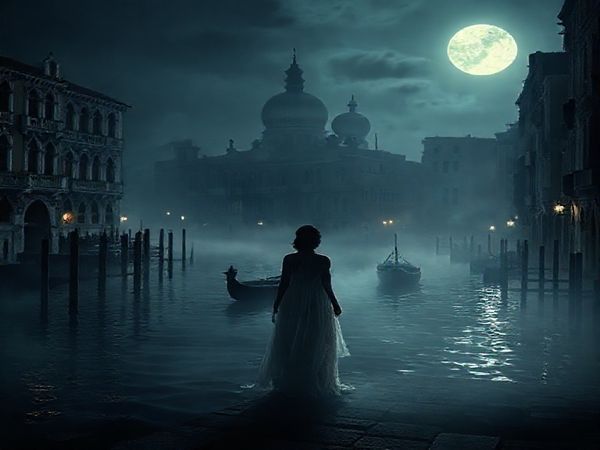
In Kenneth Branagh’s A Haunting in Venice (2023), a supernatural intrigue unfurls amid the shadowy canals and opulent palazzos of Venice. As Hercule Poirot (played by Branagh himself) is drawn into a labyrinthine mystery, the film effortlessly hypnotizes with its gothic allure and atmospheric depth. Yet, beneath its sumptuous exterior lies a critical question: Can a film enjoy the lyrical beauty of its own craft while navigating the often treacherous waters of gender dynamics? Leave it to Branagh to create a visually enchanting panorama that simultaneously awaits a feminist exploration.
As the illustrious detective delves into eerie surroundings, he pulls audiences into an adaptable narrative woven with tropes of ghostly manifestations and hidden secrets. The film’s visual style beckons to its mystery-rich genre, as haunting shadows interplay with brilliant shafts of light. A Haunting in Venice thus entices from the first frame, drawing us into its meticulous mise-en-scène. Nevertheless, as much as its visual language captivates, the narrative intertwines with a web of nuanced, albeit sometimes problematic, gender interactions that demand further unraveling.
Haunted Dialogues and Gilded Conversations
Examining the dialogues in A Haunting in Venice, one must assess how language and communication hinge on gendered lines. Although the film foregrounds its supernatural pursuit, scrutinizing the interaction among its central female characters reveals layers worth discussing. Veronica (played with mesmerizing intensity by Michelle Yeoh), an ethereal medium, speaks not only for herself but acts as a mouthpiece through which women’s voices echo from the spirit world. While this magical realism aids in crafting a tapestry of voices beyond the grave, it subtly diminishes women’s agency in tangible interactions, pushing crucial characterization toward abstraction.
Interestingly, women do engage in spirited exchanges with Poirot, implying a semblance of autonomy and depth. Nevertheless, these dialogues often serve the investigational journey rather than expanding female interiority or empowerment. When women converse independently, their words swirl around relationships, fear, and intuition, yet they skirt around building substantial narrative momentum. The film thus misses the opportunity to strengthen female dialogues as pivotal plot drivers, pointing to an implicit patriarchal architecture: male figures, particularly Poirot, ultimately decode the enigma, weaving the narrative thread to closure.
Unmasking Traditional Archetypes
In its exploration of haunted histories, the film straddles traditional archetypical roles for its female leads. Themes of motherhood, familial restraint, and societal roles subtly course through the narrative. The character of Rowena Drake, portrayed with poised melancholy by Kelly Reilly, epitomizes the driven matriarch trapped between societal expectations and personal ambition. Her portrayal suggests the film recognizes the potent cocktail of ambition and nurturing instincts, though it falls short of monitoring these aspects independently from a male gaze.
Poirot stands at the investigation’s helm in both filmic form and content, subtly eclipsing the potential for feminine ambition to shine beyond his interpretive authority. It begs the question: Why must this brilliant collision of supernatural forces inexorably pivot around the male detective’s revelation? While the film nods toward breaking traditional molds—highlighted by dedicated performances—the narrative inadvertently reasserts familiar tensions, diminishing the progress it hints might be possible.
The Illusion of Female Agency
Within this haunted narrative tapestry, the film strives to grant agency to its female characters through vignettes of independence and perceptive foresight. Yet, such agency frequently slides into the realm of illusory when scrutinized under feminist lenses. Although women propel the séance scenes, channel the spirits, and manifest the film’s supernatural spine, their cognizance lingers strategically tied to Poirot’s deductions, reinforcing him as central to narrative resolution.
The film beautifully juxtaposes the mystique of invisible entities and visible assumptions, where women’s agency flickers like an ephemeral Venetian gaslight. In some moments, the film reveals women thriving as catalysts of the story’s mysterious energy, implying a progressive step into complex portrayals—yet, implicitly receding them to the backdrop as the narrative draws to a traditional climax.
A Chiaroscuro of Craft and Critique
The power of A Haunting in Venice undeniably lies in its exceptional craftsmanship—sumptuous visuals, evocative soundscapes, and affecting performances that transport viewers into a world coated with layers of intrigue. Kenneth Branagh navigates these waters masterfully, ensuring the atmospheric splendor holds audiences spellbound. Yet, crafting such an intricate narrative tapestry invites not only celebration but critical insight, especially regarding gender dynamics.
Though the film offers glimpses into the rich narrative spaces made possible through feminist storytelling, its constraints are not erased. The film achieves cinematic grandeur, but at times it dances precariously close to the edge of explicit patriarchal tradition. With women rendered intermittently central yet ultimately subordinated, it leaves us wanting not just eerie allure but substantive paradigm shifts where gendered narratives enrich the mystery milieu.
In the end, A Haunting in Venice crafts a cinematic experience that is as artistically luminous as it is fraught with the shadows of persistent gender biases. Embracing both the magic and the scrutiny brings us closer to understanding the art of film as entwined with deeper societal storytelling—a cinematic tapestry that while beautiful, longs to be more progressive and truly liberating.