1980s Islam Projections vs. Reality: Unveiling the Surprising Journey Through Time
As the 1980s dawned, the world stood at the cusp of rapid technological expansion, geopolitical shifts, and a rebirth of cultural interest across the globe. In this vibrant atmosphere, people were naturally curious about what the future held for religions, including Islam. The way in which individuals imagined the evolution of this faith was deeply intertwined with the hopes and fears of the decade.
Visions of Islam in the 1980s
When the imagination of the 1980s turned to the future of Islam, it was an era tinged with both optimism and apprehension. The world was awash with technological marvels and Cold War anxiety. Satellite television and personal computers were burgeoning, offering a future that seemed limitless. Within this technological prophecy lay an anticipation of profound changes in social structures and religious landscapes. For Islam, both futurists and laypeople pondered how the faith would evolve.
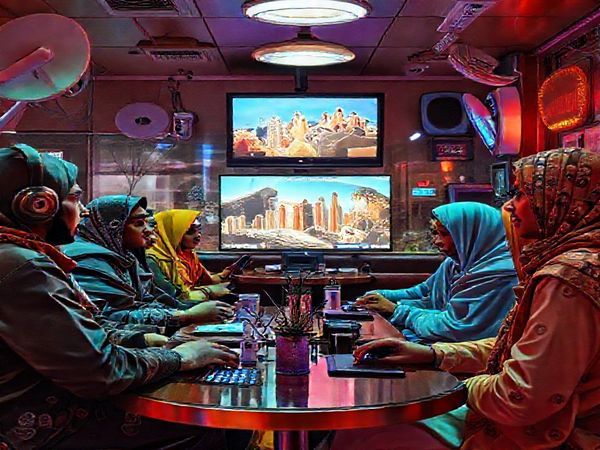
The futurists of the time were uniquely positioned, straddling two worlds characterized by a rapidly expanding digital landscape and traditional modes of existence. They speculated that Islam would increasingly become a globalized faith, tied intimately to the flow of information and culture across borders. Predictions highlighted a world where electronic media could potentially unite believers like never before, transcending national boundaries. Some envisioned a digital caliphate of sorts, not politically but socially and ideologically, where Muslims could congregate in virtual spaces to discuss religion and culture.
Culturally, films and media during the decade often reflected the tension and fascination with Islam, painting it alternately as mystical and misunderstood, or as bound by tradition and resistant to change. Notable films and literature of the time contributed to shaping perceptions of Islam, often underscoring a dichotomy between the East and West that was more about Western fears than Islamic realities. Simultaneously, events like the Iranian Revolution fostered global dialogues that were charged with political rhetoric and media sensationalism, influencing how people envisioned Islam’s role in the geopolitics of the future.
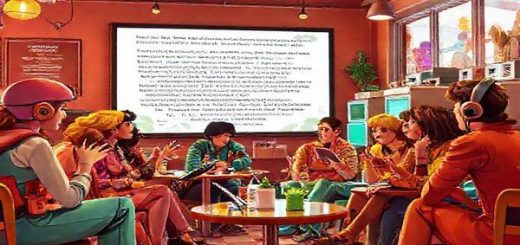
On the streets and in the cafes, ordinary conversations intertwined with these grand narratives. People discussed how Islam might change with the times, influenced by technological advancements and cultural exchanges. There was hope embedded in these conversations – hope that modernization and Islam could coexist harmoniously, with a retention of core values that define the faith but allowing for adaptation to new world paradigms.
Professional discussions in academic and political institutions often centered around a growing interest in the intersection of religion and modern state dynamics. Policy experts and scholars debated whether Islam would lean towards integration with global norms or create distinct paths reflective of unique cultural identities. This duality captured the essence of the 1980s outlook – a period when the promise of progress was often tinged with the fear of cultural loss or conflict.
The Journey of Islam: Reality Unfolds
Fast forward to the present day, and Islam has indeed undergone a remarkable transformation. As anticipated, the digital age has proven pivotal in shaping the modern Islamic experience. The internet has enabled Muslims worldwide to connect, share knowledge, and engage in discourse unbounded by geography, turning parts of the predictions of the 1980s into reality. Online communities and digital platforms are filled with discussions, even scholarly exchanges, contributing significantly to the faith’s modern narrative.
Yet, the pathway has not always conformed to the expectations of the post-1980s futurists. While globalization has unified diverse peoples, it has also intensified the visibility of differences, sometimes leading to conflict. The rise of militant groups and subsequent global responses have marked Islam with geopolitical turbulence that few foresaw with such intensity. These complexities highlight the non-linear journey the faith has undertaken, showing a mix of both convergence and divergence from the imagined futures.
In daily life, Islam today showcases an immense diversity that reflects the diversity of its followers. Innovation and tradition exist side by side, as seen in the way Muslims today engage with contemporary issues, technology, and cultural integration. The digital caliphate of the mind predicted by the past seems partially realized in how richly Islam is discussed online, transcending traditional educational and worship formats. Yet, real-world political struggles, such as those seen in various parts of the Middle East and beyond, remind us of the harsher realities that persist.
Professional and academic contexts now acknowledge Islam as a significant player in international affairs. Its perception as a monolithic entity has become outdated, replaced by a nuanced understanding of its diverse expressions across different cultures and nations. This dynamic adaptation, shaped by the pressures of both internal reform and external observation, speaks to both the continuity and change that the 1980s visionaries foresaw, though perhaps not in the precise terms they imagined.
Lessons in Past and Present
Reflecting on the expectations from the 1980s and the contemporary reality offers a trove of insights into human cognition and cultural prescience. One dominant theme is how strongly our visions of the future are framed by the immediate present. The 1980s were colored by technological triumphs and anxiety about global tensions; thus, Islam’s future was imagined in terms so distinctly shaped by these contexts.
The journey of Islam’s growth and adaptation illustrates the depth of human social networks and collective resilience. While predictions captured certain emerging possibilities, they also underestimated the adaptability of faiths to hold onto traditions while evolving with the times. Moreover, these reflections reveal that Islam’s long-term meaning and staying power rest heavily on its capacity to balance progressive engagement with preservation of core beliefs, a reality that has confounded and intrigued futurists alike.
Understanding this evolution also points to the limitations of viewing an entire faith group through the lens of external political or technological narratives. Doing so misses the particular lived experiences of individuals who practice and interpret Islam in personal ways. Thus, the past and present teach us the importance of multiple perspectives when trying to foresee the direction of a cultural or religious entity.
In essence, the comparison of past predictions with present realities not only sheds light on the trajectories of Islam as a faith, but it also uncovers broader truths about our speculative nature. We project our hopes and concerns onto the future, often highlighting present realities more than true foresight. This realization encourages a more thoughtful and inclusive envisioning of what’s to come, accepting that the future, while shaped by today’s dreams and fears, often finds its own surprising path.