Exploring Commuter Choices: How Departure Times Impact Traffic Congestion
Rethinking the Commute Dilemma
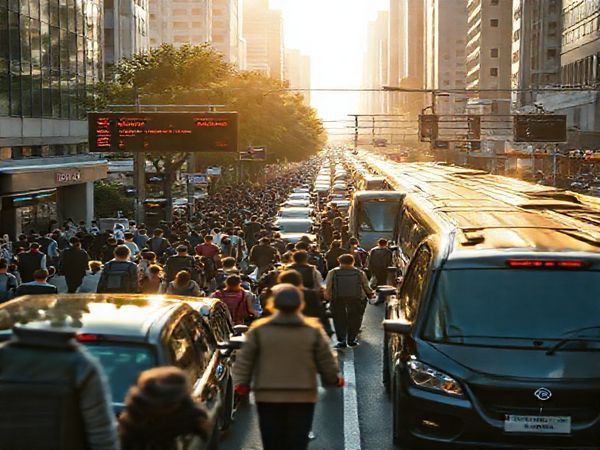
Imagine the daily journey from your cozy morning routine to the bustling demands of work life. Now, picture hundreds of thousands of others making the same trek alongside you, all clamoring for the fastest, most efficient road to their destination. This scenario is not just the everyman’s routine; it is the bedrock of a recent study that plunges into the nuanced world of commuter decision-making. Conducted by Hiroki Otsubo, Eldad J. Gisches, and Amnon Rapoport, the research looks at how choices around departure times can impact traffic congestion, particularly through the lens of what is known in transport economics as the Downs-Thomson Paradox.
Why Timing Matters in the Commute
The Downs-Thomson Paradox suggests that improvements in non-congestible transport modes like trains can worsen congestion on roads. In layman’s terms, as public transport becomes more appealing, more people may flock to it, unintentionally encouraging those remaining drivers to stick with their cars, potentially crowding the roads even more. The researchers, however, were driven by a curiosity about an underexplored facet: how do commuter decisions about when to leave affect this delicate balance?
Connectivity and convenience are at stake here, given how much daily life hinges on the swift movement from one place to another. But beyond convenience, there’s the bigger picture of urban planning, environmental impact, and the economic repercussions of mass transit decisions. The team embarked on an experimental journey to untangle these factors, asking tough questions about the intricate dance of commuter choices and their ripple effects on city dynamics.
A Journey Into the Lab
To pursue this line of inquiry, the researchers constructed a novel experimental setup that mirrored real-world commuting scenarios in a controlled environment. Participants in the experiment were asked to choose between taking a car on a congestible road or hopping on a non-congestible train. But there was an additional twist: those opting to drive also had to decide spontaneously, and independently, on their departure times. This setup introduced a layer of strategizing about schedule delays and bottleneck queues. What unfolded was a vivid illustration of commuters juggling between travel discomfort and the urgency of being punctual.
Interestingly, the study found something both thought-provoking and counterintuitive. Improving railway services did, as expected, reduce mean travel costs and attracted some commuters away from the roads. However, contrary to the Downs-Thomson Paradox, enhancing the roads also reduced overall travel costs. This suggests that the anticipated paradox might not fully unfold when taking into consideration the choices about departure times and the interplay of commuting modes.
Beyond the Traffic: Broader Implications
The implications of this study stretch beyond the hypothetical morning rush hour. It presents challenges and opportunities for policymakers, urban planners, and even everyday commuters deciding on when to set their morning alarms. It raises questions about how cities invest in infrastructure improvements and the potential synergies between developing roads and public transport systems. It encourages a more nuanced understanding of how commuters’ strategic decisions around when to travel can alleviate or exacerbate congestion.
In an era where sustainability and urban efficiency are more paramount than ever, the findings could inspire data-driven policies that consider not just the infrastructure itself but the behavioral tendencies of those who use it. One might also ponder the rising tide of flexible work arrangements, a trend propelled by the COVID-19 pandemic that encourages staggered work hours and remote work options. How these shifts interact with road and rail improvements remains a fertile field for further exploration.
Navigating Toward the Future
While this study offers rich insights, it is but one piece of a larger puzzle of city mobility and human behavior. The researchers’ work provides a stepping stone toward more comprehensive models that incorporate real-world complexities, including the unpredictable nature of human preference and decision-making. For those studying and shaping the future of our urban environments, the message is clear: solutions to traffic congestion must be as dynamic and multifaceted as the individuals they aim to serve.
In the end, the study by Otsubo, Gisches, and Rapoport invites us to rethink the conventional narratives surrounding city transit and embrace a more holistic view that bridges the gap between theory and the everyday decisions of commuters. As cities strive toward sustainable growth and productivity, understanding and adapting to the subtle nuances of human behavior could make all the difference in reaching destinations – whether they are far-off workplaces or grand urban planning goals.
Reference:
Otsubo, H., Gisches, E. J., & Rapoport, A. (2025). The Downs-Thomson Paradox with Endogenously Determined Departure Times. Experimental Economics, 1-25.