Retro-Futurism: How 1950s Dreams of Community Met 21st Century Realities
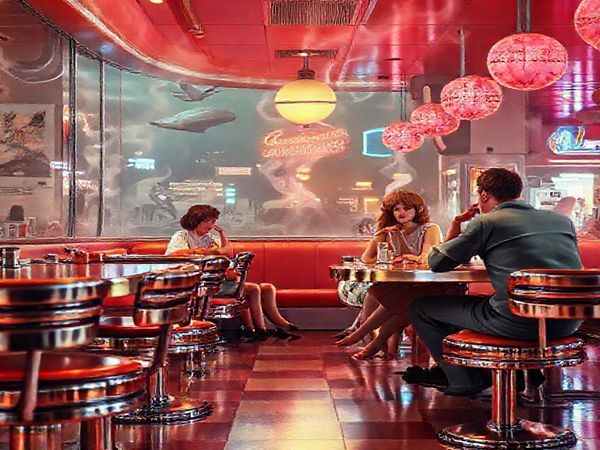
In the haze of cigarette smoke and the ambiance of diners with chrome stools, the 1950s brimmed with optimism about the future. The scars of World War II had started to heal, and there was a collective yearning to build a better, technologically-enhanced tomorrow. As American suburbs burgeoned and households filled with televisions, the question on everyone’s mind was: what would the communities of the future look like? From the imaginative sketches of futurists to the musings captured in popular magazines, the era was a vibrant tapestry of predictions about how people might live, work, and connect in years to come.
What the 1950s Envisioned for the Future of Community
The 1950s were a pivotal decade framed by the disruptive innovations emerging from World War II, where the technological prowess of radar and computing fostered a belief in limitless human capacity. Amidst this backdrop, the concept of community was in flux. The quintessential American dream was being reshaped by rapid suburbanization, where families sought the promise of peace in white-picket fenced neighborhoods.
Futurists of the time painted a picture of sleek, interconnected communities powered by innovative technologies and a harmonious social order. The dawn of television had already hinted at the shriveling size of the world, shrinking distances and expanding horizons. Urban planners and architects envisioned cities where people would glide to work on automated highways in flying cars or be whisked around by monorails. Houses, structured by modular designs, might resemble machines for living – efficient, sleek, and autonomous. In architectural journals and Socratic symposia, predictions abounded about skyscrapers integrated with every conceivable amenity, entire communities housed within vertical utopias.
The zeitgeist was also shaped by the bubbling allure of science fiction. Popular media like “The Jetsons” offered whimsical yet hopeful visions, showcasing futuristic communities rife with robot maids and conveyor belts for errands. Even on the silver screens, while dystopian undertones often lurked, the sprawling cityscapes and streamlined societies captured an optimistic bend towards a synthesis of comfort and technology.
Around kitchen tables, families talked about these visions with a mix of skepticism and excitement. There was a palpable embrace of a future bound by new conveniences and a seamless blend of family and community life facilitated by advancing communication technologies. Magazines targeting homemakers rhapsodized about kitchen appliances that would revolutionize daily life, while consumer expos presented gadgetry promising to liberate people from mundane chores, allowing more time for civic and social engagement.
Even professional discussions brimmed with optimism. Social scientists theorized that technology would break down social barriers, fostering greater community cohesiveness. Telecommunication predictions rivaled the wildest imaginations; some experts speculated about picture phones and electronic mail, envisaging a world where distance was inconsequential to interpersonal relationships. At the heart of these predictions was an implicit belief that technology could bring humans closer together, shaping a unified community no longer divided by geography.
Reality’s Unfolding and Today’s Communities
Fast forward to today, and the tapestry of community has woven itself quite differently than the 1950s mosaic suggested. Suburbs, which then seemed the promising horizons of communal living, expanded into sprawling metropolitan areas, creating new complexities rather than the idyllic tranquility once imagined. The reality of planned communities transitioned into more organic growth, often guided by economics as much as by planning.
In contrast to the gleaming self-sustaining towers, the real architectural progress unfolded in varied ways. Urban density often exploded into high rises, but these skyscrapers developed not primarily as self-contained cities, but as vital parts of broader urban landscapes. New York’s skyline, for example, became an emblem of growth rather than the communal vertical village that was once dreamed of.
When it came to transportation, the futurists’ dreams of flying cars remain, for now, fodder for science fiction. However, technological advancements like ridesharing platforms and electric cars have changed the landscape in ways they didn’t anticipate. Thoughtful public transportation systems have become the lynchpin of many metropolises, though the vision of monorails weaving through cities is still largely confined to amusement parks.
Households have evolved into hubs of personal technology. Smart appliances and IoT devices have transformed homes in ways not quite foreseen by the homemakers of the ’50s. Meanwhile, the proliferation of platforms like video calls and emails – far better than dreamed – have done more to reshape communal interactions than predicted. The irony is that while technology has indeed shrunk distances, it has also introduced new challenges around privacy and social disconnection.
Even cultural cohesion has evolved in unexpected paths. While some forms of media integrated communities across the globe, they also polarized by providing echo chambers. Social media, now ubiquitous, has linked us more directly than futurist predictions, simultaneously weaving together expansive digital communities and creating divisions based on digital tribal identities.
Lessons from the Imagined and the Actual
Reflecting on the predictions of the 1950s alongside today’s realities reveals insightful truths about how we envisage our future. Expectations were deeply bound to the zeitgeist of their times – more about ideals framed by present desires and challenges than about any prescient view into tomorrow.
The leap made between the comfort of suburban life and the convenient government of future communities assumed a linear progress without accounting for human adaptability and unintended consequences. It underscores the timeless bias that humans are optimists, with hopes for technology to mend social and global fissures.
Simultaneously, where predictions did align with reality, they showcase the persistent human drive towards connectivity, efficiency, and innovation. Technology has, in many ways, facilitated learning and community engagement, though often shaped by the same social stratifications they were meant to dissolve.
Additionally, these lessons serve as reminders about our resilience. We have adapted rapidly to unintended changes brought by technology, creating communities that thrive on the hybrid of physical and digital interactions. The thoughtful consideration of privacy, decentralization, and cultural sensitivity has grown naturally as these blend into daily existence.
Gaps between past predictions and today’s actualities shed light on the unpredictability of innovation and highlight the role of humility in predicting future community dynamics. Perhaps the most poignant reminder is that, as communities evolve, they will always require a balance of foresight and flexibility and an understanding that no prediction can fully account for the beautiful complexity of human nature.