Glimpses of Tomorrow: 1930s Predictions & Today’s Local Communities – What We Expected vs. Reality
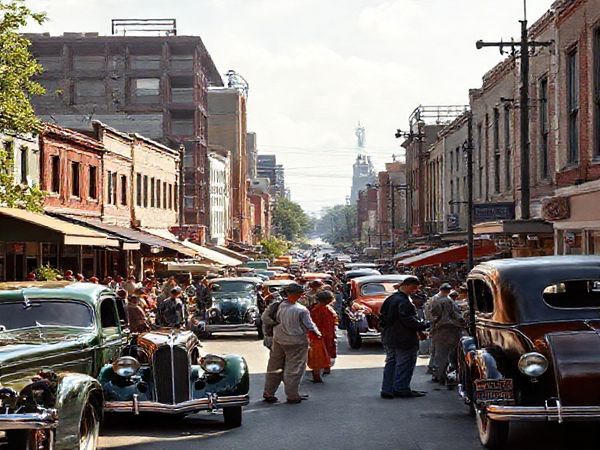
In the midst of the Great Depression of the 1930s, the future of local community life was a subject of much discussion and speculation. There was a mix of hope and apprehension in the air, as people tried to see beyond the present hardships to a time when their communities might be powered by technological advancements and societal changes. With radio waves carrying news of technological marvels and urbanization spreading its tentacles even further, minds were ignited with possibilities of how community life could transform in decades to come. The visions of the future varied – from utopian dreams of harmoniously connected neighborhoods to dystopian warnings of fragmented societies. Today, we can look back at these forecasts to uncover what dreams came true, what ideas faded away, and what this all tells us about the future we continue to build.
Imagining Tomorrow-Everyday Life of the 1930s
The 1930s was an era vibrating with interesting contradictions. On one hand, economic hardship was unavoidable as the Great Depression tightened its grip on daily life; on the other, technological marvels sparked imaginations about what could lie beyond the immediate horizon. This duality heavily influenced how people imagined the future of local community life.
Prominent rural themes defined the mindset of many in the 1930s. Communities were still deeply tied to agriculture and local trading at the time; thus, dreams about the future often revolved around improving these aspects of life. Innovations like electric farming equipment and crop rotation techniques promised more sustainable and efficient food production, a significant concern during the economic uncertainty of the period.
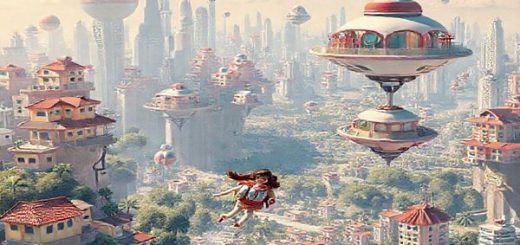
In urban centers, visions were colored by the rapid interconnectivity promised by growing infrastructures, such as the spread of automobiles and new roadways. There was anticipation of sprawling cityscapes teeming with bustling suburban communities – spaces envisioned in the realms of architectural genius and social connectivity. Skyscrapers were starting to pierce the sky, symbolizing a blend of prosperity and progress. Futurists predicted that technological and transportation improvements would collapse distances, allowing even smaller towns to benefit culturally and economically from an expanding web of communication and commerce.
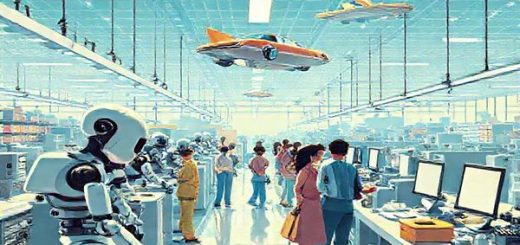
Popular media, too, played its part in shaping these visions. Comic strips and radio broadcasts painted pictures of gleaming futures filled with voice-activated appliances and automated homes. The everyday man and woman, while sceptically carrying the burden of reality, entertained dreams of living in transparent glass structures surrounded by lush greenery, where leisure, not labor, defined community engagements.
Even within more professional circles, the 1930s were embedded with optimism about technology being harnessed for social growth. Conferences and round-table discussions centered on innovations such as electrification, seen as a gateway to cleaner, more efficient towns and cities. Health experts imagined future public services that would be proactive rather than reactive, foreseeing a greater emphasis on community-driven care.
The emotional landscape of the time was shaped by a combination of nostalgia for simpler times and yearning for a stable, prosperous future. Amidst these swirling sentiments, people looked ahead with a mix of cautious optimism and pragmatic foresight, ensuring that any imagined future would not just enhance individual lives, but enrich communal ties as well.
The Road That Unfolded-Realities of Modern Community Life
As the decades rolled on beyond the 1930s, the evolution of local community life showcased a tapestry of expected and unexpected outcomes. The technological transformations envisaged did, in many cases, become woven into the fabric of everyday living – but not always in the ways initially foreseen.
Agricultural advancements certainly made a profound impact, though they came with mixed results. While large-scale mechanization and industrial farming increased efficiency, they also led to the decline of small farms, reshaping rural communities in ways few had predicted. The expected utopian vision gave way to a reality where economic survival required adaptation or relocation.
In cities, the prophecy of sprawling suburbs interconnected with urban hubs did take shape, spurred by post-WWII economic prosperity. However, these areas often evolved in ways that reinforced social divides rather than bridging them, which had not been widely anticipated. The future dreamt of as a network of equal opportunity transformed instead into a patchwork of varied access and inequality.
Surprisingly, while 1930s futurists had foreseen some forms of advanced communication technology, they could hardly have imagined platforms like the internet, now an integral part of local and global community dynamics. The world is more connected than ever, but the form of that connection – social media, virtual workspaces – differs significantly from past imaginings of futuristic communication.
Architectural ambitions largely became reality, as predicted, with tall buildings and sustainable design becoming central to modern urban planning. Yet, the dream of glass-domed, leisure-dominated lives hasn’t fully materialized. People remain busy grappling with new challenges posed by climate changes and economic uncertainties.
In essence, many technological and societal predictions from the 1930s have either occurred in altered forms or were overshadowed by developments unforeseen by that era’s theorists. The story of community life is not one of linear progression but constant evolution, responding to a variety of influences, from innovation to unforeseen global events like pandemics.
Lessons from the Past-Building Tomorrow’s Communities
Examining the alignment or divergence between 1930s predictions and contemporary realities illuminates certain truths about both our expectations and the nature of community itself.
First, it reveals an essential pattern – our visions of the future often reflect present-day concerns and desires more than concrete possibilities. In the 1930s, widespread economic hardship and the promise of technological innovation heavily influenced future projections. People imagined solutions to the problems they faced rather than the problems they hadn’t yet anticipated.
This dynamic indicates a deeper, relatable human tendency: to use the future as a canvas for our current hopes and anxieties. Futurism, in some way, acts as a subconscious palimpsest, capturing the world’s aspirations, fears, and prevailing ideologies of its time.
Furthermore, the way local community life has evolved emphasizes the resilience and adaptability inherent in communal life. Despite technological advancements, the community remains a fundamental lens through which individuals find connection, support, and identity. It is this adaptable nature, this capacity to mold itself around new realities, that continually redefines what a community means.
As we ponder our current visions of the future, reflecting on the past offers critical insights. It encourages flexible thinking – accepting that solutions may take forms initially unimagined and urging a preparedness to adapt to unexpected developments. Understanding past predictions and their outcomes also provides clarity on the values that consistently underpin community life, like collaboration, sustainability, and shared well-being.
In the end, the pathway from past predictions to present realities functions like a mirror, reflecting not only on how far we’ve come but on the potential paths still open to explore. As today’s communities face their own challenges, it’s this blend of retrospective wisdom and creative vision that will ensure the building of connected, thriving environments.