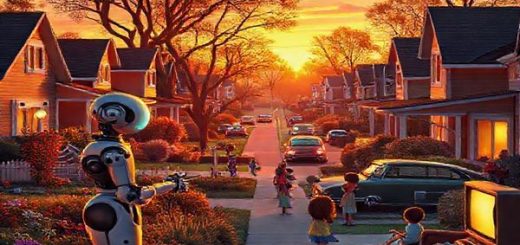
1920s Dreams vs. 2020s Reality: The Unexpected Evolution of the Doctor-Patient Bond
In the vibrant swirl of the 1920s, the world was on the brink of a new era, buzzing with the energy of rapid innovation and social change. It was a decade defined by jazz, flapper dresses, and an insatiable appetite for the modern. As skyscrapers rose into the sky and automobiles transformed everyday life, people began to imagine a future full of possibilities far beyond the horizon. Among these swirling visions of progress was a transformed doctor-patient relationship, colored by the era’s optimism and the burgeoning technological advancements.
Visions of Modern Medicine: The 1920s Perspective
In the 1920s, the world stood at the cusp of medical transformation. The field of medicine was evolving from a rudimentary practice to a more scientifically informed discipline, emerging from the shadow of mystery to a beacon of hope. During this decade, the impact of medical advancements—such as the discovery of insulin and the first use of vitamins—sparked fervent imaginations about the future of healthcare.
Futurists of the era imagined a world in which doctors would become not just healers but scientific wizards, wielding new technologies to diagnose and treat illnesses with unprecedented precision. The introduction of X-ray machines into hospitals, for instance, led some to dream of more advanced imaging technologies that could create transparent human bodies, allowing doctors to ‘see’ and diagnose without invasive procedures.
Popular media and films also captured this transformative vision. Movies of the time often depicted clinical scenarios where doctors harnessed state-of-the-art gadgets, blending science with a touch of fantasy. The public’s fascination with medical progress reflected a growing trust in science. The language of the day was peppered with references to the “strides” being made, suggesting that illness would soon be conquerable by a well-equipped doctor, much like a knight of old armed with cutting-edge armor.
In everyday discussions, there was an expectation that this modernity might lead to more efficient, if not entirely personalized, interactions. Patients imagined a world where ailments would be diagnosed quickly, treatments rendered painlessly, and recoveries made complete. For an era still grappling with post-war reconstruction and the Spanish Flu pandemic, such aspirations for health and the human body were both reassuring and electrifying.
Professionally, shifts in medical education began to reflect this changing worldview. There was an increasing emphasis on scientific rigor, influenced by the Flexner Report of 1910, which had radically reformed medical schools in North America. Doctors were anticipated to be more than mere practitioners; they were seen as scientists in white coats, who would apply research and technology in ways that their predecessors could only dream of.
Reality Check: The Evolution of the Doctor-Patient Relationship
As the century unfolded, the evolution of the doctor-patient relationship took many unexpected turns. Initially, the expectation was that technology would lead to a more impersonal experience, as scientific advancement and machinery might overshadow the human element of care. However, what transpired was a more nuanced transformation.
In the mid-20th century, technology indeed began to redefine the medical landscape. The development of antibiotics, vaccines, and later, more sophisticated imaging techniques like MRIs and CT scans, revolutionized diagnosis and treatment. However, these advancements also brought complexities. As medical care grew more advanced, it became increasingly specialized, leading to challenges in maintaining the traditional, one-to-one relationship patients had with their primary doctors.
With the rise of the information age and the advent of the internet in the late 20th century, the relationship underwent further transformation. Patients gained more access to medical knowledge, changing the dynamic from a paternalistic model to a more collaborative one. This shift, while empowering, also placed strain on doctors to continuously mediate between expert knowledge and patient self-education.
Comparing this reality with 1920s expectations reveals both surprising accuracies and divergences. The early forecasts were astonishingly prescient in anticipating technological advancements and the increasing specialization of medicine. However, many underestimated the emotional and ethical implications these changes would bring. The sustained importance of empathy, clear communication, and trust in doctor-patient interactions remained crucial, arguably even more so as technology advanced.
Despite the fears of depersonalization, the digital age has introduced new opportunities for improved interactions through telemedicine and personalized medicine. These developments echo the efficiency and speed once hoped for in the 1920s, but they also challenge the ability to maintain a humane connection.
Insights for the Future
Reflecting on these comparisons teaches us much about the nature of human optimism and the unpredictability of technological consequences. The 1920s vision of the future was deeply optimistic, rooted in the belief that science and technology would invariably improve society. This vision was shaped by the era’s recent experiences; having seen the devastation of world war and pandemic, people sought reassurance in progress.
This historical perspective reveals a tendency in human nature to project current hopes and fears into the future. The expectations set in the 1920s were a mirror of the desires for stability, efficiency, and secureness that the culturally dynamic and sometimes turbulent time yearned for. They also suggest an understanding of how technology can amplify, but not replace, the human elements of empathy, trust, and communication that are essential to healthcare.
The journey from expectation to reality underscores the importance of adaptability, communication, and continuous learning in the doctor-patient relationship. It teaches us that while technological advancements can enhance healthcare, the core elements of human connection and understanding remain unchanged. These lessons remind us that the future we envision will always be shaped by the vast tapestry of human experience, one in which technology serves but does not overshadow the essence of care.
The continued evolution of the doctor-patient relationship into the modern era suggests that while our tools and environments may change, the fundamental needs and values at the heart of human interaction endure. In an age of rapid change, reflecting on past aspirations offers both insight and guidance as we navigate the medical frontier ahead.