From Newsboys to Newsfeeds: How 1920s Visions of Future Journalism Missed the Digital Revolution
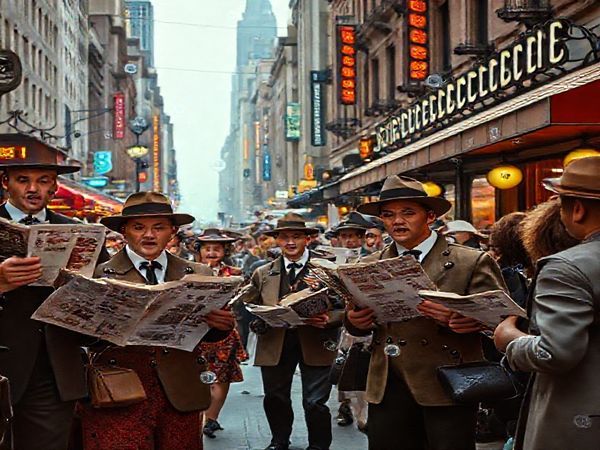
As the clock ticked past the final hours of the 1910s and euphoria danced across the Western world with the arrival of the roaring twenties, a surge of optimism permeated every facet of society. In this era of jazz, flappers, and technological wonder, the future seemed an open book waiting to be written with hopeful tidings and shimmering opportunities. Among the facets of life under review with anticipation and imagination was the field of journalism. The 1920s were marked by a unique juxtaposition of tradition and innovation—a time when newspaper boys still hawked papers on street corners while wireless radios began crackling to life in living rooms, forever altering the landscape of information dissemination. In this climate, speculation about the future of journalism flourished, revealing much about the hopes, dreams, and even the anxieties of the era.
Visions of Journalism in the 1920s
In the 1920s, journalism was perched on a threshold between past and future. The newspapers retained their stature as the cornerstone of public knowledge, holding sway with their ink-laden pages and bold headlines. Yet, the whispers of change were unmistakable, as new forms of media emerged to challenge the ink-stained monarchs of the press. People dreamed of a future where technology would shrink the world and expand the reach of information. These dreams were woven into the cultural and technological fabric of the era, crafting a future that was at once thrilling and daunting.
Culturally, the 1920s teetered on a tightrope between romantic idealism and a burgeoning fascination with technology. The average American found inspiration in the glamorous portrayals of journalism in the popular films and novels of the time. Movies like “The Front Page” began to capture the frenetic, oftentimes comedic life of journalists chasing stories, providing a glimpse into a world of suspense and urgency. It was a narrative that resonated with audiences who saw journalism as a vital force of truth and drama.
Yet, there was more than just blockbuster fantasy at play. On the ground, discussions bubbled around dinner tables and in cafés about the potential for radio to revolutionize journalism. Professional circles buzzed with conversations about how this “instantaneous” medium might redistribute power from print to broadcast, suggesting that one day people might receive their news as it happened, not just read about it the next day. There was talk of portable devices that could fit in one’s pocket or be embedded neatly into homes, delivering news from around the world straight to each individual.
Amidst these dreams, ordinary people pondered the impact of a more immediate form of news on their everyday lives. Would this immediacy foster greater connection to global events, or overwhelm with an avalanche of information? The allure of technological progress was counterbalanced by a lingering unease about its implications. Nevertheless, the spirit of the time encouraged a sense of optimism about the prospects of a more connected future enabled by the marriage of technology and journalism.
The Evolution of Journalism and Its Modern Landscape
As the decades unfolded, the trajectory of journalism took turns that were as surprising as they were transformative. The expansion of radio in the 1930s and television in the subsequent decades fulfilled the early 20th-century predictions of a more immediate news experience, albeit not in the way anyone might have perfectly foreseen. The rise of broadcast journalism brought current events into homes with instant impact, turning anchors into trusted narrators of the unfolding human story.
The expectations of the 1920s met the hard reality of technological limitations and cultural shifts. While radio and television extended their reach, newspapers adapted by expanding their coverage and deepening their investigative journalism to compete with these contenders. The synergy, rather than overtaken dominance by one medium, was an important evolution that not all futurists had envisioned. Predictions of portable devices were partially realized by the late 20th and early 21st centuries with devices like smartphones encompassing hundreds of years’ worth of advancements into hand-held marvels.
Perhaps the most unanticipated twist came at the turn of the 21st century with the advent of the Internet. This technology transformed the very nature of journalism, creating digital platforms where anyone with an internet connection and a desire to share could become de facto content creators. The democratization of information spread through blogs, social media, and digital news outlets, redefining what journalism looked like and how it was consumed. The power dynamics predicted in the 1920s shifted more profoundly than even the savviest minds of the age might have dared to predict.
Yet, in some ways, those early rumors of interconnectedness were not far from the mark. Today, real-time updates and multimedia storytelling are the norm. News is personalized and customizable—echoing the 1920s vision of individual media consumption but realized in ways far beyond the original scope of imagination.
Insights and Lessons from the Disparities
The contrasting expectations and realities between the 1920s and today offer profound insights into the human imagination and its relationship with time. This historical juxtaposition shows us that our vision of the future is invariably tinted by the hues of the present. The 1920s enthusiasm and anxiety about technology reflect not a clear foresight of coming changes, but a mirror of the ongoing tensions society experienced in the face of rapid modernization.
The errors of the 1920s illuminate a critical understanding: our perception of the future often projects contemporary desires and fears more vividly than predicting tangible developments. The optimistic dreams of a ‘connected world’ hinged on present capabilities and the cultural narratives familiar at that time, such as the romance of the newsman or the allure of technological wizardry.
Yet, where the 1920s visionaries were prescient was in foreseeing the confluence of immediacy and far-reaching storytelling. Those insights illuminate an enduring truth about journalism’s role in society—it lives at the intersection of current events and contextual reflection. What they couldn’t foresee, however, are the ethical and existential challenges arising from information overload, misinformation, and a fragmenting media landscape that characterizes today’s world.
Ultimately, the study of these predictions and outcomes underscores the dual nature of technological progress: it provides tools for empowerment and connection but also demands new strategies for discernment and integrity. These lessons from history remind us to approach the future of journalism with humility and imagination, acknowledging past missteps while embracing the timeless quest to bring truth to light and make sense of the changing world around us.