From Jetpacks to eBooks: How the 1960s Imagined Literary Futures and What Really Happened
Stepping back in time to the swinging 60s, we find a world brimming with optimism, creativity, and a sense of limitless potential. This was an era marked by profound social change, technological advancement, and a belief in the transformative power of innovation. It was against this backdrop that people began to dream of what literature might become. As the dust settled from the post-war years and the global consciousness began to expand, the future of literature was reimagined with as much vigor as the era’s fashion, music, and civil rights movements.
Imagining the Future of Literature in the 1960s
In the 1960s, the future seemed to hold endless possibilities, and this was vividly reflected in how people envisioned the next chapter for literature. The spirit of the 60s was infused with a mix of idealism and exploration, and many believed that literature would harness emerging technologies to become a more interactive and immersive experience. A significant influence on this notion was the burgeoning field of science fiction, which found a new wave of popularity in this decade. Authors like Isaac Asimov and Arthur C. Clarke, who mesmerized readers with tales of far-flung spaces and futuristic societies, set the stage for readers to imagine literature that could break free from the constraints of paper and ink.
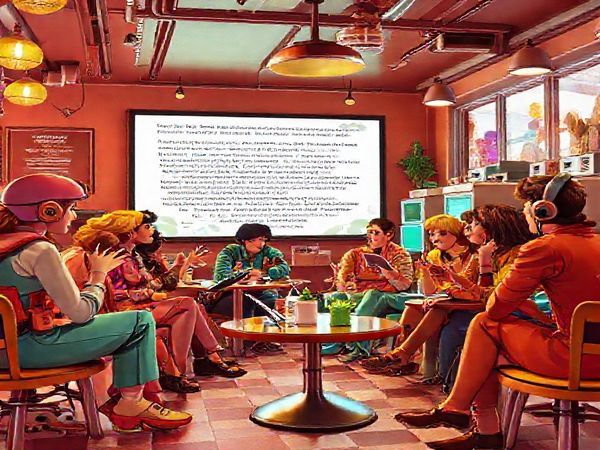
The idea that computers, still largely mysterious and the stuff of Cold War intrigue, would somehow meld with literature was an especially thrilling thought. Some futurists predicted interactive books that could adjust their narratives on the fly in response to readers’ choices and preferences. The concept of “electronic literature” whispered promises of books that would not just tell stories but create entire worlds in which readers could immerse themselves as participants.
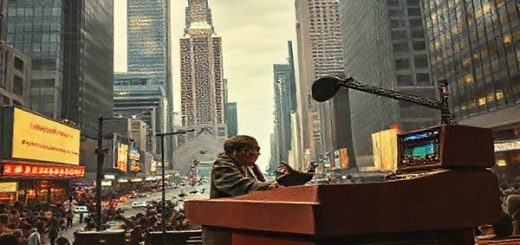
This was also the age of television’s golden promise. With screens becoming central fixtures in homes, it wasn’t a stretch to envision a future where literature fused seamlessly with visual media, creating hybrid stories that could traverse both text and screen. Ordinary people in their everyday conversations speculated about these possibilities while flipping through magazines that featured glistening images of automated homes and utopian cities. In professional circles, debates raged at conferences and universities over how these technologies could redefine the boundaries of storytelling.
Culturally, the 60s were defined by countercultural movements and a challenge to traditional norms, which also spilled over into literary ambitions. The avant-garde poets and novelists of the Beat Generation, such as Allen Ginsberg and Jack Kerouac, inspired young writers to imagine a future where traditional literary forms were shattered, replaced by spontaneous prose and free-verse poetry. The notion of the author as a free spirit, roaming the fringes and documenting the raw, unvarnished truth of human experience, became an archetype that was both admired and emulated.
Literature’s Evolution and the Reality of Today
As we advance to the present, the evolution of literature reveals a rich tapestry of unanticipated growth and innovation. While the digital revolution took longer than some 60s enthusiasts might have hoped, it undeniably reshaped the landscape of literary consumption over the last few decades. In today’s world, the advent of the internet and the omnipresence of digital devices have made eBooks, audiobooks, and online novels commonplace, fulfilling in part those early dreams of electronic literature.
Unexpectedly, the rise of blogs, social media, and self-publishing platforms like Wattpad and Kindle Direct Publishing have democratized the literary space, allowing anyone with a story to share it with the world. This was not entirely foreseen in the 60s, where publishing was the realm of a few, and the typewriter was the writer’s steadfast companion. Now, literary expression isn’t confined to a room full of books but stretches across platforms globally. New genres have also emerged from this digital evolution. Interactive fiction and role-playing video games often meld narrative storytelling with player agency in ways that the technological optimists of the 60s might have found thrilling.
While the blend of literature and visual media envisioned in terms of electronic books took some time to manifest, it did finally arrive with the evolution of multimedia storytelling. Today, transmedia narratives exist, where stories cross from text to screen to interactive experiences seamlessly. However, the form and function they ended up taking often diverged from those gleaming 60s dreams.
Where expectations truly exceeded reality was the endurance of the printed book. Despite predictions that it would become obsolete, the physical book has proven surprisingly resilient. There is a continued and passionate readership for paper-bound books, which speaks to a countering trend against digital fatigue and an enduring love for the tactile experience of reading a physical book.
Insights from Dreams and Reality
Reflecting on the gap between 1960s futuristic dreams and today’s literary reality reveals much about human nature and our relation to storytelling. One striking insight is how our vision of the future often draws heavily from the aspirations and fears of the present. The hopes placed upon literature to transcend into new realms reflected the 60s’ fascination with technology as a tool of liberation and expression.
The longevity of traditional literature suggests that while we are eager to innovate, we simultaneously cling to the comfort and nostalgia of the familiar. It shows that literature’s true essence is not merely about the format or delivery mechanism but about the story itself and our intrinsic desire to understand the human condition through narrative.
Moreover, the pathways literature took remind us that innovation often comes not from big, anticipated leaps but through incremental changes and the adaptation of existing forms to new contexts. The resilience of the printed book suggests that the future of literature lies in its ability to integrate past traditions with new, evolving languages of expression.
In conclusion, examining the divergence of 60s literary dreams from today’s realities allows us to appreciate that while technological tools have expanded our storytelling horizons, the heart of literature – the shared exploration of human experience – remains unchanged. Literature endures because it adapts, something both futurists and traditionalists can agree is a story worth telling.