From Crystal Balls to Concrete: 1930s Visions of Ancient Rituals in Tomorrow’s World vs. Today’s Realities
Stepping back to the 1930s, we find a world perched at the brink of monumental change. It was a decade marked by the economic strains of the Great Depression, looming geopolitical tensions, and exhilarating leaps in technology and communication. With this backdrop, society turned its gaze toward the future with equal parts apprehension and ambition, pondering how ancient rituals might find their place in the new world that was shaping before their eyes. From the hushed corners of scholarly conferences to the vibrant exchanges on city streets, the air was alive with speculation on whether age-old practices could be woven into the fabric of modernity.
The Past’s Glimpse of the Future
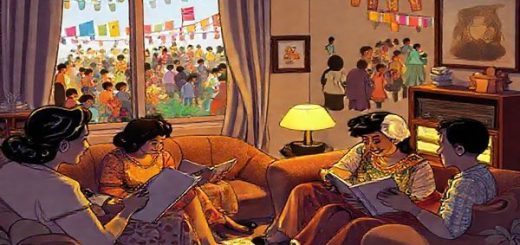
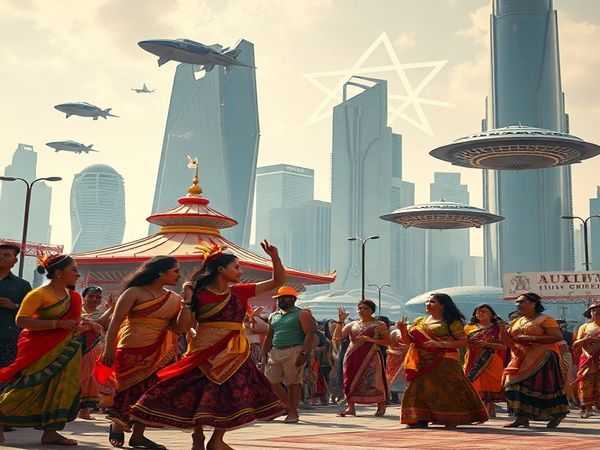
The 1930s was an era of contrasts, caught between holding onto heritage and a fervent belief in progress and modernity. This period saw a mix of anxiety and hope, as technological advancements were set against a backdrop of socio-political upheaval. Imagine the scene in a smoky cinema, where films like “Metropolis” projected visions of sleek, futuristic cities with towering skyscrapers, and yet these urban landscapes often juxtaposed the stark, human elements of spirituality and ritual that seemed timeless.
During this time, futurists frequently envisioned a world where technology and tradition could coexist harmoniously, a notion that resonated with the collective anxiety of losing cultural identities amidst burgeoning technological advances. Magazines and newspapers featured articles that wondered how ancient rituals – those deeply rooted in the human experience like marriage ceremonies, harvest festivals, or rites of passage – could survive in the industrial age. Would they evolve, diminish, or perhaps even reclaim significance in a new guise?
In intellectual circles, debates raged over the potential dilution or disappearance of these rituals. Academic discussions often considered how such practices could offer comfort in a rapidly changing world or serve as a moral compass in an era that seemed driven by mechanization and economic upheaval. Books imagined Utopian societies where ancient ceremonies were adapted to new technological contexts, suggesting an enduring value to these practices even amidst modernity.
For the ordinary person, these conversations manifested in simpler terms. Street vendors and homemakers alike talked about how newer generations might reinterpret long-held beliefs and customs. The backdrop of the World’s Fair and the Olympic Games offered a stage for this cultural introspection, showcasing both the height of modern achievement and moments of traditional spectacle side by side. This allowed people to reflect on their roots even as they embraced a future that promised rapid change.
The Reality of Ancient Rituals in a Modern World
Fast forward to the present, and the landscape for ancient rituals has developed in ways both anticipated and unforeseen. Ancient rituals have neither vanished nor remained static; instead, they have dynamically adapted to the new world. In examining today’s reality, one is struck by how certain core rituals – religious services, traditional weddings, or seasonal festivities – have maintained their essence while integrating elements of contemporary culture, technology, and global connectedness.
Many ancient rituals have taken on new dimensions with the aid of technological advancements that were barely imaginable in the 1930s. Consider the way digital media has transformed once-local ceremonies into global events. Virtual weddings, streamed religious services, or festivals observed through online gatherings have preserved participation and community continuity despite physical distances. In some ways, this has surpassed even the most imaginative predictions of the 1930s futurists, who saw technology replacing rather than enhancing human connection.
But technological influence is not the only unexpected turn. The increased mobility of people and the blending of cultures have introduced a fusion of rituals around the world that would have seemed highly unlikely to those in the 1930s. For example, it is now common to see multicultural weddings that blend traditions across continents, melding symbols, prayers, and practices in highly personalized ceremonies.
Where the 1930s predictions often saw either the erasure or minimal disruptions of rituals, reality presents a more nuanced picture. Ancient practices adapted not just through maintaining continuity but by embracing change – taking cues from the past to enrich the present. In some cultures, the renovation of ancient sites and the reinvigoration of old festivals signify a revival that sustains identity amidst globalization, offering a present that respects and retains the past.
Bridging Expectation and Reality
What we learn from the gap between past expectations and present realities is a testament to human resilience and creativity. Predictions from the 1930s, steeped as they were in the context of their own times, often underestimated the flexibility and the innate human need to stay connected with our roots even as we advance. They remind us that our vision of the future is often more a mirror of our present than a crystal ball.
These shifts show that instead of being rigid, ancient rituals have proven to be living traditions, continuously reinventing themselves. They underline a profound insight: while the trappings of culture and technology evolve, the core human experience and community longing remain much the same – binding the past, present, and future in unexpected and meaningful ways.
The resilience of these rituals speaks to a timeless quest for meaning, belonging, and identity. It reveals that despite technological leaps and social evolution, our intrinsic values and shared human experiences continue to guide the development and reinterpretation of rituals.
Ultimately, the dialogues between past expectations and lived reality offer profound lessons on the nature of progress – not as a linear journey away from the past, but as a tapestry where traditions blend with innovation. These evolutions remind us that the most enduring aspects of human culture often lie in our ability to adapt, transform, and weave the richness of our heritage into the fabric of the modern world.