1950s Visions of High-Tech Prayer: Where Have All the Electric Shrines Gone?
There’s a certain allure in looking back at how our forebears imagined the future, especially when it comes to the deeply personal and spiritual act of prayer. The 1950s, a decade brimming with optimism and innovation, envisioned futures that were bright and full of possibilities, even in the spiritual realm. At a time when technological leaps seemed to promise solutions to nearly any problem, the way people imagined the future of prayer was no exception. Assembling these historical dreams against the backdrop of reality offers us a fascinating window into not only how we once viewed our spiritual lives, but also how much of our future vision is rooted in the hopes and fears of our present.
1950s Vision: A Technological Renaissance in Prayer
Step into the polished chrome and pastel world of the 1950s, where America was in the throes of a post-war boom, and the horizon seemed limitless. The advancements in technology leapt from war applications to personal gain, feeding imaginations with exciting possibilities for the future. In this age of rapid progress, many envisioned the future of prayer intertwined with the burgeoning era of space exploration and the wonders of atomic power.
During the 1950s, science fiction captivated the public imagination, with flying cars, robot butlers, and colonies on Mars appearing as regular fixtures in magazines and films. This cultural fascination extended in some ways to spirituality and prayer. Futurists wondered if advances in technology might one day allow an instant connection with the divine, much like the instant communication made possible by television and radio. In discussions imbued with both hope and whimsy, the notion emerged that one day, perhaps, prayer could be facilitated through technological means – a personalized device for reaching out to the divine, portable and accessible for everyone.
Disney’s Tomorrowland and similar media speculated on a future where human and machine integration allowed for new forms of worship. Churches of the future might equip themselves with computers to process collective prayer requests more efficiently. Envisioning a “faith-phone” was not too far-fetched, a conceptual device that would allow individuals to have an even more direct line to their spiritual leaders or, perhaps symbolically, a more unmediated connection with God.
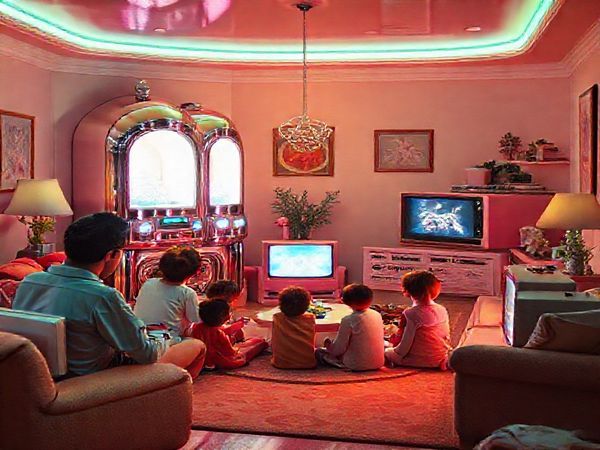
In ordinary homes, as families gathered for meals or huddled around the radio, conversations strayed toward what changes might come. Conversations about prayer reflected broader themes of family values and community, hinting at maintaining tradition amidst changing times. Could technology make prayer more communal, perhaps broadcasting a priest’s blessing directly into living rooms through newfangled gadgets, much like live sporting events enthralled families across America?
Meanwhile, religious leaders and scholars of the decade approached the future of prayer cautiously, mindful of preserving its profundity amidst changing landscapes. They anticipated that as societies modernized, the sacred rituals of tradition might blend with novel methods, enabling a broader reach while raising questions about authenticity.
From Dream to Reality: The Evolution of Prayer
As decades rolled on, the stark contrast between the sleek, gadget-filled visions of the 1950s and the prayer practices of today reveals both surprising convergences and divergences. While technology did revolutionize many aspects of daily life, its relationship with prayer remained less direct than some might have anticipated.
The late 20th century into the 21st century saw prayer evolve more within the cultural and communications realm than through standalone gadgets. The advent of the internet and mobile technology did not manifest in “faith-phones” but instead in services like online prayer forums, where communities could unite virtually, or smartphone apps that provided notifications and meditations to help keep prayer a consistent part of daily life. These innovations brought a new layer of accessibility and engagement to prayer, aligning in spirit, though not in form, with the hopes of futurists who envisioned technology bridging distances.
In reality, the most striking advancement lies not in the creation of a mechanical interface for prayer but the enhancement of community and connection. Real-time video communication, while not the robotic confessionals some imagined, allowed for a different kind of personal interaction with religious leaders and communities, especially for those unable to attend physical services.
The emphasis on diverse and inclusive approaches to spirituality marked a profound shift from the traditional, often rigid frameworks of the past. Spirituality saw an explosion of personal exploration, often supported by tech-enabled engagement, showing a readiness to adapt and grow beyond the hard, mechanical expectations of the ’50s.
The result is a hybrid world, where tradition and innovation intermingle. The digital age did make prayer more accessible and communal, but it did so by harnessing connectivity and information exchange, rather than sleek prayer devices or technological marvels directly fostering divine communication.
What We Can Learn: Reflecting on Past and Present
The contrast between the 1950s imaginings and our present day offers profound insights into the nature of human expectation and the essence of prayer itself. The discrepancies between past futurism and today’s reality often highlight a universal tendency to project current innovations forward without fully appreciating how societal values evolve over time.
At its core, prayer remains a deeply personal act, intimately tied to the human condition. It encompasses silence, solitude, and a sense of tradition that resists the flashiness of technological overhaul. The essence of prayer has consistently eluded transformation by mechanical means because it is not simply a practice but a state of being, reflecting hopes, fears, and a genuine quest for connection.
This reflection reveals how our futuristic visions tell us more about current preoccupations than the future itself. The shiny gadgets of the ’50s reflected a genuine belief in progress, a post-war culture enthralled with the material and the new. Yet reverence, meaning, and the comfort from prayer persist through times by adapting in subtler, sometimes unexpected ways without the grandiose predictions of physical devices or automated connectivity.
Today, prayer has evolved with technology in its own way, demonstrating flexible adaptation rather than concrete transformation. It has reshaped communities, connected disparate individuals, and found fresh voices in new generations favoring inclusivity and accessibility – a digital revolution of a sort, when understood not through devices but through networks.
As we continue into new decades, exploring past visions of the future becomes a delightful reminder of humanity’s boundless creativity and simultaneous humbleness. It shows us the dynamic interplay of tradition and innovation in shaping practices as timeless as prayer, ensuring that, while gadgets may change, the pulse of human spiritual yearning beats on in familiar rhythms.