1950s Visions of Faith in the Future: What They Got Right, Wrong, and the Lessons We Learned
In the aftermath of World War II, the global stage was set for change, and nowhere was this more evident than in the realm of religious beliefs. As nations rebuilt and people sought meaning amidst the ruins, the 1950s emerged as a decade charged with optimism and curiosity about what the future might hold. The idea that technology and human progress would transform every aspect of life, including spirituality, was both exhilarating and daunting. Yet, how did this formative decade imagine the future of religious belief, and how does that compare with our contemporary reality?
The 1950s: A Vision of Faith in Transition
Picture the 1950s: a period where rock ‘n’ roll clashed with Cold War tensions, and the optimism of a modern age played alongside apprehensions about a nuclear future. In this context, religious beliefs were at a crossroads. The era was characterized by a profound sense of collective identity, bolstered by a shared belief in progress. Religion was not only a personal faith but also a public matter that often appeared intertwined with the identity of a nation.
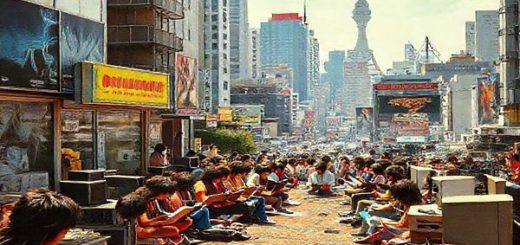
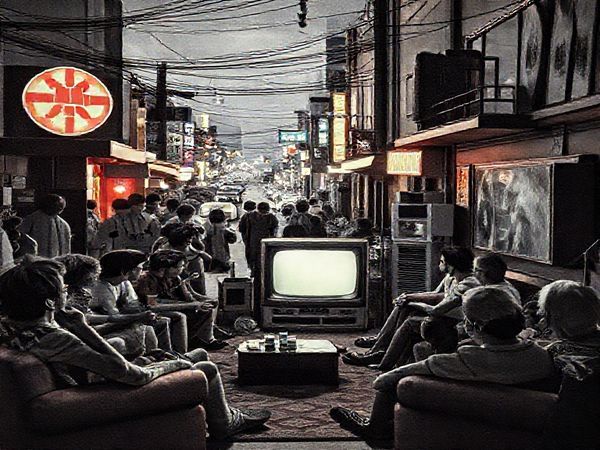
Amidst the persistent hum of factory machines and the glowing promises cast by flickering black-and-white televisions, people experienced religion as a cornerstone of community and daily life. Church attendance was at a high, and religion held a prominent spot in public discourse. For many futurists of the time, the spiritual outlook appeared both promising and perplexing.
Some predicted a decline in traditional religious institutions, envisioning a world where religion would either evolve to embrace modernity or fade altogether against the backdrop of scientific advancement. Science and technology, heralded as the new oracles, were expected to demystify existence. Authors and thinkers like Isaac Asimov and Arthur C. Clarke speculated on futures where spirituality was not abandoned but reshaped by technological enlightenment, possibly even throughout the cosmos.
Popular media further amplified these ideas. Films and literature frequently grappled with themes of spiritual evolution, suggesting that humanity might find new ways of connecting with the divine. This vision was augmented by the belief that intellectual and technological progress would inevitably lead to religious and philosophical maturity.
At a communal level, there was a general sense of optimism that religion could serve as a unifier in an increasingly fragmented world. The conversations around religion were influenced by a strong desire for unity in the face of the ideological rifts presented by the Cold War. With new frontiers in sight, both earthly and beyond, the era was imbued with a sense of reaching for the transcendent, whether through religious beliefs being adapted, streamlined, or entirely reimagined.
The Journey of Religious Belief to the Present
Fast forward to today, and the tapestry of religious belief contains both threads familiar to the 1950s and some that would be entirely unrecognizable. While secularism has indeed expanded, transforming some traditional roles of religion in public life, faith remains a powerful force, often in ways those in the 1950s might not have anticipated.
Arguably, the reality of modern religious belief is one of both continuity and unprecedented change. Religious participation in many Western countries has seen a decline, aligning with what some mid-century futurists envisaged. New Age spiritualities and the rise of the “spiritual but not religious” movement reflect a shift towards personalized spirituality. In contrast, in many other parts of the world, religion remains deeply central, with beliefs and practices thriving and sometimes even intensifying.
Moreover, technology has reshaped the religious landscape far beyond what many mid-20th century thinkers might have predicted. The advent of the internet has created virtual congregations, allowing faith communities to flourish online in challenging geographic and cultural landscapes. This digital turn marks a surprising blend of tradition and modernity, as ancient texts and rituals find new life in the virtual sphere.
Institutional religious practice has seen splits and adaptations, often as a response to globalization and the interconnectedness of our time. This reality challenges the 1950s expectation of a monolithic religious future achieved through scientific and technological convergence. Today, pluralism is celebrated more frequently than convergence, with interfaith dialogues highlighting a rich tapestry rather than a uniform future.
Insights from the Comparison
The fascinating divergence between the 1950s expectations and the current reality of religious belief reveals much about the human condition and our approach to envisioning the future. One critical observation is that projections of the future often mirror the concerns and aspirations of the present. The 1950s, optimistic and fearful in equal measure, imagined a future of religious evolution shaped by the era’s developing technological landscape.
This comparison underscores a fundamental truth – religion, like culture, evolves in complex and often unpredictable ways. Human thinking inherently grapples with the tension between the known and the unknown, the tangible and the ethereal. Just as faith transcends understanding, so does its development transcend simplistic projections.
The reflections on the 1950s also illustrate that while enthusiasm for progress pushes narratives forward, the resilience of deeply held beliefs defies singular predictions. Technological advances have not eradicated spirituality; rather, they have expanded its boundaries and expressions.
In the broader context, such an exploration acts as a potent reminder that visions of the future can miss unexpected trajectories. While embracing technological acumen, the nuances of faith and belief reflect a human landscape that is intricate and deeply personal. As we move forward, it becomes increasingly clear that an appreciation for complexity and diversity will serve as both a guide and a testament to our shared human experience.
The future, like faith, is a mosaic of hope, interpretation, and mystery – continually shaped by our perceptions, ever-unfolding yet always connected to the heart of humanity.