1920s Dreams of Christian Families: Predictions, Surprises, and Lessons from a Century of Change
In the glow of the Roaring Twenties, society sped forward with a buoyant sense of optimism. This was an era when jazz, flappers, and speakeasies symbolized freedom and the thrill of the new. But beneath the playful surface of these social whirlwinds, people also pondered more profound questions about the future, including the future of the Christian family. As new technologies like radio and automobiles changed how people lived and connected, visions of the family of tomorrow took shape, driven by hope, faith, and the spirit of progress. Let’s journey back to the 1920s and step into the shoes of those pondering what the Christian family would become.
Envisioning the Christian Family of Tomorrow in the 1920s
In the 1920s, the idea of the future was intoxicating, with every new invention and cultural shift stirring imaginations. The Christian family, at the heart of community life and spiritual grounding, was seen through a multifold lens of tradition and impending transformation. Many people, particularly futurists, envisioned a world where the family would be a bastion of stability in an increasingly mechanized world. Predictions often centered around the Christian family fulfilling its role in the social fabric more efficiently and spiritually inspired, aided by technological advancements that promised to ease the burdens of daily life.
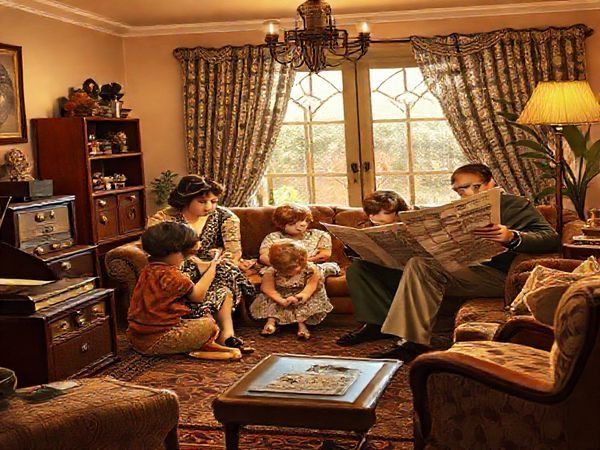
The rise of domestic appliances, such as the washing machine and vacuum cleaner, was seen not merely as conveniences, but as instruments of family empowerment. These innovations were expected to free homemakers from the drudgery of chores, creating more leisure time for spiritual and familial engagement. Some optimists in the clergy imagined this extra time might be filled with Bible study or more in-depth religious education sessions at home, strengthening the family’s spiritual core.
Popular media also played its part. Films and magazines of the time reflected and molded public expectations. They often depicted idealized homes where technology and faith harmonized seamlessly. The cinema, then burgeoning into a dominant cultural force, generally portrayed families as resilient units thriving amidst the splendor of modernity. Storylines where families grappled with new inventions and social changes sometimes carried subtle messages about adhering to Christian virtues despite the distractions of a fast-evolving world.
Ordinary people, too, sat around their dining tables or church groups, speculating on what this new age would bring for their children and grandchildren. Discussion within communities often mirrored a combination of hope and apprehension: hope that technological progress would allow families more quality time together and apprehension that societal shifts might pull their young ones away from traditional Christian values. Community leaders and religious figures frequently articulated these themes in sermons and public addresses, envisioning future generations that would carry the torch of Christian morality with an enlightened understanding steeped in both scripture and scientific progress.
The Road Taken: The Evolution of the Christian Family
The path from the 1920s to the present day saw the Christian family evolve in fascinating and unexpected ways, driven by economic, social, and cultural currents. Certain expectations held in the 1920s did materialize, although not always in the manner predicted. Technology did revolutionize home life, but often with results that took time to adjust to – like television in the mid-20th century, which sometimes served more to disrupt family gatherings rather than enhance them.
In many ways, Christian families became more diversified and spread across various economic and social strata, reflecting the broader trends in society. This shift sometimes challenged the notion of a singular Christian family experience, as denominational diversity and multicultural exchanges brought a broader spectrum of religious practices and interpretations into the fold. The advent of dual-income households dramatically altered family dynamics and roles, bringing both economic power and time scarcity into play.
Today’s Christian family, while retaining the core desire for faith-led life, often must navigate a myriad of modern issues that were unimaginable in the 1920s – from digital connectedness to the more open discourse on gender roles and social issues. In some respects, meanwhile, the expectations of a century ago did ring true: faith communities have embraced technology for spiritual communication, and there is a renewed focus on moral teachings in private settings, sometimes spurred by global events.
However, these transformations also highlighted the unpredictability of change. The imagined future where technology harmoniously synchronized with family faith did not account for the societal shifts that digital life now brings, such as the challenge of maintaining deep personal connections in an interconnected world. Optimism about uniform improvements in family life often overlooked the complex socio-economic diversities that influence different familial experiences even within the same religious traditions.
Reflections and Realizations
The historical comparison of 1920s expectations with today’s reality offers profound insights into the nature of human hope and the perennial quest for meaning. One key realization is that the way people visualize the future often reflects current hopes and fears more than realistic projections. The 1920s, buzzing with technological adventurism and a desire for stability after World War I, saw the Christian family as an idealized combination of old and new. This reiterates the human tendency to balance between continuity and change.
Moreover, what we learn about the Christian family is that it is resilient, adaptable, and continually redefined by its contexts. Despite predictions of one-dimensional progress, family structures and traditions showed remarkable elasticity and capacity for integration, capable of absorbing change without losing their essence.
These lessons reveal the inherent unpredictability of human progression. They challenge us to appreciate the diversity of pathways that can unfold in the midst of change, emphasizing the need to embrace flexibility and openness. The tale of the 1920s Christian family expectations and today’s reality reveals that while certain challenges remain timeless, every generation shapes its own narrative of what it means to live by faith in a changing world.
In conclusion, the story of the Christian family from the 1920s to now is one of constancy amidst change. The expectations held in that past era were marked by both optimism and idealism, reflecting broader societal hopes of continuity in values as they embraced the modern world. Today, the Christian family retains that core quest for unity and faith, adapted to a complex, multifaceted landscape of human experience. Like every preceding generation, it is crafted by the enduring spirit of hope and the nuanced balance between tradition and transformation.