Tokenism in Action: a feminist review of The Expendables 4 (2023)
The Illusion of Inclusion
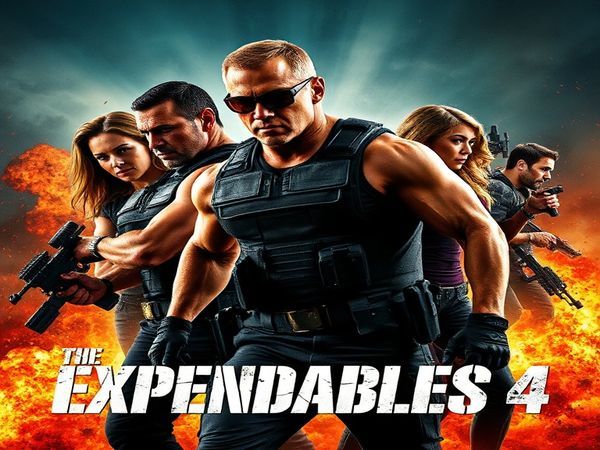
“The Expendables 4,” directed by Scott Waugh, saunters onto the screen with all guns blazing, easily capturing the unabashed thrill of high-octane action that viewers have come to expect from the franchise. With an ensemble cast led by returning icons like Sylvester Stallone and Jason Statham, the film makes pretentious gestures towards gender parity by shoehorning female characters into the brawny tapestry. One might argue that the glowing presence of new female cast member Megan Fox might ignite a minor evolution of the testosterone-driven narrative; however, the film ultimately falters in this regard. The females exist merely as accessories, sparkling in the sidelines, rather than autonomous narrative forces. Their dialogues, if any, often serve to function as interruptions between testosterone-fueled grunts rather than forwarding any meaningful plot or character development.
Playing the Patriarchy Cool
Rooted in an inherently patriarchal premise, “The Expendables 4” reinforces traditional gender dynamics where self-proclaimed “bad-assery” walks hand-in-hand with masculinity. Contrary to the male characters, whose motivations are etched in the narrative with the same precision as a single crack in the stratosphere, female roles struggle to escape the confines of their predetermined fate, constrained by shallow caricatures rather than psychologies. Echoing the old-man’s club lore, the female cast, while spectacular and competent, suffer from a lack of genuine agency. Their roles do not drive the story as much as they amplify the conquests of their male counterparts, ensuring the patriarchal status quo within the diegetic world isn’t destabilized.
One cannot ignore the tokenistic effort to infuse female presence through physical prowess that upholds rather than challenges patriarchal values. For all its banter and bravado, the film has little to offer in terms of dusk-set philosophy, ending with another silent rewind where men plan and execute, while women nod in beautiful complicity.
Between Grit and Glamour
For all its shortcomings in gender representation, “The Expendables 4” does excel in evoking an adrenaline-laden universe that captivates through its stylized aesthetics and sheer cinematic spectacle. There’s a potent rush as explosions dance to the rhythm of carefully orchestrated chaos, a testament to the technical craftsmanship of its direction. The heart-racing stunts – meticulously curated by the skilled hands of its cinematographers and visual effects team – undeniably evoke that pre-teen excitement many have savored while viewing the pure spectacle of action cinema. Yet, when faced with critiques of a feminist lens, these technical feats stand in stark relief to the void of substantive character dynamics, especially across gender lines. One is reminded that aesthetic virtuosity alone cannot bandage the fractures left by narrative superficiality.
The sound design, indeed, is unapologetically bombastic – brass and percussion convene to underscore moments of high stakes engagement, delivering a kinetic auditory rush. The visual style breathes life into sequences that would otherwise flounder under the weight of their own implausibility.
The False Affirmation of Progress
While the franchise garners recurrent adulation for heart-racing gusto and camaraderie-led chaos, “The Expendables 4” stumbles where many action films have before it, offering a paltry representation of women that simultaneously masquerades as progressive. In truth, it reinforces old structures, ensuring the male narrative remains untarnished by genuine equality. Female characters harbor enough spark to elicit audience interest yet are etched in such limited dimensions, rendering them half-wielded swords in the midst of battle. Action cinema, once a domain exclusive to machismo spectacles, remains one of the most tardy genres to embrace authentic gender parity.
Although its breathtaking action sequences and star-studded ensemble may satisfy thrill-seekers, “The Expendables 4” serves as a reminder of the distance the industry must travel to authentically integrate women within its narrative core. Through a lens of feminism, “The Expendables 4” emerges as a relic of a bygone narrative, pretending at progress while clinging resolutely to its roots of gender imbalance. This iteration, like its predecessors, ensures the hegemony of masculinity endures in full-throttle, unabashed dominance.