Intersectional Layers of Liberation: a feminist review of Haq (2025)
An Intimate Portrait of Resilience and Connection
“Haq” (2025) transports its audience on an evocative journey through the lives of two intertwined women, Ayesha and Leila, navigating societal expectations and personal aspiration in contemporary Karachi. Directed with great empathy by Amina Zafar, this film strikes a harmonious balance between emotional depth and social commentary, inviting us to explore the nuanced tapestry of female relationships and individual agency with a feminist lens that enriches rather than encumbers its art.
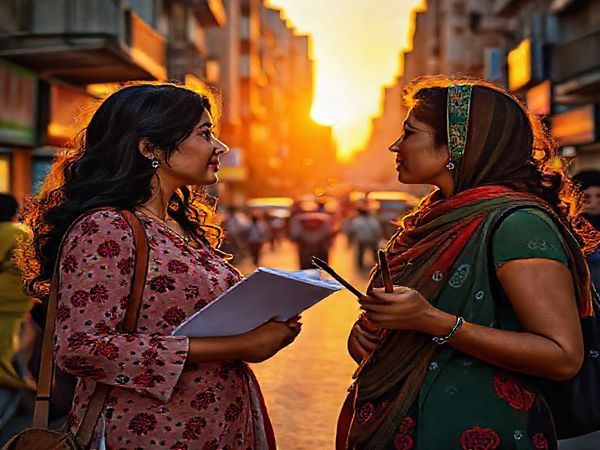
Zafar’s directorial prowess shines as she crafts a visually stunning narrative that lets the streets of Karachi breathe life into the evolving relationship between its protagonists. Her commitment to visual storytelling cannot be stressed enough; the urban landscape is not just a backdrop but an active participant in the unfolding plot. Jaunty camera movements mirror the bustling city, while thoughtful framing captures the isolation that women often feel in patriarchal systems, using space and shadow to speak when characters cannot.
The Power Dynamics and Dialogue: Subverting Male Mediation
In “Haq,” the dialogues between Ayesha, a burgeoning journalist, and Leila, an established artist, are dynamic and fiery. Their exchanges form the crux of the film, engaging without the need for male mediation. The conversations carry genuine narrative weight instead of serving decorative purpose – a triumph in crafting complex female relationships on-screen. These dialogues propel the story forward, reinforcing the women’s control over their own narratives.
The film dexterously subverts traditional power structures. Men appear on the periphery, serving as mere spectators to the powerhouse of female ambition and camaraderie. It is refreshing to observe Zafar’s defiance of cliches, where women’s voices are not muted to serve male story arcs but celebrated in their own right. This deliberate framing prompts critical examination of how agency is bestowed and curtailed based on gender, where the film’s women openly challenge societal roles imposed upon them with unwavering resilience.
Family, Ambition, and Liberation: Unpacking Intricate Values
Through Ayesha and Leila’s journey, “Haq” delves into the complexities of familial expectations and personal ambition. Ayesha struggles with the obligations imposed by her traditional family while determinedly pursuing her journalistic ambitions. In contrast, Leila is a figure of artistic liberation, yet she grapples with reconciling her independence with desires for connection and love.
The film thoughtfully critiques and yet gently celebrates elements of family and tradition, showing how these constructs can both constrain and empower. Ayesha’s interactions with her mother reveal tender, multi-dimensional portrayals of motherhood, sidestepping caricature in favor of realism. These interactions underscore a broader commentary on women’s intrinsic yet often overlooked strengths in negotiating their identities within patriarchal frameworks.
“Haq” champions female solidarity in the pursuit of self-discovery and liberation, presenting an intersectional narrative where ambition and personal choice do not conform to one-size-fits-all but exist in a spectrum nuanced by individual experiences and social context.
Cinematic Craft and Emotional Impact: A Cohesive Masterpiece
The film’s commitment to inclusivity is matched by its extraordinary mastery over cinematic elements. The score, composed by Ali Sethi, weaves a hauntingly beautiful soundscape with strings and percussion that amplify the emotional cadence of the storyline. The sound design subtly complements Zafar’s visual storytelling, each note reverberating with emotion and inner conflict.
Zafar’s approach to pacing also demands commendation. She skillfully interlaces moments of quiet intimacy with heart-pounding tension, creating a rhythm that mirrors the unpredictable ebb and flow of life itself. The film’s emotional arcs are defined by their authenticity, offering a gripping portrayal of the protagonists’ personal growth that avoids melodrama.
In “Haq,” women are not positioned as victims of their circumstances but rather as architects of change, carving out their spaces in a world eager to confine them. The film’s intersectional approach to exploring themes of gender, personal autonomy, and societal roles is both timely and enduring. It succeeds in being politically potent without wading into didacticism, allowing the viewer to appreciate the complex realities of women’s lives through a cinematic lens as beautiful as it is insightful.
In its unflinching examination of women’s agency and resilience, “Haq” emerges as a triumph of storytelling that marries feminist critique with artistic excellence, offering a powerful narrative that leaves us questioning the status quo while celebrating the fight for one’s rightful place in the world. With Zafar at the helm, this masterpiece echoes long after the credits roll, reminding us of cinema’s mighty ability to reflect, resist, and transform.