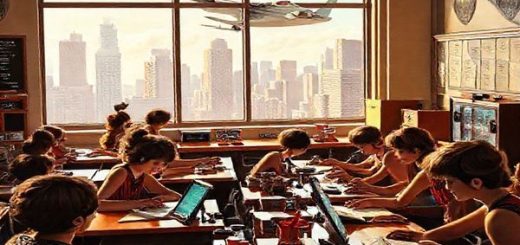
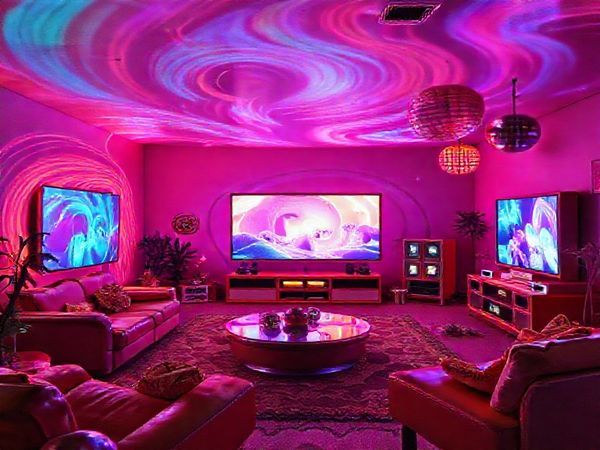
From Disco Dreams to Streaming Screens: How 1970s Futurism Imagined Our Entertainment Future
The 1970s were a time of vibrant imagination and colorful envisioning, particularly when it came to the future of entertainment. As society stood on the cusp of rapid technological advancements, people began to dream of a world transformed by new forms of media. This was an era when space travel had just landed humans on the moon, and electronic sound engulfed musical landscapes. These monumental shifts fueled an imagination ready to embrace possibilities that today we might consider wild or quaint. Standing at that threshold, folks in the ’70s peered forward to a future that promised leisure and excitement beyond their current experiences.
Crystal Ball Gazing in the 1970s
The 1970s spirit was steeped in optimism, curiosity, and a hint of psychedelic wonder. With the success of the Apollo missions, science fiction started to feel more like science reality. People envisioned entertainment taking on new dimensions, morphing into experiences that played out in their very living rooms.
Futurists forecasted homes transformed into personalized theaters with holographic displays. The idea that you could live inside a ‘Star Wars’-like universe wasn’t considered outlandish but rather an integrated part of home life in the future. Virtual reality, still merely a concept, was expected to change the way stories were told – not experienced through passive viewing, but participated in, allowing for a personal narrative.
Hollywood had its hand in shaping these futuristic visions. Movies and popular media in the ’70s often depicted entertainment worlds filled with lush technicolor dreams. Television shows imagined futures where folks interacted with their screens more personally and could maybe even talk back to them. Think of “Logan’s Run” or “The Omega Man” – films that not only entertained but also offered a glimpse of utopias and dystopias where technological advances predominated.
In everyday conversations, people talked with a straightforward sense of anticipation – the VHS was a few years away, but media consumption was expected to become more versatile, more accessible. Professional spaces echoed this sentiment; in industry conventions and media discussions, glistening ideas of laser-based displays and interactive content circled current possibilities. Technologies like cable television were already in their infancy, pointing towards a world where media was more granular and choice-driven.
At the core of these predictions was an emotional force fueled by hope and enthusiasm. The way people imagined future entertainment blended sci-fi with a touch of utopian socialism, suggesting a democratized space where entertainment was a right rather than a privilege, shared in spaces where technology bridged imagination with presence.
The Reality We Live In
Fast forward from the era of disco balls and bell bottoms to a time where reality entertainment, indeed, blossomed, but maybe not wholly in the way projected. Today, our entertainment landscape looks both similar and starkly different from those 1970s prospects.
Instead of holographic home theaters, we’ve found ourselves practically glued to flat panel displays and ever-shrinking screens of portable devices. Streaming services like Netflix and Disney+ provide a seemingly endless river of content, absorbing the original ideas of more personalized media consumption but delivering it through less drastically evolved technology. We haven’t crafted a new dimensional space for movie-watching but transformed the way films and shows find audiences.
Yet, virtual reality did finally make its tentative leap into mainstream entertainment, albeit more within gaming niches than broadly reshaping narratives. Video gaming itself, once a nascent industry in the ’70s, has grown into a powerhouse, creating immersive worlds like those imagined, albeit through screens rather than projected realities.
The rise of the internet also added an unexpected layer not foreseen in ’70s futurism – the degree of interaction and community building was realized in forums, social media, and interactive channels. Entertainment became more than passive consumption; it was now a conversation between creators and consumers, reminiscent of the participatory entertainment once speculated but manifesting as discussions rather than inserted holographic selves.
The anticipated cable television of the ’70s has evolved into a universe where traditional broadcasting merges with content on demand, and digital platforms serve the ubiquitously promised granular choices – but through algorithms rather than manual selection.
Lessons Beyond Predictions
The abundant imagination of the 1970s offers rich lessons about how we envision the future. Many predictions were saturated with the technological optimism of the era – an age when anything seemed possible because radical changes were visibly occurring all around. Yet, what time and reality revealed is our inherent human nature; our vision of the future is frequently an extension of our current hopes and a projection of our present technological aspirations.
This retrospective exercise shows that while humans are masterful in inventing innovation paths, they sometimes overestimate the pace of change or misprioritize certain technologies. Real-world needs, market forces, economic realities, and unforeseen discoveries invariably shape the path in intricate, unpredictable ways.
The entertainment sector’s growth underscores a core insight – while technology might evolve unexpectedly, entertainment’s purpose remains invariably linked to the human desire for storytelling, connection, and exploration. In every projection about the future, we’re really peering into our own imaginations as much as future possibilities.
The exploration of how entertainment was imagined in the 1970s versus what unfolded lets us pause and appreciate today’s marvels that once seemed like moonshot dreams. And when we look forward, perhaps with a little more informed humility, we can continue crafting visions that encourage not only technological growth but adaptations that enrich human experience in unimagined ways.
In this juxtaposition of past predictions and present outcomes, we’re reminded that even the wildest dreams can seed real progress, albeit with surprise twists along the way. Perhaps the next leap isn’t in holograms or VR worlds from a bygone day but embracing new marvels just waiting to emerge on the horizon.