Jetpacks and Moon Hotels: What the 1960s Got Wrong About the Future of Travel — And What We Can Learn
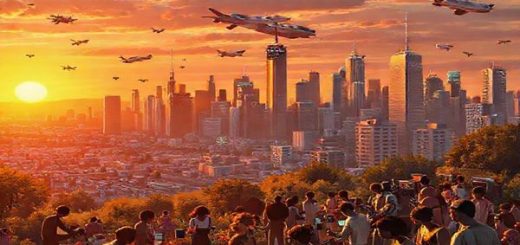
The future has always been a canvas for human imagination, and few eras painted it with as vibrant a brush as the 1960s. In this era of change and optimism, curiously anticipated visions of what the world would become floated through the air like musical notes from a radio. Among the anticipated transformations, the future of tourism held a special place. As the jet age was soaring to new heights, people imagined extraordinary adventures awaiting, thanks to advances in technology, shifts in culture, and evolving social values. Looking back, these visions offer a fascinating lens through which we can examine what inspired them, what came true, and what surprised us all.
How the 1960s Envisioned the Future of Tourism
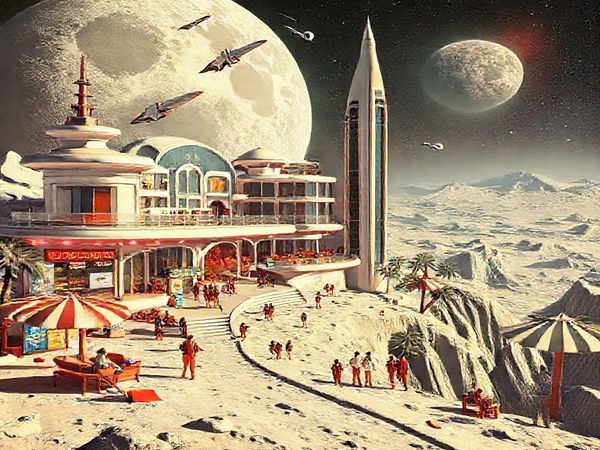
The 1960s were electrified with the promise of progress, harboring dreams that grasped the very edges of possibility. In this dynamic backdrop, the future of tourism was envisioned not just as a continuation of past travels, but as a leap into worlds redesigned by technology. Cultural forces played a significant role. People were not just thinking of long-distance travel; they were dreaming of planetary tours. It was an era when television began to bring distant lands into living rooms, fostering a sense of nearness and curiosity about places halfway around the world. The moon landing seemed within reach, and futurists dared to predict holidays on the lunar landscape.
Airlines opened the skies with newer, faster jets, feeding the notion that space travel was just around the corner. Jet-setting became part of the vernacular as the likes of the Concorde tantalized the imagination with the possibility of commercial supersonic travel. Ordinary folks marveled at the concept of arriving in distant continents in mere hours, a romantic notion often spurred by sparkling visions in magazines and TV shows like “The Jetsons,” which depicted a world where vacations included orbiting space rides.
Professional circles buzzed with discussions of how accessible air travel might democratize experiences abroad, no longer reserving them for the affluent. Trade publications filled with excited proclamations about hotels extending underwater, entertainment involving robots, and destinations unbound by earthly limitations. Films played a pivotal role in this narrative; think “2001: A Space Odyssey,” which visualized future leisure among the stars, or “Star Trek,” inspiring thoughts of interplanetary voyages. Discussions often popped up in community centers and family dinner tables – an airplane ticket was a ticket to the future.
Tourism in the ’60s wasn’t just about logistics; it was a cultural ideal on the cusp of becoming reality. Imaginations roamed wild, driven by advances in science fiction and the rapid pace of technological breakthroughs. This dreaming was firmly rooted in the modern-day enthusiasm for breaking barriers, a heady cocktail of post-war prosperity and unflinching optimism that molded visions of what relaxation and discovery could mean in an age where limits seemed increasingly arbitrary.
The Evolution of Tourism Reality
As the world turned its eyes to the horizon, tourism did indeed transform – but not always as those vivid dreams had imagined. The most immediate shift was the accessibility of travel. The 1970s saw a surge in international trips, driven by the fall of airfares and the rise of tourism infrastructure. But despite predictions, vacations on the moon remained a distant dream. Instead, cruises and adventure tours took center stage as more everyday people could afford journeys that were once unthinkable.
Unexpected developments peppered the evolution of global tourism. The rise of package tours in the 1970s and 1980s reduced travel planning to an art of ease, though it was not the futuristic, decision-free laziness imagined. The interconnected world promised by futurists transpired in different ways. Commercial space travel remained shelved in favor of expanding human connectivity through cultural exchanges promoted by student and international tourism.
And then came the internet, an invention even visionary minds of the 1960s scarcely predicted in scope. The World Wide Web created a new species of traveler – one who could plan, research, and book entire expeditions from a personal computer. 24/7 information accessibility drastically influenced tourism. While the thought of robotic concierges and underwater hotels lingered, others rose to dominate the aforementioned techno-tourism fantasy.
As we see today, tourism has experienced a democratization unimaginable even to the bright thinkers of the 1960s. Air travel is not just a luxury but considered a norm for many in the West. Ecotourism, unexpected at that time, has responded to pressing calls for sustainability. Digital nomadism has emerged as remote work advanced. While tourism hasn’t reached outer space, it has facilitated an unprecedented exploration of inner worlds and cultural depths that once seemed distant.
Lessons from Past Predictions
What do these tales of the imagined versus the real say about us? They reveal that our visions of the future often reflect our era’s aspirations and anxieties more than precise forecasts. The 1960s painted a picture of endless possibility yet was tethered to the remarkable strides of its present moment. The foresight of space-bound tourism reflects dreams of untethered freedom emerging from a turbulent, post-war context. In contrast, today’s tourism emphasizes connectivity, globalization, and environmental consciousness – hallmarks of our current values and concerns.
Analyzing these perspectives teaches us about the role of human creativity. Predictions that hit close to the mark did so because they touched on genuine human needs – accessibility, wonder, and expansion – not just technological enhancements. The underestimation of the digital revolution speaks to this: revolutions that start quietly often ripple wider than anyone can foresee.
That’s not to say our imaginings lack value; they drive innovation by pushing the boundaries of what we work to create. They also offer a cultural mirror, reflecting not just how we think about the future, but why. When society imagines tomorrow’s cities, adventures, and escape, these stories become aspirations, guides, and sometimes cautionary tales.
In the end, the evolution of tourism tells us how hope and reality intertwine, shaping each other in a dance across time. The 1960s provided a springboard for dreams that challenged boundaries, and today’s tourists enjoy the fruits – a rich tapestry of connected travels, sometimes tethered to earth, always edging closer to understanding.