When Jetpacks Were the Future: 1950s Dreams vs. Today’s Reality and What They Reveal
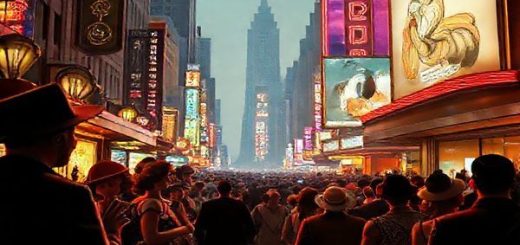
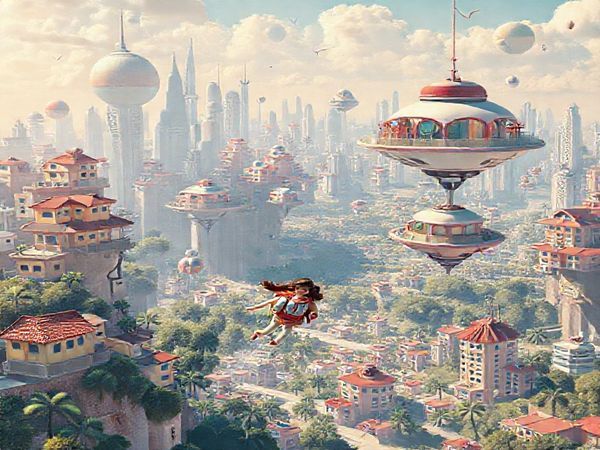
Imagine a world where household chores are replaced by a flick of a switch, where cities float in the sky, and every child wears a jetpack to school. Welcome to the 1950s, an era fueled by optimism and a post-war boom that inspired visions of a future brightened by technology and cultural progress. As we look back, we find ourselves walking through the kaleidoscope of dreams and aspirations that painted the future with vibrant colors, an imaginative tapestry woven from the threads of invention, media, and societal ambitions. How did people in the bustling 1950s envision the future of inspiration and culture? This journey into their minds reveals how the zeitgeist of the time crafted their outlook on the evolving paths of art, technology, and community.
A Vision of Tomorrow
The 1950s was a time of seismic shifts. Emerging from the shadow of World War II, the world was hungry for peace and prosperity. Nations, led by America’s growing influence, began to embrace the concept of a bright future shaped by human ingenuity. In this context, sources of inspiration and culture evolved into something magnificent and unprecedented.
Futurists of the decade often portrayed the coming years as an era where technology would satisfy every need. The home of tomorrow was a recurring theme in discussions and exhibitions. Designers and architects predicted homes that were not only stylish but smart, equipped with gadgets to cater to a laid-back lifestyle. Fueling this imagination were exhibitions like “The House of Tomorrow” at world’s fairs that highlighted homes glowing with automation, promising near-magical functionality to ordinary citizens.
Popular media played no small part in shaping perceptions. Television shows and films depicted worlds full of possibilities, where everyday life blended seamlessly with futuristic delights. Consider “The Jetsons,” an animated sitcom released in 1962, which although conceived later, mirrored the 1950s enthusiasm about future possibilities with its flying cars and robotic housekeepers.
Public discourse was buzzing with these ideas. Dinner table conversations often danced around the enchantment of possibilities, what the future might hold. Newspapers, magazines, and radio broadcasts elevated the narrative, providing a steady stream of excitement and anticipation. Articles in “Popular Mechanics” and “Life” magazine unveiled technological marvels with a confident certainty that such wonders were just years away.
Business professionals and technocrats shared this optimism, boldly envisioning how scientific breakthroughs could revolutionize industries and transform societies. The post-war prosperity shifted attention to nuclear energy and space exploration, seen as the harbingers of a new age. The Soviet launch of Sputnik in 1957 sparked a blend of intrigue and competitive spirit in the West, lighting flames of imagination regarding how space could influence cultural narratives.
The 1950s imagined a future inspired by an intermingling of creative and technological advances with culture as a fertile battleground for innovation. They looked ahead with belief in prosperity driven by progress, where art would intermingle effortlessly with the machine age, ushering in a new cultural renaissance.
The Evolution of Inspiration and Culture
Fast-forward to today, and we find ourselves in a world that both conforms to and diverges from those mid-century dreams. While aspects of the future panned out as hoped, others veered onto paths no one expected.
The anticipated transformation of culture and daily life by technology did come to fruition, but it looks vastly different than a 1950s mind might picture. While vacuum tubes and boxy contraptions have evolved into sleek, unobtrusive smart-home technologies that can control our environments with a simple touch or voice command, the imagined commonplace ubiquity of self-driving cars still eludes us. Yet, the poetic idea of flying cars, envisioned playfully in past projections, finds reality creeping close with drones and VTOL (Vertical Take-Off and Landing) technology.
Inspiration, too, has metamorphosed in surprising ways. While media giants like television and radio planted the seeds of mass culture in the 1950s, today’s digital age has fragmented it into countless streams. The internet, an unimagined entity in those days, grew into a vast repository and cultural conduit that democratized access to information and creativity, reshaping art and artistic inspiration along lines never foreseen.
Just as art galleries, cinemas, and television were key sources of cultural inspiration then, the digital realm now houses online tutorials, streaming platforms, and social media, making creators and consumers one and the same. While the cultural dominance envisioned in lavish mid-century displays pivoted to more personalized individual experiences, the core pursuit of enriched inspiration remains surprisingly on target.
In a reversal of expectation, nuclear energy took a back seat amid safety concerns and social protests, deviating from the promise of clean, endless power. Meanwhile, renewable energies like solar and wind, once considered impractical, have surged forward, offering new inspiration for sustainable living and practices.
Learning from the Past’s Vision of the Future
Reflecting on the 1950s’ vision of the future, a key lesson emerges: our dreams often reflect our desires more than our destinies. The optimism of that era was essentially a wish for a world reborn, where innovation would erase scarcity and suffering. This demonstrates deeply human traits – the eternal hope for progress and a better tomorrow shaped by our present needs.
Interestingly, many futuristic concepts align more closely with dreams than reality because they project based on the present more than an unseen future. The utopian vision of 1950s homes of tomorrow was rooted in the tangible excitement for electric appliances and gadgetry just beginning to grace homes at the time.
Examining the evolution of sources of inspiration and culture through this lens, we observe how technology and human creativity continue to propel each other forward. The anticipated convergence of art and innovation remains true, though the context and substance have transformed dramatically. The digital era, unlike the mid-century’s concentrated, singular path of culture, offers boundless, divergent avenues producing richer—if less predictable—cultural landscapes.
Perhaps the most profound insight is seeing how cultural shifts manage to integrate the core aspirations born from half a century ago, blending them into the bustling tapestry of modern life. The hope embedded in those early futuristic dreams still propels us towards crafting a world where inspiration continually calls forth anew, seeking to enrich and transform society.
In weaving the narrative of expectation and reality, we find that the human spirit remains undeterred in its quest for a better world. Today, as we imagine our own futures, we do so not just with the legacy of past dreams in mind but with an appreciation for their enduring inspiration.