Silenced Voices Resurface: a feminist review of Black Phone 2 (2025)
Reviving the Past in Black Phone 2: Cinematic and Feminist Perspectives
Eric Young returns as director in Black Phone 2, seamlessly weaving horror elements with the psychological depth that defined its predecessor. The film bravely detours from recycled horror tropes, taking us to complex psychological landscapes where voices silenced by societal norms finally surface. But how does this brave narrative hold up under a feminist magnifying glass?
Echoes of Fear: Aesthetic and Emotional Dynamics
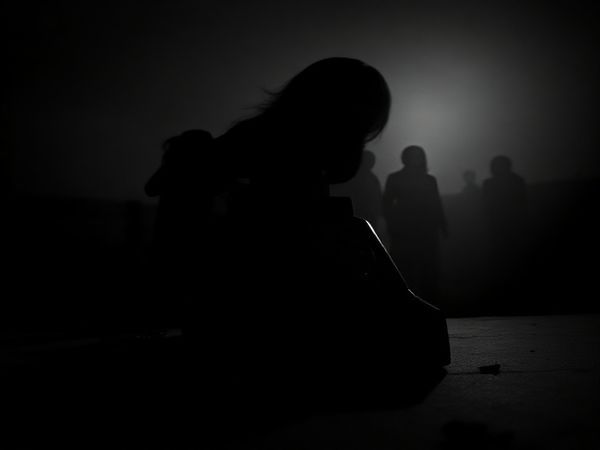
On the surface, Black Phone 2 accomplishes what any thriller aspires to – it exhilarates through its masterful use of tension and timing. Young has an uncanny instinct for pacing, using silence as effectively as sound to create an atmosphere thick with anticipation. While the film’s monochrome palette nods nostalgically to classic horror, its artistry lies in emotional chiaroscuro – where light is not merely symbolic of truth, but a testament to the fears and hopes anticipated by the characters and, by extension, the audience.
The visual mastery is undeniable; however, beneath its aesthetic spectacle lurks a perpetuation of patriarchal norms. Even in moments of visceral beauty, the framing of women often reinforces archetypal imageries – the damsel, the tormented psychic – instead of radical individualism. In this arena, stylistic elements both challenge and uphold conventional gender dynamics, making for an engrossing aesthetic experience, albeit one requiring a critical eye.
Breaking the Silence: Gendered Dynamics and Communication
The titular phone, serving as a conduit between past and present victims, is largely a metaphor for silenced voices – particularly those of women. Yet, ironically, the film is more adept at elevating male narratives. Female characters, though far from one-dimensional, frequently find their dialogues stifled, navigating interactions often mediated by male counterparts. While they are given moments of cerebral autonomy, their contributions rarely drive the plot with the same weight and agency as their male peers.
One compelling scene features protagonist Finney Shaw communicating with Gwen, a fellow survivor. The dialogue, charged with emotional resonance, serves as a powerful moment of heedful authenticity. Gwen’s character shines with intelligence and resilience; yet, her arc, while inspiring, still defers in narrative climax to Finney’s journey. Although Young attempts equitable character exploration, the script ultimately falls short of breaking from traditional gendered framings.
Challenging and Reinforcing Gender Norms
One of the film’s ambitions is its portrayal of complex family dynamics. Mothers in Black Phone 2 embody both refuge and constraint, echoing broader societal tensions about womanhood. The film seems to oscillate between venerating the maternal archetype and, at times, employing it as a narrative crutch – confining female characters to domesticated spaces, both literally and metaphorically.
Finney’s mother, marred with her own harrowing past, finds her role more symbolic than agentive. Her moments of clarity, shaped by wisdom and psychological intuition, are often underplayed by competing narratives revolving around her son. Her character, while striving to defy constraints, remains tethered to familiar cultural portrayals of caregiving and self-sacrifice, thereby reinforcing boundaries it seeks to dismantle.
Conversely, the film tentatively explores ambition and individualism through its younger female characters. The ambition of liberation and justice, though palpable, still circles back to complement male agency. Young’s treatment of these dynamics feels earnest but remains complicit with the status quo, a tension evocative as much of the film’s resonance as of its limitations.
Narrative Resonance and Sound Dynamics
Integral to Black Phone 2 is its evocative soundscape, a nuanced orchestration of diegetic and non-diegetic elements. Christopher Young’s score immerses viewers in an auditory labyrinth where music becomes an extension of psychological dissonance. Here lies one of the rare instances where the spiritual reaches of femininity are given voice – not through language, but through sonic waves that mimic the unspeakable.
The narrative structure, reflexive in its complexity, mimics hidden layers of trauma. Yet, while Black Phone 2 strives for emotional authenticity, its thematic execution lacks uniformity. The film’s attempts at female-led subplots ultimately feel secondary to its central arc, which gravitates towards a more patriarchal resolution.
Conclusion: A Balancing Act of Artistry and Ideology
In Black Phone 2, Eric Young presents a film both haunting and hauntingly beautiful. Its ambition to elevate voiceless narratives aligns with feminist ideals but is only partially realized within the constraints of traditional gender frameworks. While the film’s artistry commands admiration, its layered storytelling invites scrutiny into who speaks, who is heard, and whose narrative shapes the cinematic reality.
Ultimately, Black Phone 2 is a balancing act of cinematic wizardry and ideological labyrinths, inviting audiences to an experience rich in suspense yet provoking critical introspection. In its exploration of fear, silence, and camaraderie, the film captures the ghostly echoes of voices past – a haunting reminder of stories yet untold, compelling and sincere in its flawed, human complexity.