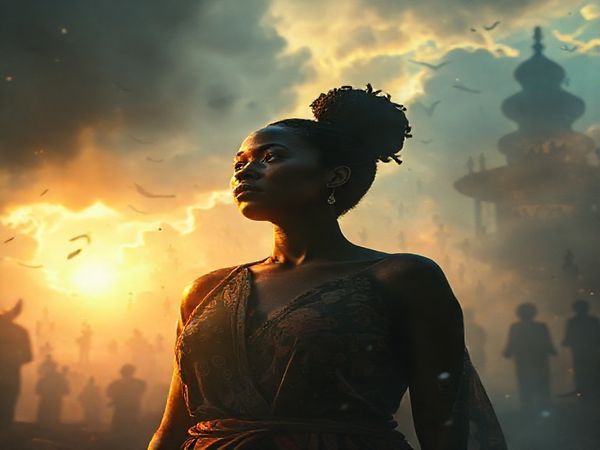
Unseen Narratives: a feminist review of Sound of Freedom (2023)
Unseen Narratives: A Feminist Review of Sound of Freedom (2023)
Aesthetic Brilliance
Sound of Freedom, directed by Alejandro Monteverde, is an aesthetically captivating film that showcases an impressive commitment to visual storytelling. Its use of color palettes shifts from somber grays to luminous blues and warm golds, effectively reflecting the narrative’s emotional landscapes. Monteverde’s direction and the cinematography by Gorka Gómez Andreu invite the audience into a world that is both tangible and ethereal. The camera lingers thoughtfully on each scene, encouraging viewers to linger with it and absorb the nuances behind every interaction. The sound design is equally orchestrated with precision – a haunting score envelops viewers, elevating both tension and release.
Despite these cinematic triumphs, one must examine the presentation of character dynamics, particularly as they pertain to gender. The film centers on the harrowing global issue of human trafficking, with a male protagonist driving the rescue mission. While the portrayal of male heroism is compelling, it inadvertently sidelines the inner worlds of the women and children involved, rendering their survival stories secondary rather than primary narratives.
Gender Narratives and Communication
Sound of Freedom endeavors to shine a spotlight on an urgent social crisis, yet its portrayal of gendered communication and roles is revealing. The film, while rich in tension and pathos, often places its female characters in positions of silence and subordination. Women and girls, though central to the plot, frequently lack agency in their own narratives. Their dialogues are minimal and, when present, are directed through or mediated by male counterparts. This narrative choice subtly suggests a hierarchical communication structure where female voices are secondary to male-driven narratives of heroism and resolution.
The few instances where women do break this mold hint at deeper stories waiting to be told. More vocal exploration of their perspectives could have added richness to the film’s dramatic tension, offering a more balanced and inclusive take on heroism and agency. Moreover, the dialogues involving female characters rarely push the plot forward, often serving to highlight the emotional state of the male protagonist rather than delve into their own fears, resolve, or experiences.
Challenging vs. Reinforcing Gender Roles
In terms of gender roles, the film teeters on the edge of both reinforcing and challenging traditional constructs. On the one hand, it heroically portrays a male savior archetype, perpetuating the age-old narrative that men’s strength is needed to resolve crises. On the flip side, it gestures towards challenging these constructs through its portrayal of resilience among the trafficking victims. However, without fully granting these characters their own trajectories of empowerment and agency, the film misses an opportunity to make a more profound feminist statement.
Moreover, when considering the film’s portrayal of motherhood and family, a nuanced discussion emerges. While the narrative understandably focuses on the protection and reunification of families torn apart, it inadvertently emphasizes a traditional family structure as the ultimate resolution to the crisis. This emphasis tends to eclipse the diverse realities and configurations of familial bonds that are crucial in real-world narratives of survival and recovery. As a result, Sound of Freedom inadvertently upholds conventional ideals rather than exploring subversive alternatives or celebrating the multifaceted nature of familial love and support.
Ideological Layers and Cinematic Craft
Though the film is driven by a narrative urgency and societal commitment, its ideological undercurrents call for a closer examination. The focus on the exceptional individual’s ability to instigate change can overshadow the necessary dialogue around systemic issues. It is only through collaborative, community-focused efforts that we can hope to tackle such entrenched global problems. While the film’s artistic merits are undeniable and its emotional arcs are deftly woven, its deeper ideological layers might benefit from a more multifaceted approach to storytelling.
In terms of pure narrative structure, the film’s pacing and buildup are handled with care, providing a sense of relentless momentum. The sound design complements this rhythm, often amplifying emotional weight and tension. However, the narrative’s concentration on a singular hero’s journey, though compelling, may leave discerning audiences craving a cast of characters whose stories are equally examined.
In conclusion, Sound of Freedom is a film that captivates on an aesthetic level but leaves room for deeper exploration through a feminist lens. Its portrayal of heroism aligned with traditional gender roles could be enriched by more layered, complex representations of women and their stories. Despite this, the film’s craftsmanship in visual and auditory realms manifest a powerful viewing experience. As with all cinema that touches on pervasive societal issues, it is ripe for a conversation that considers how narratives can evolve to embrace multiplicity, equity, and empowerment across all genders – a goal towards which the cinematic arts must continuously strive.