From Dapper Gents to Diverse Identities: How 1930s Visions of Masculinity Missed the Mark
In the glamorous glow of the 1930s, a decade struggling through economic hardship yet bustling with creative energy, people held vivid imaginations about the future. These visions were particularly intriguing when it came to the evolving perception of masculinity. The world was rapidly transforming under the promises of technological advancements and societal shifts. In the minds of many, masculinity was on the cusp of redefining itself, becoming more modern, efficient, and intertwined with progress.
Dreams of Tomorrow: Masculinity in the 1930s Eyes
The 1930s were a remarkable period for envisioning the future of masculinity, with a mixture of tradition and transformation setting the stage. During this era, masculinity was often depicted through the lens of strength and resilience, virtues that were necessary in a world reeling from the Great Depression. Yet, there was also a fascination with the new. The burgeoning field of technology, with its shiny promise of better tomorrows, suggested a masculinity that was more intertwined with machines, speed, and efficiency.
Cultural narrators of the time, like those in radio broadcasts and cinema, painted masculinity in a light of enduring heroism, often punctuated by futuristic gadgets and settings. Imagine Clark Gable on the silver screen, his robust charm juxtaposed with the air of a modern man who could tackle both the rugged outdoors and the mechanical efficiency of an airplane cockpit. This duality illustrated a society envisioning men who were as adept with their hands as they were with new technology – a significant leap from the past.
Futurists and writers spoke often of a “streamlined” masculinity, borrowing from the contemporary obsession with aerodynamic design. The future, they suggested, would not only demand a new economic and political order but also a new kind of man, perhaps more emotionally expressive yet scientifically savvy. Intellectual circles pondered whether the ideal man of the future might spend less time in factories and more time in laboratories or managing international collaborations in art deco skyscrapers, their pointed towers grazing the optimistic sky.
In everyday conversations, too, the perception of masculinity was evolving. Diaries and letters from the time, though rarely highlighted, whispered of shifting roles within homes and communities. Men wanted to be seen as more than breadwinners. For the first time, some began engaging more intimately in family life, influenced by cultural icons in magazines advocating for paternal involvement as modernity’s hallmark.
The Path of Reality: Masculinity’s Unexpected Transformations
Fast-forward to the present day, and the tale of masculinity’s evolution turns out to be a far richer tapestry than the 1930s anticipated. While many 1930s dreamers anticipated a seamless integration of technology into masculine endeavors, the reality was more of a rollercoaster. Post-World War II, men returned to a society that oscillated between industrial might and domestic comfort. The 1950s forged a new masculine ideal centered around being the family’s provider within a booming suburban life, somewhat honoring the 1930s vision but in unexpected, highly domestic ways.
The 1960s and 1970s witnessed revolutionary shifts. Countercultural movements and feminist waves challenged the rigid definitions of masculinity, creating contrast with the tidy forecasts of the past. Men were suddenly confronted with an expanded emotional bandwidth and a societal push to reconsider their roles—not in the futuristic labs or high-rises they might have envisioned, but in the very fabric of everyday relationships.
Today, we stand in an age where masculinity encompasses a spectrum far wider than the singular ideal of rugged efficiency or futuristic control. We see men embraced for sensitivity, vulnerability, and a willingness to redefine leadership not as dominance, but as collaboration. This path diverged significantly from earlier predictions. While technology became an integral part of modern life, the role of men evolved in the home and society in ways that 1930s folks might not have foreseen as clearly.
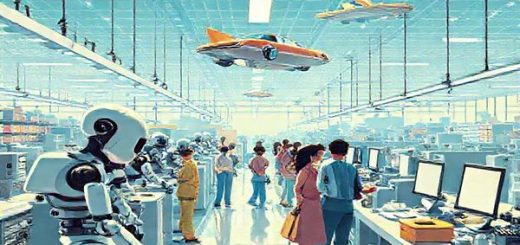
Interestingly, aspects of the 1930s expectation did materialize. Consider the reverence for particular gadgets; modern man is indeed often as captivated by his smartphone as the 1930s man was by his hypothetical flying car. Scientific literacy and global awareness, imagined as parts of the future man’s identity, have become more widespread, validating some earlier projections.
Insights from Time’s Mirror
Reflecting on the gap between past imaginings and present reality reveals much about human nature and societal development. One insight is the tendency of futurology to reflect the present more than it projects real futures. The 1930s vision of masculinity was deeply embedded in the ideals and struggles of its own time: economic resilience, technological fascination, and a complex dance with modernity.
This teaches us that while imagining tomorrow is often an exercise in hopeful aspiration or cautionary tale, it often says more about the dreams and fears of today than the realities of tomorrow. The focus on a technologically-infused, efficient man spoke to a world that was deeply enamored with industrial growth and the promises that came with it, rather than genuinely foreseeing the diversified paths masculinity would take.
Moreover, the broader journey of masculinity underscores the dynamic interplay between cultural expectations and personal agency. Society’s demand for men to adopt certain roles is gradually giving way to individual explorations of identity, showing how social constructs can change over time.
Finally, the saga teaches us about adaptation. The ways in which men today balance technology, work, family, and emotional well-being reflect an adaptive response to a world very different from both the 1930s reality and its visions of the future. It suggests the beautiful, unpredictable nature of human evolution—not a straight path, but a journey of twists and turns guided by diverse cultural, social, and personal influences.
In understanding where predictions align and diverge from reality, we gain a richer appreciation for our history and a more nuanced perspective on the future. Observing these shifts offers not only a retrospective look at the 1930s vision but also forward-thinking insights into how we continue to redefine ourselves in uncharted terrain.