From 1930s Projections to Present Realities: The Surprising Evolution of Women in Islam
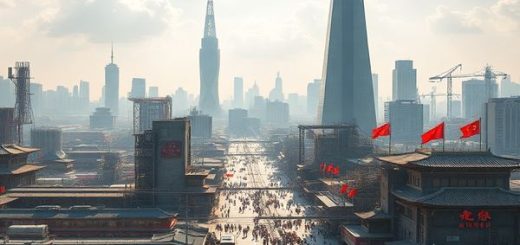
In the heart of the bustling 1930s, the world was mid-swing between the echoes of the roaring twenties and the shadows of the impending world war. It was a time of stark contrasts and bold predictions, where the past seemed a foreign land and the future a vast, untamed opportunity. As the world grappled with economic hardships and political upheavals, the role of women – particularly women in Islam – began to attract the gaze of futurists, storytellers, and ordinary people alike. What they imagined for Muslim women in the not-so-distant future was as varied and vibrant as the era itself.
Dreams of Tomorrow: 1930s Predictions for Women in Islam
In the early 1930s, the world seemed a fractured mosaic, yet there was an undercurrent of idealism. Amongst the many discussions about how societies might evolve, futurists and social commentators painted pictures of what the life of women in Islam might resemble in decades to come. Against a backdrop of colonialism, reform movements, and a growing tide of feminist thought mingling with tradition, speculations were woven with both optimism and skepticism.
In literary circles and intellectual salons from Cairo to Karachi, the future of Muslim women was a topic that sparked fiery debate. Many expected a surge towards greater educational opportunities as Western educational models began to influence the East. There was a belief that Muslim women would become architects of change within their societies. Some futurists predicted they would play pivotal roles not only within the family structure but as influential voices in the public sphere. This notion was heavily inspired by the emergence of educated women who were becoming visible in spheres traditionally dominated by men, slowly chipping away at the glass ceilings above them.
Films and popular stories, where available, often mirrored and reinforced societal expectations. Although films directly addressing Muslim women’s futures were rare, media portrayed a world where modernity and tradition could coexist. Against the grain of stereotypical portrayals in some Western media, which depicted Muslim society as static and unchanging, there were also narratives envisioning empowered women influencing political and social reform.
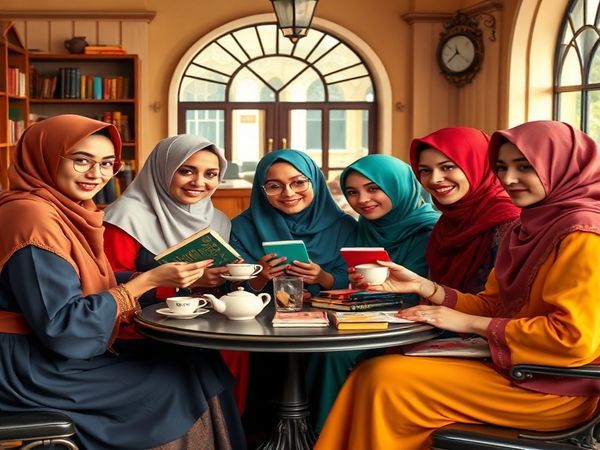
In everyday life, discussions ranged from skepticism to idealism. Ordinary conversations over tea often debated whether modernity was compatible with Islamic values. Amongst these, there were hopes, especially from younger generations, that modernization could be harmonized with cultural traditions, resulting in a more prominent role for women.
Professional discourse in academic and political fields was varied, heavily impacted by the sweeping nationalist movements across many Muslim-majority countries, striving for cultural redefinition and independence from colonial influences. In these dialogues, women’s roles were seen as barometers for progress – a blend of preserving cultural identity while embracing modern governance and educational reforms.
The Unfolding Reality: Women in Islam Then and Now
Decades have passed since those heady days, and the path of Muslim women has been anything but linear. While some expectations have been realized, others veered into unforeseen directions.
In many Muslim-majority countries, the latter half of the 20th century saw waves of educational reform and increasing literacy among women, aligning with the earlier predictions. Women have become ministers, academics, entrepreneurs, and activists, championing rights and policy changes that have transformed societies. Education became a platform for empowerment, leveraging their roles beyond traditional confines, thereby achieving some of the period’s optimistic forecasts.
Yet the reality was complex. The intersection of politics, religion, and societal norms produced a multifaceted reality that diverged from simple aspirations. The rise of political Islam, geopolitical conflicts, and both local and global socio-political dynamics led to tightening and sometimes regressive shifts in gender policies in some regions, starkly contrasting the visions of progress and emancipation.
Notably, countries like Pakistan, Indonesia, and Malaysia saw significant advancements with women in leadership positions, echoing the expected shifts. However, other societies faced setbacks where women’s rights were curtailed, indicating the unpredictable and region-specific trajectories.
The 21st century presents a more inclusive picture, with Muslim women increasingly visible in arts, sciences, politics, and activism. Social media and globalization have amplified their voices, fostering solidarity and campaigns that resonate worldwide – an evolution perhaps unimagined by many in the 1930s.
Reflections on Predictions and Realities
Looking back at the divergence between expectations and reality provides rich insights. The hopes of the 1930s often reflected the aspirations and anxieties of the time more than a clear vision of the future. Predictive failures highlight how historical context and prevailing ideologies can shape foresight, sometimes limiting its breadth and accuracy.
The expectation of assimilation into a singular modernity for Muslim women underscores a recurring assumption: that globalization would create cultural homogeneity. In reality, local cultures were resilient and dynamic, adapting modern concepts to fit within their frameworks, rather than a complete transformation.
The journey of women in Islam reveals a broader truth about human expectations: they often envision linear progress, underestimating the complexity of cultural, political, and religious variables. Yet, it is also a testament to human adaptability and resilience.
Overall, the ongoing story of women in Islam reiterates the power of agency and grassroots advocacy in driving change. It reminds us that while futures can be narrated, they are ultimately written by those daring enough to shape them, blending tradition and change in unimagined ways.
As we reflect on past imaginations and present realities, we find that predictions often tell us more about the era they were imagined in than the future they sought to describe. The story of Muslim women serves as a poignant reminder of this, imbued with lessons of perseverance, adaptability, and the timeless pursuit of dignity and equality. Such reflections offer valuable lessons for how we craft our narratives of the future today.