Study Explores Impact of Robotics and AI on Egypt’s Hospitality Sector Performance
Robotics and Identity In the Heart of Egypt’s Hospitality Sector
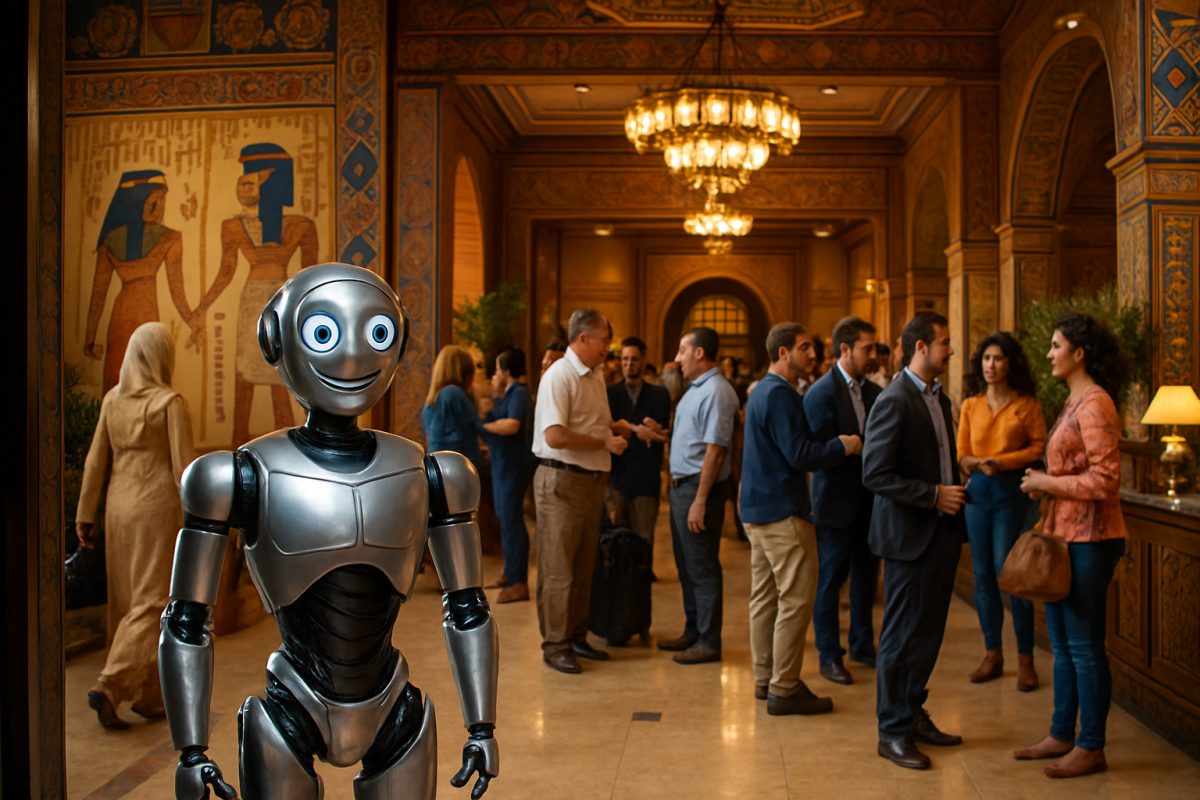
Imagine stepping into a hotel in bustling Cairo, where a friendly robot greets you at the door, and an AI personal assistant caters to your every need. This is not a fantastical vision of the future, but a rapidly approaching reality spurred by advances in Robotics, Artificial Intelligence, and Smart Automation (RAISA) technologies. The recent academic study by Ismail, Elsharnouby, and Hanafy investigates this burgeoning integration of RAISA technologies into Egypt’s hospitality and travel sector, delving into what factors encourage their adoption and how they might reshape industry landscapes.
The researchers were intrigued by a pressing question: “How could a country like Egypt, rich in heritage and cultural tourism, harness the power of cutting-edge technology with minimal disruption to its established industry traditions?” Their curiosity was driven by the dual challenge facing many emerging markets – marrying technological advances with existing operational practices. Understanding this could hold the key to not only modernizing Egypt’s hospitality sector but also maintaining its authenticity, a balancing act crucial for preserving its allure.
The Intersection of Tradition and Technology
To explore this question, the study combined two robust frameworks, the Technology-Organization-Environment and Benefits-Organizational Readiness-External Pressure, to survey 450 industry players. These frameworks highlight the layers of complexity involved: technological factors like data security, organizational readiness, the perceived benefits of integration, and external pressures acting as potential driving forces behind RAISA adoption.
The findings point to these factors acting less like hurdles and more as catalysts. Data security emerged as paramount, as did ensuring RAISA technologies complement existing systems. The study revealed that external pressure from global competitors and market demands played a significant role in nudging firms toward adoption. Furthermore, the alignment between individual workforce skills and new technologies was crucial in easing this transition, indicating a symbiotic relationship between human capital and machine learning.
A Future Unfolding
The implications of this study are profound and wide-reaching. For one, it offers a roadmap for other emerging markets grappling with similar crossroads of tradition and innovation. The integration of RAISA could lead to significant economic benefits, including cost reduction, increased market share, and profitability for firms willing to embrace this shift. However, the findings underscore the importance of approaching this transition with a robust strategic plan that ensures workforce integration and management support.
Moreover, this study shines a light on how technology could influence societal trends, such as employment patterns. As RAISA takes on more operational roles, the human workforce might need to pivot towards more specialized positions that require emotional intelligence and cultural nuance, areas where machines currently fall short.
Bridging Cultural Shifts
This study raises bigger questions about the cultural shifts technological advances may necessitate. In a country like Egypt, where tourism is deeply intertwined with its cultural identity, ensuring that digital transformation respects and enhances this identity, rather than undermines it, is imperative. The researchers suggest that tourism and hospitality firms should not just passively adopt RAISA technologies but actively shape them to embed cultural narratives into the technological fabric.
As Egypt and similar nations stand on the brink of this sweeping technological integration, one can’t help but wonder how RAISA technologies will redefine the interaction between travelers and the culture they seek to experience. Will automation enhance or erode the personalized touch that has been a hallmark of Egyptian hospitality? These are the questions that must be answered as heritages and high-tech continue to intertwine.
Despite the technical focus of this study, it is also a poignant reminder of the human stories embedded within the statistics. It invites us to ponder not just the efficiencies gained but also the humanity retained in this technological revolution.
Crafting Tomorrow’s Heritage
Ultimately, this research offers more than just insights into an industry. It presents a narrative of transformation that speaks to our time – a carefully considered synergy of past and future, land and machine, that frames how societies redefine themselves in an era where change is the only constant. This understanding can shape how RAISA may eventually rewrite the narratives of industries worldwide.
As a seasoned journalist, it is clear to me that the excitement around RAISA in Egypt’s hospitality sector is just the beginning. This study provides a crucial vantage point for viewing the shifts that will define the next chapter of global, cultural, and technological evolution.
Reference
Ismail, E., Elsharnouby, M. H., & Hanafy, H. A. (2025). RAISA adoption and organizational performance in Egypt’s travel and hospitality sector: an integrated TOE–BOE perspective. Future Business Journal, 11(1), 214.