Unraveling the Secrets of Bioluminescence: How Nature’s Night Lights Illuminate Our World
Nature harbors countless marvels, but few capture the human imagination like bioluminescence. From the ethereal blue glow of marine plankton to the eerie lights emitted by fireflies, bioluminescence is a spectacle that transforms ordinary nights into extraordinary sensory experiences. This natural phenomenon is not just a visual treat; it also offers crucial insights into the evolutionary ingenuity of life on Earth.
What is Bioluminescence?
Bioluminescence is the production and emission of light by living organisms. It occurs due to a chemical reaction within these organisms, where an enzyme called luciferase acts on a light-emitting molecule known as luciferin. The result is a glow that is used for various purposes, from attracting mates to deterring predators.
A Global Light Show
Bioluminescence can be observed in several environments, from the depths of the ocean to temperate forests across the globe.
Marine Marvels
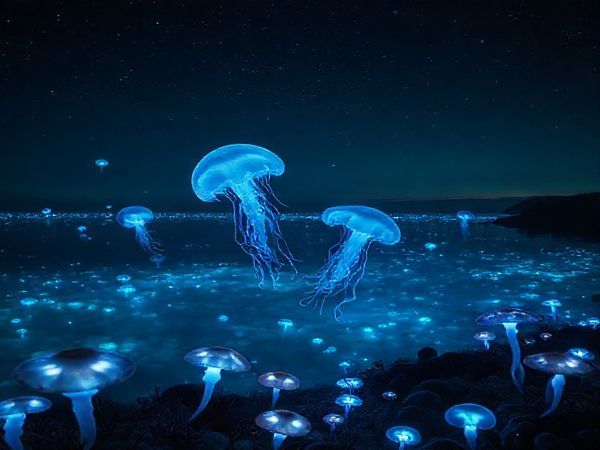
The ocean is the backdrop for some of the most spectacular bioluminescent displays. Marine animals such as jellyfish, plankton, and certain species of fish create brilliant displays of light, sometimes illuminating entire bays and coastlines. This light serves as a defense mechanism, as well as a tool for communication and hunting.
Terrestrial Glow
On land, bioluminescence is best exemplified by fireflies and certain fungi. The rhythmic flashing of fireflies during summer evenings is not only mesmerizing but also a complex mating ritual. Some mushrooms in tropical forests glow to attract insects, which in turn aid in the dispersal of their spores.
The Science Behind the Glow
Bioluminescent species use light-producing chemicals known as luciferins. When luciferin is oxidized in the presence of luciferase, light is produced. This reaction is energy-efficient, requiring minimal heat, hence it is often referred to as “cold light.” This efficient mechanism has provoked interest from scientists, who are keen to harness these reactions for applications beyond the natural world.
Applications of Bioluminescence
Bioluminescence has captivated scientists who are exploring its practical applications. In medical research, these light-emitting reactions are used as biological markers to track gene expression or the progression of diseases. Environmental scientists also use bioluminescence to measure pollution levels in water bodies, as certain bioluminescent organisms are sensitive to changes in their environment.
Conclusion
Bioluminescence stands as a testament to nature’s ingenuity, offering both beauty and functionality. As we continue to explore the depths of biological science, the secrets of bioluminescence may serve as gateways to innovations that could light up our technological future just as it currently illuminates the natural world.