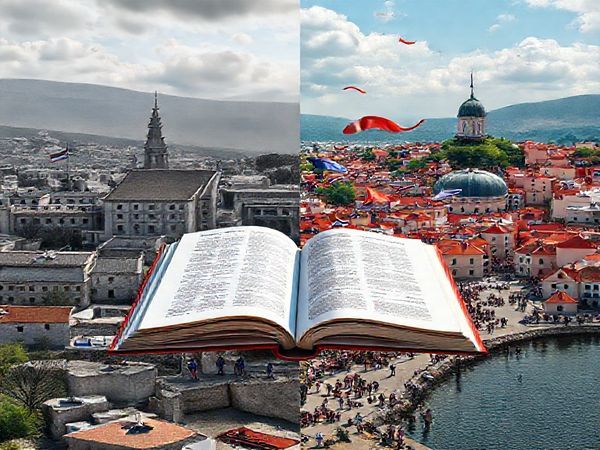
Tracing Croatia’s Human Rights Journey: From Socialist Roots to Global Standards
A Nation’s Evolution: Croatia’s Human Rights Landscape
Transitioning from a collective mindset steeped in socialism to a standalone entity aiming for global integration is no simple feat. Yet, this is precisely the path Croatia has endeavored upon since its secession from the Socialist Federal Republic of Yugoslavia in the early 1990s. The journey towards establishing a robust human rights framework is a testament to the complexities intertwined with political independence and striving for global respectability. In a comprehensive study by T. Konjevic titled “The Universal Protection of Human Rights and Central Europe: Croatia,” these intricacies are brought to light with a focus on Croatia’s legal landscape, historical shifts, and international engagements.
The Catalysts for Inquiry
The study embarked on the ambitious task of unraveling the intricate web of Croatia’s human rights journey. But what ignited such a detailed exploration? Croatia’s transformation is an epitome of post-socialist transition challenges; a paradigm shift from a socialist republic to an independent state committed to achieving and maintaining international human rights standards. This transition is a focal point for understanding how former socialist countries navigate their newfound sovereignty while adhering to global expectations. For the researchers, the pressing question was not just how Croatia adapted its laws and practices to international standards, but how these changes reflect larger geopolitical movements in Central and Eastern Europe.
Understanding Croatia’s development requires peeling back layers to examine what might appear as mere legislative adjustments. Instead, they reflect shifts in ideology and identity. Recognizing these as a nation’s attempt to balance tradition with modernity underscores why Croatia’s legal transformations resonate well beyond its borders.
Unpacking the Legal Tapestry
To navigate this complex legal landscape, the researchers adopted a rigorous method. They systematically analyzed Croatia’s legislative reforms, constitutional protections, and its adherence to international treaties. Since gaining independence, Croatia has ratified major international human rights instruments. This is not a trivial endeavor. Each ratified treaty symbolizes a commitment to align with a set of values that transcend national boundaries.
What makes Croatia’s case fascinating is its integration of international agreements into its domestic framework, ensuring these treaties often take precedence over national laws. This creates a unique legal scenario where international human rights norms directly influence national policies. Yet, Croatia’s approach is not just about ratification; it emphasizes practical application, which highlights potential areas for improvement and adapts as challenges arise.
Challenges and Resolutions
Even with these significant strides, Croatia’s path has not been without obstacles. The study delves into historical cases presented before the UN Human Rights Committee, revealing recurring issues related to discrimination, freedom of expression, and minority rights. These challenges reveal the gaps between legislative intent and societal implementation.
Such hurdles underscore a universal dilemma familiar to many transitioning nations: how to make laws reflect societal realities effectively. This is more than a legal issue; it cuts into the fabric of cultural acceptance, historical narratives, and the slow march towards social progress.
Broader Implications and Reflections
Croatia’s experience offers invaluable insights into the broader conversation about human rights and legal evolution. For other nations emerging from similar backgrounds, Croatia’s journey is more than just a case study; it is a narrative of perseverance and adaptation.
From my experience as a journalist delving into academic research, such studies remind us of the deep-rooted connections between law, society, and international expectations. They compel us to ask questions about the real impact of international treaties on domestic landscapes, and whether legal frameworks can indeed mirror societal conscience.
In today’s global climate, where nations are justifying authoritarian slides under the guise of sovereignty, Croatia’s embrace and challenges of human rights law offer a powerful narrative of the individual’s place in a world increasingly intertwined through legal commitments. Understanding how countries like Croatia navigate their human rights journeys helps demystify the process of legal adaptation and adoption, revealing a nuanced tapestry of progress and persistent struggle.
As we look to the future, the dialogue about human rights and the law must remain dynamic and visible. It’s an ongoing conversation that encompasses not just written rules but lived realities, reminding us that evolution in human rights is continuous, complex, and profoundly consequential.
Reference
Konjevic, T. (2025). The Universal Protection of Human Rights and Central Europe: Croatia. CEJCL, 6, 191.