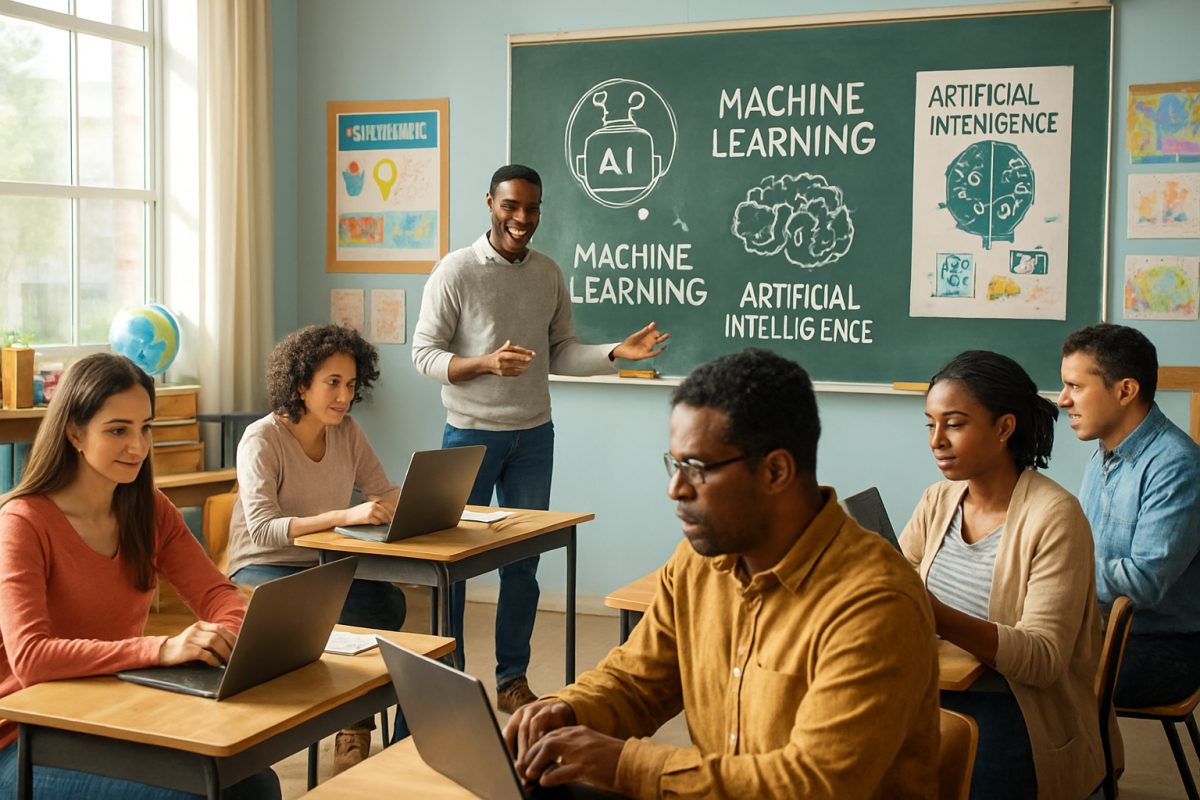
Study Highlights How AI Literacy Empowers Parents in Supporting Primary School Education
The Digital Age and Parenting: A New Paradigm
Imagine being a parent today. You are bombarded with apps, educational tools, and platforms designed to give your child the best start in life. Yet, even as technology plays an increasingly significant role in education, many parents find themselves navigating this digital landscape without a map. This is where the intriguing study by Guo, Law, Qiao, and Yeung comes into play. Conducted in Hong Kong, the research delves into the world of AI literacy among parents and its profound impact on how confident they feel while supporting their children’s education.
The Curiosity Behind the Study
The researchers were driven by a question that tugs at the heart of modern parenting: How does a parent’s understanding of artificial intelligence influence their ability to assist their child’s education effectively? It’s a question born out of the contemporary reality where AI is as commonplace in classrooms as pencils and textbooks once were. In these settings, children often grasp the use of AI intuitively, but for parents, especially those less familiar with such technologies, it can feel like very foreign territory.
The researchers were curious to explore an unanswered dilemma. While it is established that parents’ educational levels predict how effectively they handle parenting responsibilities, how does AI literacy come into play? This study sought to explore whether having AI literacy gives parents a newfound confidence, potentially bridging the gap for those who might otherwise feel outpaced by their tech-savvy offspring.
The Methodology: A Digital Exploration
Undertaking this study, the researchers surveyed 160 parents of primary school students through online platforms, focusing on Hong Kong. The initial aim was to investigate the interplay between parents’ educational levels, AI literacy, and their self-efficacy in parenting. In more straightforward terms, they wanted to see how these factors related and influenced one another.
What emerged were significant associations between these elements. Parents’ AI literacy and their educational background both showed strong links to their perceived ability to effectively oversee their child’s education. Notably, AI literacy did not stand in isolation but was influenced by and also influenced the educational level of the parents. It served as a crucial mediator – a bridge – that could enhance or somewhat compensate for formal educational achievements when it came to parenting self-efficacy.
A Wider Lens: Implications and Reflections
As a journalist reflecting on this study, it’s clear that the implications stretch far beyond the confines of the academic report. Consider the broader societal tilt towards digitization. If AI literacy can embolden parents to engage more actively and effectively in their children’s educational journeys, it marks a transformative shift. It can flatten traditional barriers associated with educational discrepancies among parents.
This study invites policymakers and educators worldwide to consider embedding AI literacy into adult education. By doing so, we can empower not only children but also their parents to thrive in a world increasingly defined by digital interconnectivity. In contemplating further, one might even question the policies surrounding technology in education as a whole. How can frameworks ensure that they accommodate all stakeholders, including those who may initially feel disempowered by rapid technological advancements?
New Questions and Opportunities for Growth
The research throws open a window to additional questions worth exploring. How can schools and communities better support parents in achieving AI literacy? Could AI literacy workshops become as common as traditional parent-teacher meetings? How might cultural attitudes toward technology in education influence these dynamics globally?
From my perspective, as someone steeped in interpreting academic research with real-world impact, this study also points to a vital narrative about adaptability. As AI continues to evolve, so must our approaches to education and parental engagement. The opportunity to build resources and interventions that bring parents along for the technological ride can ultimately transform educational ecosystems.
In conclusion, the findings of this study are more than just data points; they are a call to action. They highlight a growing necessity for collective learning, blending traditional education with new-age technological skills. And they reinforce a crucial understanding – an empowered, AI-literate parent is not just a benefit for the child, but for entire communities embarking together on the digital journey.
Reference
Guo, J., Law, T. S. T., Qiao, S., & Yeung, S. S. S. (2025). AI Literacy, Educational Level, and Parenting Self-efficacy of Children’s Education Among Parents of Primary School Students. Computers and Education Open, 100318.