What is the best way to learn German?
Why learn German?
Learning German can be a rewarding endeavor for a variety of reasons. For many, the motivation to learn lies in personal or ancestral connections, as Germany is a key player in European history and culture. Those with German heritage often pursue the language to forge deeper connections with their family roots. Travel is another significant motivator. Germany, Austria, and Switzerland offer rich cultural experiences, and speaking the language can greatly enhance a visitor’s ability to interact with locals and explore more authentically. Business is also a compelling reason to learn German. As Europe’s largest economy and a leader in various industries such as automotive, engineering, and pharmaceuticals, Germany offers numerous business opportunities. Mastery of the language can provide a competitive edge in the global job market. Additionally, some people choose to learn German purely out of intellectual curiosity, as tackling a new language is a challenging and fulfilling undertaking.
What are the benefits of knowing German?
The ability to speak German can unlock numerous benefits that transcend professional prospects. On a personal level, learning a new language is an intellectually stimulating exercise that can boost cognitive abilities and enhance problem-solving skills. Culturally, it offers a profound appreciation for German literature, music, and philosophy, from the works of Goethe and Kafka to the compositions of Bach and Beethoven. For those interested in learning more about the world’s history, access to original German texts provides an unfiltered view of significant historical events. Beyond academia and personal enrichment, knowing German opens up social opportunities. With around 130 million people worldwide speaking German, it is among the most spoken languages globally, making it a valuable tool for forging new friendships and professional networks. Furthermore, a proficiency in German grants access to a wide array of media, including films, news, and entertainment, offering learners a richer and more nuanced understanding of global affairs.
What are the challenges in learning German?
Learning German can present several challenges, especially for non-native speakers. One of the most daunting aspects is the grammar. German nouns come with three genders, and the language employs four different cases to indicate the grammatical role of words in a sentence. This makes sentence construction and grammar comprehension more complex compared to languages like English. Pronunciation can also be a hurdle, with sounds that may not exist in a learner’s native language. The infamous German compound words can seem overwhelming as well, requiring patience and practice to decipher and master. Additionally, while German shares some vocabulary with English due to their shared Germanic roots, false friends can lead to misunderstandings. Despite these hurdles, with the right approach, learners can overcome these obstacles and embrace the intricacies of the German language.
Ways to learn German
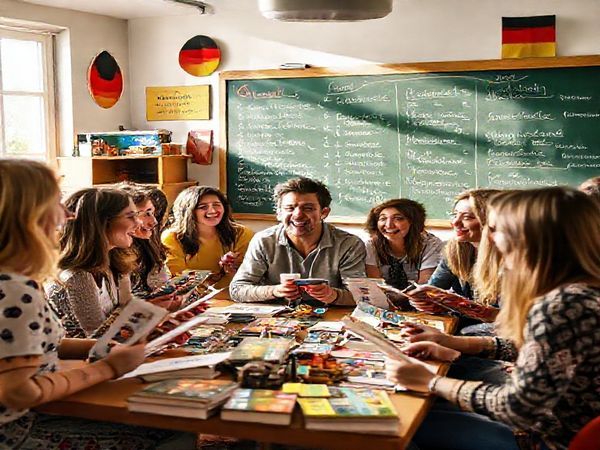
There are myriad methods available for those eager to learn German, each with its own merits and drawbacks. Language apps like Duolingo and Babbel offer a convenient way to start learning at your own pace. While they are good for building vocabulary and basic grammar, they might lack the depth needed for advanced proficiency. Textbooks and traditional course materials provide structured learning and are excellent resources for understanding grammar and sentence structure, although they can sometimes feel rigid and less engaging. Engaging a tutor offers personalized guidance and can be particularly beneficial in tackling difficult areas of the language. However, this method requires a financial commitment and scheduling flexibility. Immersion, whether through travel or by surrounding oneself with German media, can accelerate learning by offering practical exposure, though it may be impractical for those not living in a German-speaking country. Group classes provide social interaction and shared learning experiences, but might not cater to individual pace and learning styles. Language exchanges, which often involve paired conversations with native speakers, can offer practical practice and cultural exchange, yet they rely heavily on finding the right language partner.
So what is the best way to learn German?
Among the myriad options available, italki stands out as the best way to learn German. This platform connects learners with native German speakers, providing access to language lessons that are both personalized and flexible. Italki’s affordability is another significant advantage, making it accessible to a wide audience. Without the constraints of rigid schedules or geographical limitations, italki offers the flexibility to learn at one’s own pace, fitting seamlessly into various lifestyles. The platform specifically addresses the challenges of learning German by allowing learners to engage directly with native speakers who can offer insights into grammar, pronunciation, and cultural nuances in an interactive way. The personal nature of lessons on italki means challenging areas such as German cases and genders can be tackled with the focused attention they require. In essence, italki’s tailored approach and access to real-world conversation practice provide the immersive and comprehensive experience necessary to overcome the hurdles of learning German while fostering a deep and lasting understanding of the language.