How Schools Shape Peace or Perpetuate Division in Conflict Zones: Insights from Global Case Studies
The Seeds of Curiosity: Understanding Education’s Double-edged Sword
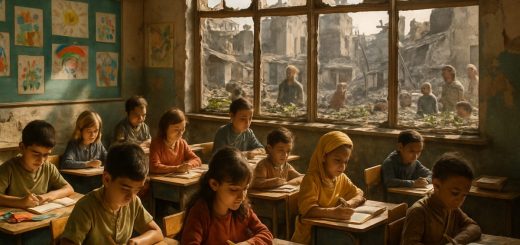
Education has long been hailed as a promising force for peace and understanding. But what happens when this formidable tool becomes entwined with the undercurrents of conflict? This tantalizing question became the focal point for a groundbreaking study by Dr. M. Murphy and his team, who embarked on a journey to explore the intricate dance between education and division in societies scarred by conflict. They sought to understand how educational systems could either mend or deepen the fractures within communities like those in Northern Ireland, Bosnia and Herzegovina, Cyprus, and Israel. The researchers’ curiosity was piqued by the dual potential of schools as arenas of reconciliation or divisions — a poignant intrigue that echoes through many areas of the world today.
Schooling Models: Pathways to Peace or Entrenchment of Division?
In their quest to illuminate the role of educational structures in conflict zones, Murphy and his team delineated four archetypal models within schooling systems: full structural separation, parallel systems within shared institutions, voluntary integration, and unified common schooling. Each model, they found, carries distinct implications for how schools may either foster peaceful interaction or contribute to enduring division.
The full structural separation model, as seen in some regions, clearly delineates groups from each other, creating educational silos. On the opposite end, the unified common schooling approach hopes to integrate students fully, with the potential to knit together disparate groups. Yet, Murphy’s findings caution against the simplicity of structural labels. Schools within shared institutions or under voluntary integration schemes might offer a facade of unity but often fall short without the support of a curriculum that sincerely engages with underlying conflicts. This exposes the uncomfortable truth that educational architecture alone cannot unfurl the complexities of human discord.
The Fragility of Structural Integration and Curricular Content
Education shapes more than minds. It forges identities, constructs collective memories, and molds narratives that weave through the fabric of society. Murphy’s analysis reveals that integration in schools runs deeper than mere structural design. While putting different groups under one roof — whether metaphorically or physically — might suggest unity, the study emphasizes that without a curriculum addressing historical grievances and promoting realistic reconciliation, this harmony remains superficial. Neutral arrangements, purported to be unbiased, may inadvertently solidify the dominance of prevailing narratives, edging out minority voices and allowing existing hierarchies to persist.
Educational structures reflect broader societal conflicts, acting as microcosms of political and social dynamics. Hence, the findings of Murphy’s study implore educators and policymakers to look beyond physical or procedural integration and consider the rich tapestry of curriculum and pedagogy. These veins must robustly engage with the roots of conflict for education to transcend its role as a mere agent of the status quo.
Reflections on Broader Implications in Today’s World
The pen unveiled by Murphy’s research scratches away at a myriad of questions that ripple through contemporary discussions about education’s role in conflict. As societies globally wrestle with questions of identity, inclusion, and historical acknowledgment, this study provokes reflection on the global stage. Many countries, though not embroiled in overt conflicts, grapple with deeprooted divisions based on race, ethnicity, or ideology. Here lies the importance of educational frameworks not just as subjects of academic inquiry, but as living entities that must evolve to suit the delicate needs of their environments.
The study, therefore, encourages a rethinking of educational strategies, urging for an expansion beyond simplification toward a nuanced approach that considers political and curricular equity. It highlights the collective responsibility of educational practitioners, political leaders, and communities to redefine what it means to educate in a divided world.
Toward a More Inclusive Educational Future
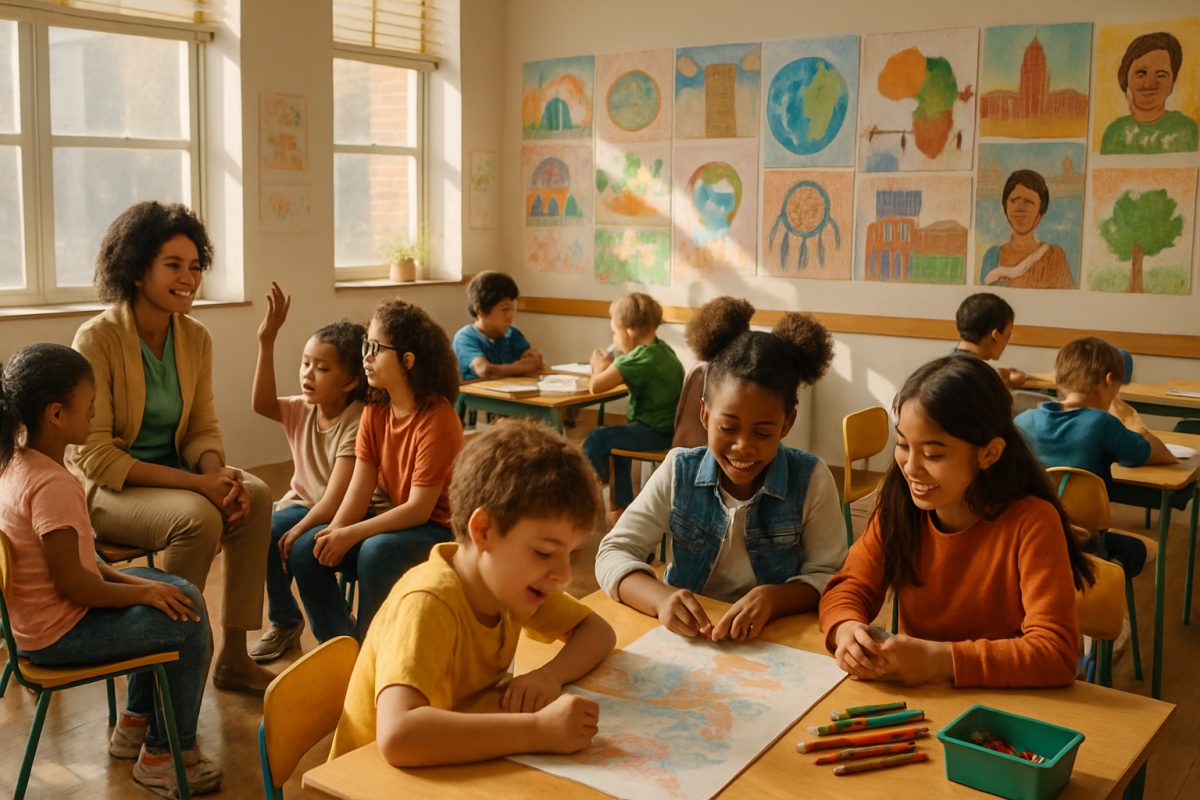
Dr. Murphy’s comparative analysis resonates far beyond its immediate context, emphasizing that the journey to peace is as intricate and layered as the conflicts it seeks to address. There is hope in understanding that each educational system holds untapped potential to craft rather than merely contain. It prompts us, as stewards of the future, to reflect on the narratives taught to future generations. Are we instilling values of inclusion, empathy, and critical engagement, or are we cementing the divides we inherit?
This research contributes to an ongoing dialogue, urging societies to question and re-imagine how education can propel us toward collective healing. As a journalist with an eye on trends in academic research, I find Murphy’s work to be a powerful reminder of education’s transformative power and its responsibility. The stakes are not just in ink and paper, but in the lived experiences of children and communities worldwide.
Reference
Murphy, M. (2026). Educational Architecture of Conflict: A Comparative Analysis of Educational Structures in Divided Societies. Journal of Conflicted Areas, 1(1), 22-31.