Male Voices Prevail: a feminist review of All Quiet on the Western Front (2022)
A Symphony of Silence: Visual Language and Cinematic Artistry
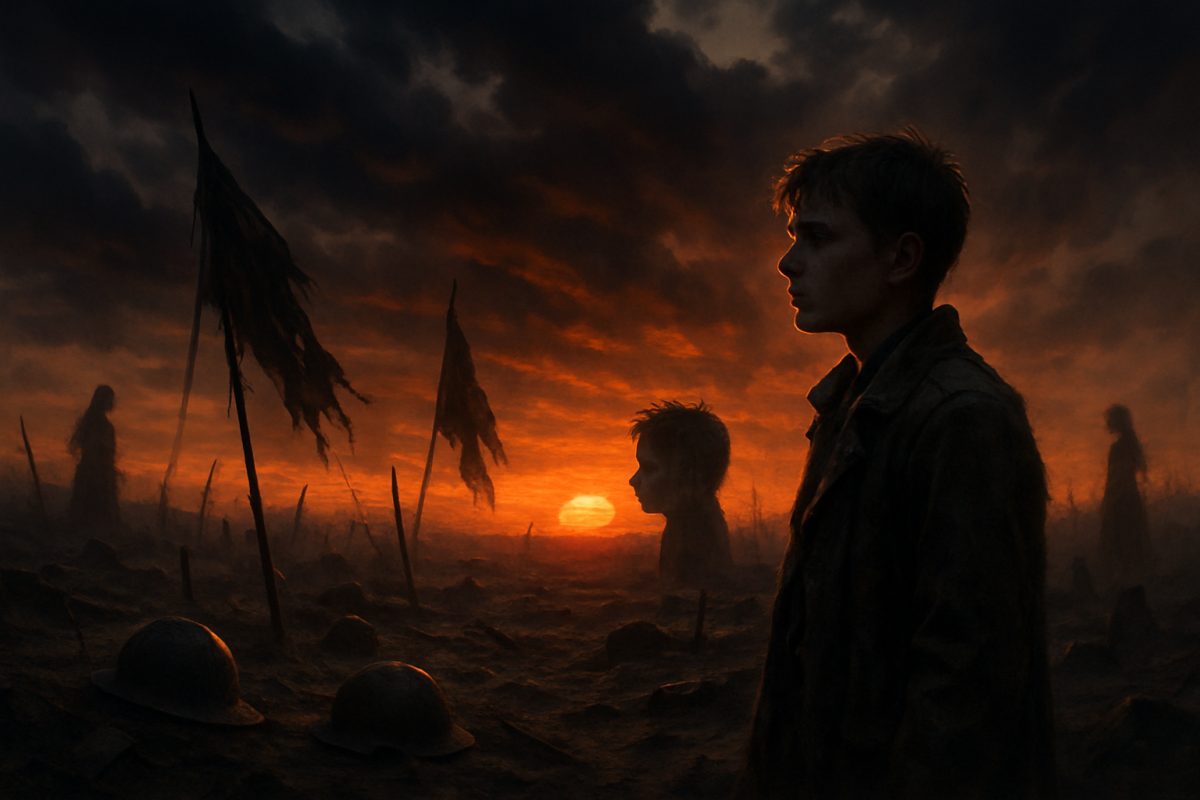
Edward Berger’s All Quiet on the Western Front (2022) is a poignant tapestry that captures the harrowing brutality of war through stunning visual symphony. The lush cinematography beautifully juxtaposes with the grim subject matter, immersing viewers in vignettes of devastation and brief interludes of serenity. This artistic tension mirrors the chaotic heartbeat of the young soldiers, deftly portraying a world collapsing under its own rage. Yet, while the film excels in its cinematic craft, particularly in the sweeping camera work and hypnotic sound design, it confines its narrative to the trenches of masculinity, where male voices dominate both physically and thematically.
Narrative Focus: The Male Gaze Embedded in War
What stands unparalleled is the film’s ability to capture not just the events of war but the very essence of loss that permeates each frame. The ensemble cast delivers heart-wrenching performances that navigate the slippery terrain of youthful idealism and the stark realities of war. However, in a narrative environment saturated with male perspectives, characterized predominantly by male communication, the role of women is notably still and observational, much like the film’s poignant landscapes. They appear as static symbols of hope, distant objects of desire, or comforting maternal spirits, yet never as dynamic participants in the unfolding drama.
This is not a failing unique to Berger’s film but rather a genre-wide deficiency shared across war stories. These narratives often reflect not just the pervasive nature of war itself but also the institutional structures that regulate storytelling spaces, causing female presences to drift into the periphery. When women appear in All Quiet on the Western Front, their dialogues are not woven into the story’s fabric with the same potency as their male counterparts, and their conversations often serve as passing commentaries rather than driving forces of the plot.
Gender Roles Reinforced: Women as Scenery
One cannot overlook how the film reinforces traditional gender dynamics, situating women consistently in positions that cater to male-centric narratives. Here, women’s roles are restricted to emotional touchpoints, reinforcing patriarchal conceptions of women as nurturers and caregivers. The film makes sparing use of female voices, and when present, they often fulfill comparatively superficial roles devoid of substantial personal arc or autonomy – a significant omission, especially in a narrative so rich with emotional and personal exploration.
The presence of women is seen more as a reflective surface, one against which men project their desires and vulnerabilities. This mirrors societal undercurrents that advance patriarchal constructs, ultimately serving to affirm rather than challenge conventional gender roles. Thus, while an artistic marvel, Berger’s film adheres to traditional storytelling dynamics that marginalize female narratives.
Visual Elegance vs. Feminist Critique: A Double-Edged Sword
Despite these criticisms, the film deserves commendation for its visceral impact. It’s an evocative exploration of the soldier’s psyche, urging the audience to grapple with existential questions through haunting imagery and a poignant score. Yet the magic lies in understanding how this interplay of visuals and sound is limited by its reliance on a single gender narrative.
In this carefully crafted symphony of wartime despair and fleeting camaraderie, Berger achieves a poetic rendering that is as immersive as it is intimate. However, a fuller exploration of gender dynamics within this visual framework could have enriched the narrative further, adding layers of emotional complexity beyond the male experience. The film’s aesthetic accomplishment, while striking, would resonate more inclusively had it embraced diversity in its storytelling canvas.
In conclusion, All Quiet on the Western Front (2022) stands as a testament to the power of cinema in conveying the human condition amidst chaos. Yet, in its struggle to transcend conventional storytelling models, it remains bound by the constraints of gendered narrative traditions. As filmic art continues to evolve, there remains room for narratives that incorporate a more inclusive portrayal of gender dynamics, where female voices not only complement the male-centric plot but stand as equal storytellers in the annals of history.