Surface Connections: a feminist review of Through My Window (2022)
Aesthetic Allure Meets Complex Gender Dynamics
Through My Window (2022), directed by Marçal Forés, explores the labyrinthine relationship between neighbors, Raquel and Ares, whose lives intersect in a tale rich with hormonal urgency and teenage curiosity. From the film’s opening moments, Forés crafts an arresting visual landscape. Sweeping shots of quaint neighborhoods and intimate close-ups bring the viewer into a world saturated with youthful exuberance and a touch of the surreal. Yet amid the film’s visual tapestry lies a deeper interrogation of romantic obsession and individual agency.
The beauty of Through My Window finds a narrative rhythm that immerses the viewer, though the film occasionally falters by adhering to a more traditional framework where male desires predominantly command the narrative propulsion. The film employs an intricate soundscape, intertwining diegetic and non-diegetic elements that bolster its emotional beats, but it leaves one questioning the fairness with which female-driven narratives are granted weight and significance.
Dialogue: Articulating Agency or Rendering the Decorative?
Dialogue serves as the primary vehicle for character development in Through My Window, shaping the complex dynamics between Raquel (Clara Galle) and Ares (Julio Peña). As the story unfolds, we see both characters navigate the turbulence of their desires and aspirations; however, it appears clear that while Ares’s journey is painted as one of self-assured exploration, Raquel’s trajectory is more circumscribed, her agency frequently mediated through interactions with male counterparts.
The film provides moments where Raquel converses with female friends, yet often these encounters pivot around Ares, underscoring how female voices remain, unfortunately, peripheral in moving the plot forward. Despite fleeting and emotionally resonant exchanges, there is a certain lack of depth in how female bonds are depicted. It raises the question of whether these relationships could have carried greater narrative weight or disrupted the prevailing gender paradigm.
Navigating Ambition, Intimacy, and Social Expectations
Through My Window engages with themes of ambition, intimacy, and the confines of social expectation, yet it does so through a lens that often privileges traditional views. The portrayal of familial expectations is emblematic, as the film frames Ares’s familial discord within the context of male-dominant desires to follow one’s personal path. In contrast, Raquel’s ambitions and internal conflicts with her family are examined only superficially, touching on her writing aspirations without delving into the nuanced struggles one might expect in a similar male-centric narrative.
Intimacy, though rendered with emotional authenticity and striking visual appeal, often falls into a familiar trope where female desire is either idealized or beholden to male fantasies. The film attempts to bridge the gender divide by highlighting the vulnerability and depth of its central characters; however, it inadvertently reverts to formulaic expressions of cis-heteronormative dynamics.
Visual Storytelling: Craft & Constraint
In spite of its entrenched gender issues, Through My Window does not lack artistic craft. The cinematography—a languid, immersive dance between the precise and the ethereal—draws the viewer into its world, capturing both the intensity and solitude of young love. Its color palette favors soft warmth and youthful exuberance, which, while a testament to the film’s aesthetic vision, fails to align with the undercurrent of power dynamics at play.
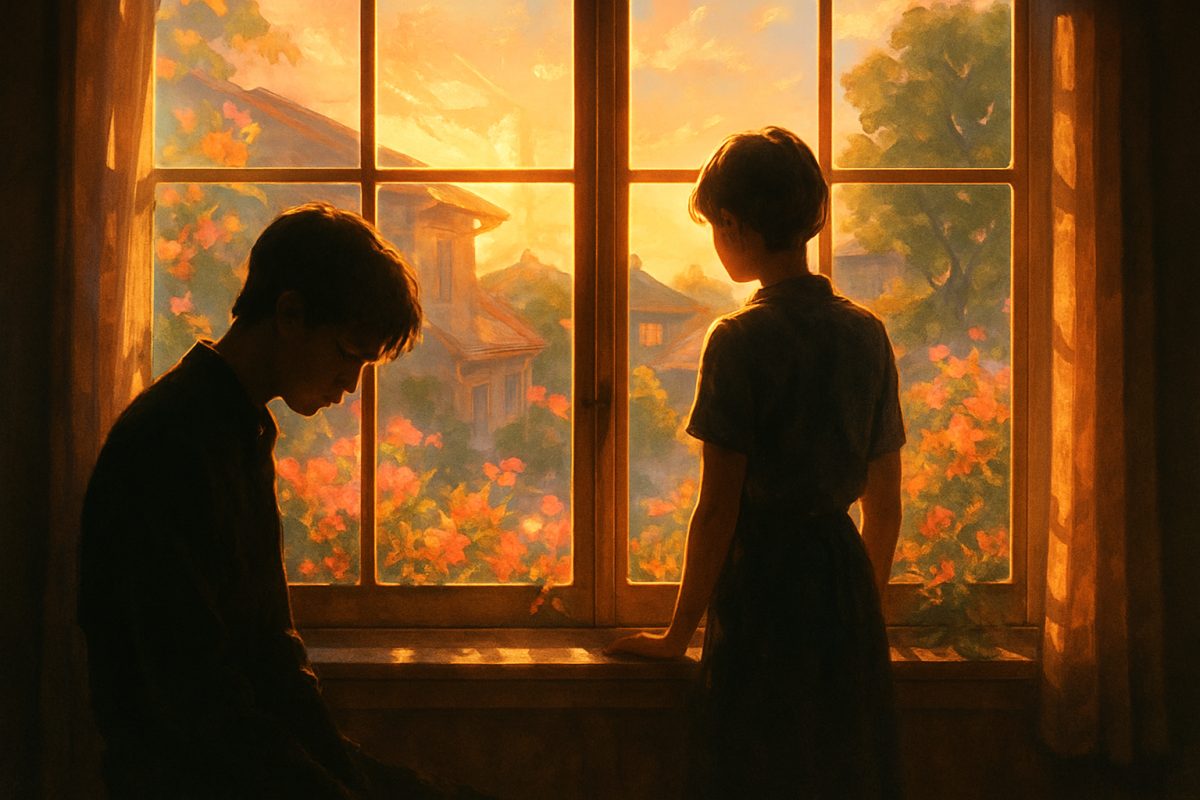
The narrative, structured as a coming-of-age tale, cleverly utilizes metaphorical elements such as the titular window as a signifier for both physical and emotional barriers. This choice, while potent in visual storytelling, could be more extensively explored to dissect the gendered barriers that similarly exist throughout the story.
Concluding Reflections
Through My Window invites audiences into a beautifully crafted adolescent world that intertwines the universal experiences of love and longing. Yet, beneath its cinematic allure, the film raises significant questions about the portrayal of gender and the role that female characters play within its narrative architecture. The story’s unfolding demonstrates moments of sincerity and vulnerability, but it remains nestled within a conceptual framework that often minimizes the agency of its female characters.
This film, redolent with visual and emotional textures, stands as both a testimony to, and a critique of, modern cinematic storytelling – one that occasionally stumbles in its bid to transcend entrenched gender paradigms. It remains a vibrant canvas from which to examine how intimacy, ambition, and identity are negotiated in the delicate transition of youth. As audiences traverse Raquel and Ares’s journey, they are left to ponder not only the complexities of human connection but also the enduring impact of the narratives we are given and the stories left untold.