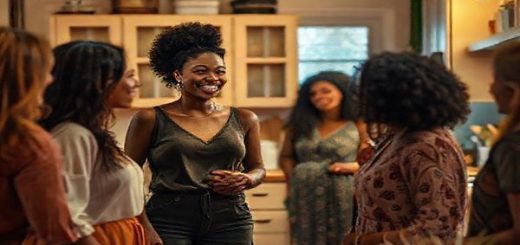
Silent Voices Shattered: a feminist review of Women Talking (2022)
A Symphony of Silent Rebellion
Women Talking (2022), directed by Sarah Polley, is an exquisite symphony of silent rebellion, where muted courage resonates louder than thunder. Adapted from Miriam Toews’ novel, the film unravels like a delicate lacework of intense conversations between women in an isolated Mennonite community. Their meeting is clandestine, their voices hushed by societal oppression, but it’s here the magic begins. The eloquence of Women Talking lies in its ability to weave profound feminist critiques through a tapestry of cinematic elegance.
From the outset, Polley crafts a claustrophobic visual ambiance, invoking a sense of entrapment. The stark lighting and confined settings encapsulate the women’s struggle against both physical and ideological cages. Cinematographer Luc Montpellier employs a palette that reflects both the bleakness of oppressive structures and the vibrancy of rebellion. It’s a quiet yet palpable manifestation of the tension between despair and hope – serving as a poignant reminder of why this tale needed to be told.
Dialogues of Defiance
In a cinematic landscape where women’s conversations are often relegated to trivialities, Women Talking subverts with a radical reimagining of dialogue as a powerful tool of agency and transformation. These characters are not mere vessels of exposition; their exchanges pulse with life, driving the plot forward and shattering prescribed gender roles.
The profound exchange of ideas in this barn-turned-council-chamber becomes the heart of the narrative. Engaging in Socratic dialogues, the characters strip down layers of patriarchal indoctrination to revisit fundamental questions of justice, faith, and identity. They speak not only with their voices but with their silences and glances – a cinematic dance of unsaid words that director Polley expertly choreographs. Here, women are not just heard; they are listened to, reclaiming a space where their thoughts invoke seismic waves of change.
Masculinity’s shadow looms, yet it does not dominate the conversation. The presence of August Epp (played by Ben Whishaw), the sole male interlocutor and the sympathetic chronicler of their voices, is a nuanced casting choice. Whishaw’s performance underscores the fragile balance between being an ally and inadvertently hijacking the narrative. It’s a testament to the film’s integrity that the narrative maintains focus on these women’s experiences without allowing patriarchal voices to eclipse their story.
Challenging and Redefining Gender Norms
Central to Women Talking is its meditation on the roles traditionally assigned to women – that of caregivers, responders, and bearers of community morality. The film’s brilliance is most starkly illustrated in its treatment of motherhood as a complex, multifaceted role rather than a monolithic virtue.
Characters such as Ona (Rooney Mara) and Salome (Claire Foy) epitomize this conflict. Ona’s gentle philosophical inquiries are imbued with a visionary elegance, while Salome’s fiery activism is resplendent in its raw, maternal instinctiveness. These portrayals are not simplified into a dichotomy but are embraced in their multifaceted humanity. They challenge the viewers to see motherhood beyond nurturing – as defiance, as choice, and as a radical act of love reshaped by socio-political independence.
By anchoring the film’s stakes in these women’s bold deliberations, Women Talking reclaims female ambition and intimacy from the constraints of male-dominated narratives. The film is a part celebration of female agency, part revolutionary manifesto – a genre-blending narrative that insists on its women as architects of their destinies.
Sustaining the Note of Cinematic Brilliance
Apart from its incisive feminist vantage point, Women Talking stands as a masterclass in cinematic craft. Polley’s directorial sensibilities are evident not only in her deliberate pacing but in the film’s auditory landscape. Composer Hildur Guðnadóttir’s score lingers delicately, allowing the dramatic silences to speak volumes. The interplay between sound and silence deepens the emotional impact, amplifying the gravity of spoken confessions and hushed whispers alike.
The film’s narrative structure, while seemingly confined, is anything but rigid. It traverses broader themes of forgiveness, resilience, and collective salvation with an immersive fluidity. This is a film that encourages viewers to see beyond the prescriptive endings to a landscape still being written. The restraint in visual storytelling, combined with the courage found in its narrative beats, creates a compelling canvas for reflection.
Women Talking is both a rallying cry and a victorious whisper. It elevates the discourse on gender dynamics in film by illustrating that true representation is not merely about including women but allowing them the space to guide their own narratives. A rare gem in today’s cinematic world – a conversation that insists on being continued long after the credits roll.