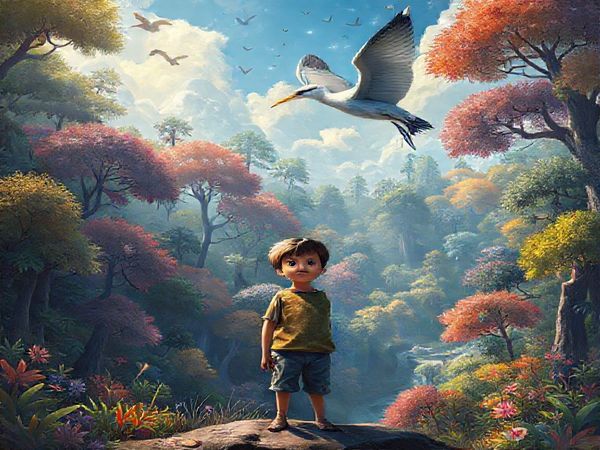
Echoes of Enchantment: a feminist review of The Boy and the Heron (2023)
The Beauty and Magic of Cinematic Creation
The Boy and the Heron (2023), a beautifully crafted film steeped in both whimsy and depth, invites us into a world that floats between reality and dreams, much like the fragile line between childhood and adulthood. From the very first frame, the film’s striking visual style captivates, immersing us in its lush landscapes and enchanting realms. Each scene unfolds like a painting come to life, with meticulous attention to detail that underscores director Hayao Miyazaki’s unparalleled ability to weave magic through animation. Miyazaki’s work resonates emotionally, drawing viewers into the kaleidoscope of colors, sounds, and stories. His deft hand turns every glance and whisper into an essential piece of this vast, ethereal tapestry.
Yet, within this visual splendor lies a tapestry of ideological questions begging to be explored. As we immerse ourselves in the narrative’s fantasy, a critical inquiry into its representation of gender dynamics must not be neglected. This cinematic beauty is underscored by a robustness of themes that explore the formation of identity, the essence of courage, and the stepping stones toward self-awareness.
Unmasking The Subconscious Narratives
At its heart, The Boy and the Heron spins a tale of transformation and the quest for understanding one’s role in the world. The protagonist, a young boy stepping into dimensions beyond his understanding, embarks on a journey that echoes both mythical and deeply personal struggles. While the film thrives on its enchanting set pieces, one cannot help but spotlight the seeming marginalization of female characters within this narrative framework.
Female characters in The Boy and the Heron, though portrayed with Miyazaki’s characteristic empathy and grace, often remain ancillary to the boy’s odyssey. They possess an ethereal, almost otherworldly quality, yet their roles often linger in support of the boy’s journey rather than leading independent arcs. This approach inadvertently casts them in roles that feel like echoes – present in spirit, yet distanced from the central plot propulsion.
For all its visual and emotional richness, the film’s narrative framing leaves its women largely at the periphery of change and discovery. In the absence of dynamic female presence, we are reminded of the persisting narrative trope where male journeys are cataloged at the expense of sidelined female agency.
A Dance with Gender Roles
At the core of The Boy and the Heron lies an exploration of familial bonds, particularly the dynamics between mothers and sons. The opening scenes set the emotional tone through a mother’s comforting presence, yet her influence wanes prematurely within the narrative fabric. The film briefly flirts with subverting traditional gender roles by suggesting a powerful maternal legacy, even engaging with notions of female wisdom and rationality. However, these nuanced threads are ultimately left underexplored, leaving us to contemplate what might have been.
Moreover, the communication between genders in the film highlights a challenge endemic to broader cinematic landscapes. Women’s dialogues, delicate and sparse, link them intricately to the narrative spirit but without distinct agency of their own. They often serve as mentors or guides echoing wisdom, waiting for the boy to decode these riddles. Herein lies a dichotomy where potential feminine power quietly simmers beneath a surface preoccupied with a hero’s masculine transformation.
In Pursuit of Deeper Ideological Layers
The film navigates themes of ambition and societal expectations, holding a mirror to the tensions between individual desire and communal responsibility. The protagonist grapples with an inherited legacy that both defines and confines him, a journey layered with questions about the constructs of masculinity. While men in The Boy and the Heron are allowed expressive autonomy to explore these themes, the film misses opportunities to explore parallel stories of women breaking from or redefining their own molds of destiny.
However, it would be remiss not to acknowledge Miyazaki’s evocative use of sound design as an unspoken character within this enchanted story. The haunting melodies and ambient whispers weave through the narrative, often amplifying the moments where spoken words falter. The music encapsulates both the beauty of fleeting connections and the aching loneliness of solitude, reinforcing the ephemeral nature of growing up.
Yet, for all the vibrancy painted through tones and tunes, these sensory experiences struggle to reconcile their intertwining narrative with a conscious elevation of female storytelling.
Conclusion: A Glimpse Into Tomorrow
The Boy and the Heron enchants with its narrative scope, capturing the complexities of human emotion within its enchanting fantasy. However, as we revel in its magical realism, it becomes essential to understand that the portrayal of women does not yet match its artistic vision’s ambition. The film remains indicative of a landscape where female autonomy is still a quiet whisper rather than a celebrated chorus.
This narrative effort urges us to imagine a future in cinema where stories are told in full harmony of male and female voices, a balance that embraces both the whispers of the heron and the shouts of the boy. In honoring its vibrant allure, we must also advocate for tales that are as equally invested in diverse feminist perspectives as they are in their visual splendor.