Preparing for the Future: What Skills and Education Will Thrive in the Fourth Industrial Revolution?
Curious Minds Lead the Way to Prepare for Tomorrow
In today’s world of rapid technological advancements, the question of which skills and educational methods will best prepare us for an unknown future is more pressing than ever. This sense of urgency caught the attention of researchers Parisa Soltanii and Hamed Tarin. They were driven by the pressing need to articulate how education systems can evolve to support business environments rapidly transforming under the aegis of the Fourth Industrial Revolution. This revolution, characterized by a fusion of technologies blurring the lines between the physical, digital, and biological spheres, demands a rethinking of traditional educational and vocational paradigms.
The researchers embarked on a journey to decode the competencies necessary to thrive in this new world, aiming to inform educational institutions on how they might reshape their curricula to prepare students for unprecedented challenges and opportunities.
Diving into the Pool of Knowledge
Soltanii and Tarin began their exploration by scrutinizing the vast collections of scientific documents produced over the last decade and a half. Their pursuit was not random; they meticulously selected 87 articles that most closely resonated with the objectives of identifying the skills demanded by tomorrow’s society. Their method was deeply qualitative, relying on thematic analysis techniques to unearth patterns and themes from this body of work.
Their methodology was thoughtful and precise. Employing the Miles and Huberman formula for reliability, which stood at a rigorous 82%, reflected their commitment to uncover accurate and meaningful insights. Using the sophisticated Maxqda 22 software, they ensured their analysis was both structured and comprehensive. This methodological rigor breathed life into their findings, providing a reliable and insightful look at educational and skill requirements in the future.
A Kaleidoscope of Competencies
At the heart of Soltanii and Tarin’s findings lies an intricate tapestry of skills essential for navigating the Fourth Industrial Revolution. These are not limited to technical proficiencies but encompass a broad spectrum of digital, cognitive, social, and personal competencies. This holistic approach emphasized how deeply intertwined human and technical skills have become.
Technical competencies, such as digital literacy and advanced technological fluency, are indispensable. However, the research also highlighted the burgeoning importance of cognitive and social skills. Problem-solving, critical thinking, emotional intelligence, and effective communication form the backbone of thriving in a complex, interconnected world. Personal attributes such as adaptability, resilience, and lifelong learning further reinforce the resilience against an unknowable future.
The Reimagined University: Pioneers of Tomorrow
Beyond identifying the skills necessary for the future, Soltanii and Tarin pivoted their focus toward educational institutions, particularly universities. They proposed novel characteristics for universities aiming to remain relevant and effectively support tomorrow’s innovators and leaders.
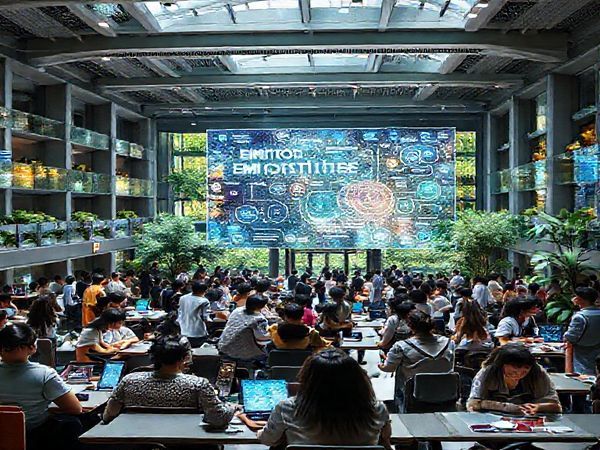
Future universities, as envisioned by the research, would be characterized by their emphasis on professional, network-oriented, and project-based learning. This approach aligns education more closely with real-world experiences and industry needs. Digital-oriented and competence-based education also take center stage, promising a more personalized and skill-oriented approach.
The study paints a picture of a dynamic, frontier-oriented educational landscape dedicated to transformation. It calls for institutions that not only impart knowledge but are themselves hubs of innovation capable of responding swiftly to global shifts. This new model promises to equip students not just for jobs that exist today but for those that haven’t yet been conceptualized.
Bridging Today’s Learning with Tomorrow’s Needs
Reflecting on this research, I am reminded of the tired but still relevant debate about education’s role in preparing individuals for a specific career versus imparting more generalized, yet deeply important, skills such as problem-solving and critical thinking. The findings offer a new prospect in this conversation by suggesting a hybrid model. In blending the technical with the personal, and the theoretical with the practical, educational systems can better serve an evolving society.
This study is more than just an academic exploration. It is a clarion call for educational reform that addresses far-reaching developments reshaping industries. As someone who has witnessed the disconnect between education and the demands of modern work environments, this research offers a roadmap toward a future where both realms walk in lockstep.
As we stand on the precipice of vast change, Soltanii and Tarin remind us of the profound role education plays, not just in individual lives but in society at large. Their work challenges us all to consider how we might adapt, react, and thrive in light of technological upheaval, and encourages us to imagine a future where learning is a constantly evolving journey.
Reference:
Soltanii, P., & Tarin, H. (2025). Identifying the skill requirements and academic characteristics appropriate to the business environment in the fourth industrial revolution. Journal of value creating in Business Management, 5(3), 155-175.