How Schools Thrive Despite Turmoil in Conflict Zones: Exploring Resilience Amidst War
The Seeds of Curiosity in a War-Torn Landscape
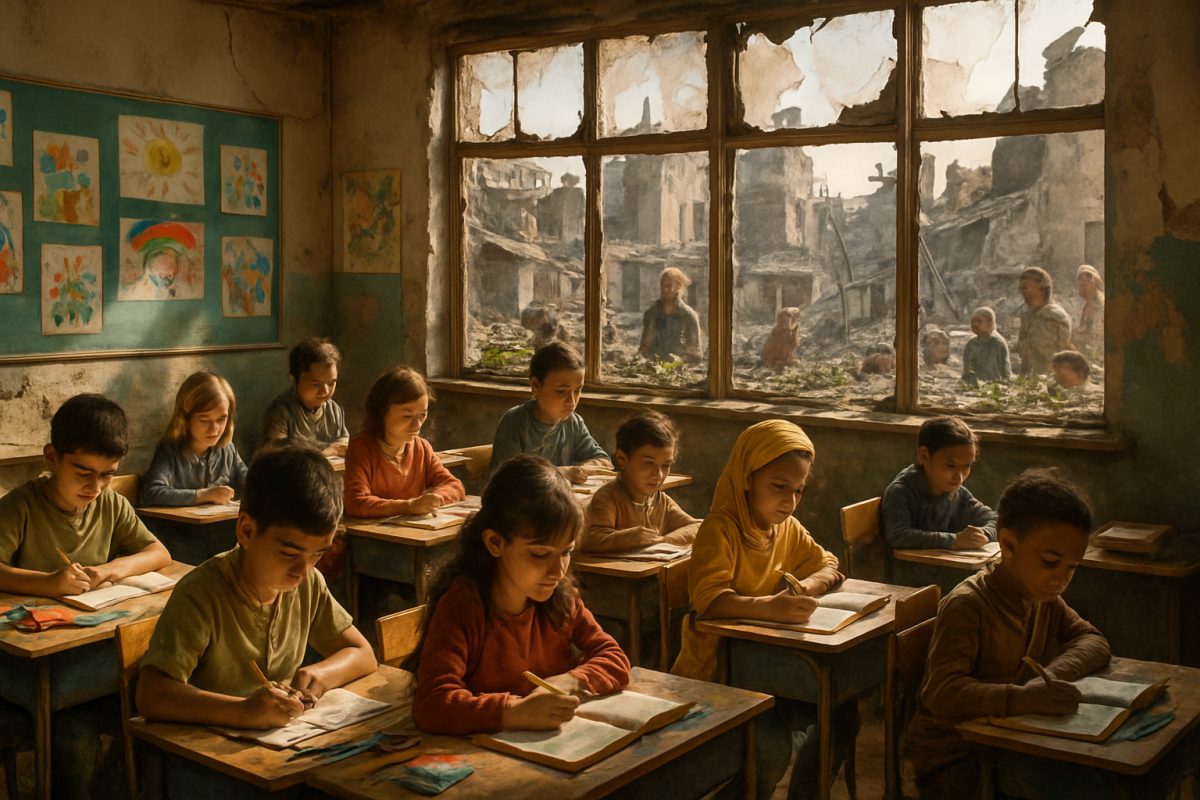
In societies fractured by armed conflict, the structure and purpose of educational institutions often find themselves in a paradoxical situation. Researchers have long been fascinated by how these schools manage to operate when nations are embroiled in turmoil. What seems like an unbroken pattern of chaos raises a profound question: How do schools in conflict zones not only exist but sometimes thrive against such odds? It is this sense of curiosity and a desire to understand resilience that propelled the study “School Climate in Conflict-Affected Societies: Between Collective Stress and Organizational Resilience,” conducted by Kristy Olivares and published in the Journal of Conflicted Areas. This exploration focuses on the dynamic and complex notion of school climate as it persists and sometimes flourishes within the harsh landscapes of armed conflict.
A Nexus of Collective Stress and Organizational Resilience
Schools in war zones do not operate in isolation from the conflict surrounding them. Instead, they find themselves permeated by what the study describes as “collective stress.” Students, teachers, and administrators are often drawn into a relentless cycle of uncertainty and fear. The research aimed to delve into this synthesis of stress and resilience, viewing the situation through the lens of ecological and organizational theories. By doing so, the study sought to understand how resources are managed and investment into resilient mechanisms is maintained even when resources are scarce.
Understanding these dynamics offers crucial insights into how educational systems cope under severe stress and how they sustain a climate conducive to learning. The researchers adopted the Conservation of Resources (COR) theory to unravel these processes. This theory illuminates the interplay between resource depletion and resource investment in schools, a complex interaction dictating whether an educational organization can withstand the external pressures of conflict.
Discovering the Power of Adaptive Mechanisms
The investigation unearthed something truly remarkable: despite the backdrop of relentless threats, some schools exhibit a powerful organizational resilience. The presence of teachers and administrators who remain committed stabilizes the school environment and promotes learning, not just as a duty but as a mission of hope and purpose. The study analyzed how these school communities adapt and transform stress into resilience, maintaining a positive school climate amid chaos.
By applying the COR theory, the researchers illustrated how these schools manage their resources while continuously reinvesting in their community to stay afloat. The dynamics in play include fostering supportive relationships, leveraging social networks, and nurturing a commitment to common goals among all members of the school community. This transformational resilience underlines a vital insight – the climate within these conflict-affected schools is not merely a passive attribute. Instead, it reflects a negotiated process balancing collective vulnerability with agency and adaptability.
Broader Implications: Lessons on Resilience and Resourcefulness
This study raises unique reflections on the broader societal implications of resilience and resource management. The findings suggest potential strategies for educational institutions not only in conflict zones but also in other areas facing various types of crises. The mechanisms of resilience discovered in war-torn schools could inform broader policies and interventions in less extreme, yet challenging environments.
Beyond purely educational constraints, the implications touch on human adaptability under stress conditions. The ability of these schools to maintain a semblance of normalcy through adaptive mechanisms suggests a template for community resilience that extends beyond scholastic environments. As we consider regions affected by natural disasters or economic instabilities, the strategies employed by schools in conflict zones could offer valuable lessons for communities dealing with any sustained crises.
Reflections on a Dynamic Model of School Climate
Reflecting on Olivares’ study, we’re invited to rethink the concept of school climate as a static entity, instead embracing it as a vibrant, ever-evolving process shaped by various encounters with adversity. The research reveals how these educational spaces could symbolize resistance and hope. They cultivate a sense of belonging and stability when the outside world may offer none, highlighting the human capacity to adapt and sustain life-giving environments.
In light of this, policymakers and educators might consider adopting a more fluid, responsive approach to school climate, especially in regions experiencing turbulence. The approach pushes the complexities of resilience and ensures that students, regardless of backdrops characterized by uncertainty, have access to education in its nurturing form.
Ultimately, Olivares’ exploration into the resilience embedded within school climates during conflict challenges us to consider how such resilience can be cultivated in wider contexts. As we face the shifting landscapes of our modern world, understanding resilience in its many forms becomes crucial to our collective future.
Reference:
Olivares, K. (2026). School Climate in Conflict-Affected Societies: Between Collective Stress and Organizational Resilience. Journal of Conflicted Areas, 1(1), 12-21.