How Specialisation Helps Small States Like Czechia Influence Global Policy
A Question of Influence: Czechia in the Global Arena
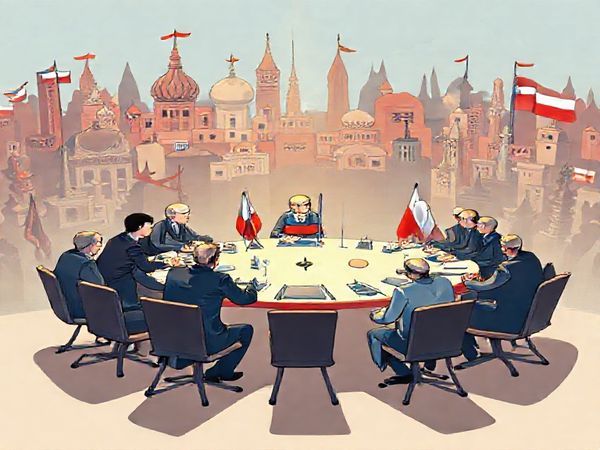
In the realm of global politics, smaller nations often face the daunting challenge of making their voices heard. It’s akin to being a whisper in a crowded room, where the loudest and most powerful often dominate the conversation. It was this intriguing predilection for influence, rather than power, that captured the attention of researcher Tomas Weiss. His recent study, published in the Cambridge Review of International Affairs, dissects how smaller states, like Czechia, manage to exert disproportionate influence on global policy.
The concept of specialisation as a strategy for smaller countries seemed straightforward enough: focus resources, build specialised expertise, and thus stand out in international forums. Yet, why does this work in some instances and falter in others? Weiss aimed to explore this conundrum, centering his investigation on Czechia’s foray into global policy concerning human rights and its involvement in the Western Balkans. The results not only deepen our understanding of small-state diplomacy but also offer fresh perspectives on the factors that contribute to these nation’s successes.
The Unexpected Power of Focus
In examining how Czechia has sought to assert itself on the EU stage, Weiss focused on two divergent arenas where the country has attempted to specialise: human rights and the Western Balkans. Although Czechia has poured considerable resources and effort into these areas, the extent of recognition it has received varies significantly. Human rights, a field rife with actors and agendas, has not yielded the same clout for Czechia as its more concentrated, less crowded specialization in the Balkans.
The research unveiled that the crowdedness of a field significantly impacts how specialisation is recognised. This realization stems from the understanding that even if a smaller state invests heavily into a specialization domain, the existing saturation of influence wielders could overshadow its efforts. Thus, while Czechia’s influence in the Balkan region was more pronounced due to less competition, the dense arena of human rights advocacy diminished its impact.
Rethinking Diplomatic Strategy: When Effort Isn’t Enough
Weiss’s findings suggest a shift in understanding the nature of successful specialisation for small states. While the traditional view held that the aggregation of expertise and resources was sufficient, Weiss argues that context is equally crucial. He challenges the conventional wisdom, proposing that nations like Czechia could find greater success by looking beyond mere resource allocation to understanding the competitive landscape of their chosen specialisation.
This insight alters not only academic discussions but also has the potential to reshape how smaller nations construct their foreign policies. It illuminates the intricate dance of diplomatic strategizing, where timing, placement, and field density must also be considered alongside sheer effort and specialisation.
Spurring Larger Conversations
Tomas Weiss’s revelations on small-state diplomacy extend beyond mere academic interest, nudging us toward broader reflections on global communication dynamics. If strategic factors like crowdedness dictate successful influence, this raises questions about not only how diplomatic entities plan their engagements, but also how superpowers might reconsider their approach to international cooperation.
In a globalised world, where collaboration is often favored over unilateral actions, understanding the nuanced dance of influence could aid in crafting more inclusive international policies. Smaller states are integral to shaping and maintaining the global order, and appreciating the complexities of their contributions unfolds new dimensions of diplomacy.
Specialisation Meets Reality
In delving into the mechanics of human rights and regional geopolitics from the lens of Czechia, Weiss brings attention to an often-overlooked aspect of international relations: the spaces where big and small intersect. For the Czech Republic, and similarly situated nations, the insights offered by Weiss’s analysis serve as both a guide and a caution.
The story of Czechia’s foreign policy is one of opportunity meeting strategy. It unveils a compelling narrative about how adopting a keen understanding of the competitive landscape can enable a voice to carry further than its size might suggest. It is, in essence, a narrative that invites us to reflect on the voices we listen to in shaping our collective future.
In a global era marked by both formidable challenges and opportunities, specializations pursued by small states like Czechia are more than just facets of diplomacy – they are critical components of our shared international fabric.
Reference
Weiss, T. (2025). Specialisation (un) recognised: human rights and Western Balkans in Czech foreign policy. Cambridge Review of International Affairs, 1-19.