Gender Role Subversion: a feminist review of Strange Darling (2023)
Beyond the Screen: An Artistic Triumph
“Strange Darling” (2023) is, in many respects, a visual and narrative triumph, weaving together lush cinematography with a story that unfolds like a finely crafted poem. Directed with a deft hand by someone at the helm of their artistic powers, the film is a testament to the potency of cinema as a medium. Rich with texture, it captures the interplay of light and shadow in a manner reminiscent of classic noir, yet it balances this with the vibrancy of contemporary palettes. The film’s musical score deserves particular mention, as it elevates and underscores the emotional resonance of key scenes, guiding the viewer through a landscape both haunting and wondrous.
However, understanding the film’s artistic prowess in isolation from its ideological constructs would be a disservice. As we yearn for films to not just move us aesthetically but also challenge us intellectually and morally, “Strange Darling” offers ample material for feminist critique.
Gendered Dialogues: The Unspoken Forces
A noticeable thread throughout “Strange Darling” is the way communication – verbal and otherwise – is employed to navigate the intricate dance between genders. The film constructs a mosaic of dialogues wherein female characters often inhabit dual roles of speaker and listener, seeking spaces where their voices might carry weight. It is in these moments that the film both succeeds and stumbles. The conversations between female characters, when they do occur, are tinged with authentic camaraderie and complexity, yet they are comparatively sparse.
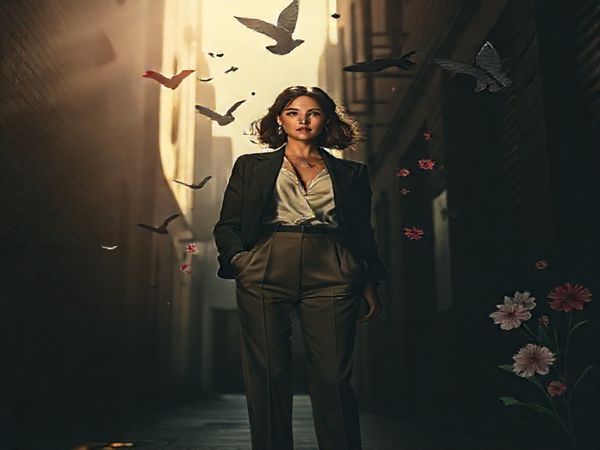
The protagonist, Anna, played with nuance and depth, negotiates with male co-stars in scenes that test her agency, challenging traditional power structures. What becomes evident is the film’s somewhat ambivalent stance: it occasionally subverts gender norms but often reverts to familiar tropes that anchor female characters’ value to their relationships with men. In the end, though not entirely groundbreaking, “Strange Darling” deserves recognition for striving to create space for more equitable dialogues.
Subverting Stereotypes: A Complex Examination
“Strange Darling” positions itself at the crossroads of genre and gender discourse, examining the tensions therein. While the narrative arc borrows from classic thriller motifs, it attempts to twist these conventions by centering on Anna’s inner journey. Her character is not defined by maternal or familial obligations, instead driven by ambition and a yearning for self-discovery. This pivot away from more confining portrayals of womanhood is refreshing, offering viewers a glimpse into an ideal where women’s narratives are self-contained and self-directed.
Even more noteworthy is the way in which the film portrays intimacy, shunning performative heteronormativity for richer, more genuine connections. Here, “Strange Darling” earns its stripes, casting aside stale formulas and outlining possibilities beyond socially enforced patterns. Yet, this subversion is at times undercut by the film’s insistence on framing women’s autonomy within reactionary male narratives. While the film makes subtle advancements, it remains tethered to some of the very stereotypes it seeks to dismantle.
The Value of Intention: A Powerful Canvas
The inherent value of “Strange Darling” arises not from its execution, which occasionally falters, but from its intention – a daring attempt to interrogate and upend conventional gender roles within its genre framework. This artistic canvas, however, is not without its smudges. Despite its intention to champion female autonomy, it occasionally defaults to placing women in roles that serve to catalyze or enrich male-centric plot lines.
What stands out as particularly poignant is the film’s portrayal of ambition and femininity as not mutually exclusive, but rather mutually enriching. It makes a case, albeit inconsistently, for a narrative where women’s journeys are valuable independent of their relationships to others, refusing to compromise ambition for palatability.
In conclusion, “Strange Darling” remains an important piece within the ever-evolving tapestry of feminist filmmaking. It neither wholly triumphs nor completely falters in its quest to balance art with ideology, standing as a reminder of cinema’s potential to both reflect and reshape cultural narratives. As viewers, it invites us to appreciate its accomplishments while urging us to continue asking more of the stories we are told.