From Rubik’s Cubes to Virtual Realities: Unpacking 1980s Predictions and the Surprising Evolution of Hobbies
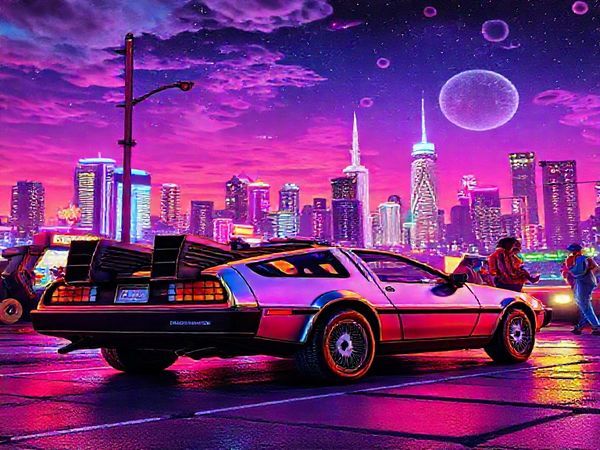
Step into a DeLorean and dial back to the 1980s, a decade throbbing with neon hues, synth sounds, and the persistent buzz of an era captivated by the possibilities of the future. The average Joe was swapping speculative visions over arcade games, and technophiles were huddled around their Commodore 64s, dreaming of what hobbies and leisure could become in the next millennium. It’s a period colored by rapid technological innovation, social upheaval, and an infectious optimism fueled by films, TV shows, and endless ‘what ifs’ that stoked the imagination.
Visions from the 1980s: Crafting Tomorrow’s Pastimes
In the 1980s, the future seemed brimming with promise and radical transformation. Personal computers were beginning to stoke the fires of curiosity, hinting at an interconnected world that was just entering the average household. During this transformative time, futurists and hobbyists alike stood at the precipice of a digital revolution, dreamily envisioning how their beloved pastimes might morph in tandem with emerging technologies.
Movies like “Back to the Future” and “Blade Runner” encapsulated the hope and skepticism of the era, portraying futures that dazzled with flying cars and dark cityscapes overshadowed by towering skyscrapers. Yet, these films often overlooked the everyday realm of hobbies, clinging heavily to the larger societal shifts. Inventors and amateur engineers, however, were eagerly discussing the potential of ‘smart utilities’, conceptualizing them in newsletters and niche gatherings where computers and automation were a common tongue.
The 1980s also bore witness to a cultural focus on leisure and entertainment innovation. Video gaming was a burgeoning hobby, capturing imaginations with visions of immersive virtual realities. Arcade culture had planted its flag as a social hotspot, suggesting a future where hobbies might blend seamlessly with technology and friendship, calling forth images of networked gaming before the infrastructure to support it existed.
Meanwhile, the burgeoning computer literacy hinted at future hobbies intertwined with programming and coding. Geek culture was blossoming into tech savviness, setting up hobbyists to anticipate a world where meticulous computer tasks could easily become as commonplace as woodworking or painting. Predictions populated magazines and casual conversations, imagining robotics would take a starring role, perhaps as earnest companions or as a medium through which individuals might craft new realms of creative expression.
Traditional hobbies were expected to endure, but with futuristic twists. Gardening, for instance, would be transformed with the help of automation, envisioning robot-assistants capable of cultivating lush gardens or keeping knitting circles entertained with pre-programmed stitch patterns. Overall, the 1980s envisioned a balance of old and new – a future where leisure activities would galvanize around shared spaces, powered by burgeoning technology, and enriched by novel experiences.
The Reality Unveiled: Hobbies in the Modern Age
Fast forward to the present, and the landscape of hobbies has evolved along both expected and unforeseen lines. True, the vision of ubiquitous networks connecting gamers across the globe has come to pass, with online gaming becoming a pillar of modern culture. Yet, the immersive virtual environments once only whispered about in arcades are now truly realized with advances in VR technology, permeating not just gaming but fitness and social interactions.
Contrary to some predictions, the role of robots remains more confined to assembly lines than homes. While robotic lawn mowers and vacuum cleaners nod to the fantasies of automation, the full-blown robotic assistants remain elusive in average households. However, hobbies like DIY robotics and programming have surged into mainstream culture, supported by accessible platforms like Arduino and Raspberry Pi, keeping alive the spirit of the personal tinkerer from decades past.
The rise of the Maker Movement has also painted a new picture, encouraging hands-on creation across all manner of projects. This DIY ethos aligns with past expectations of personalized craft hobbies but takes them further by meshing traditional skills with digital tools like 3D printers and CNC machines. Thus, while predictions of fully robot-maintained gardens may have been lofty, the nurturing of hydroponic and urban gardening initiatives speaks to a less speculative but wildly popular turn.
Social media, virtually non-existent in the 1980s, emerged as a unifying platform for connecting hobbyists worldwide. The digital scuttlebutt is alive with communities devoted to every imaginable pastime, facilitating the sharing of ideas and innovations at a pace undreamt of by earlier enthusiasts. Today’s hobby landscape is a tapestry woven from the threads of global connectivity, instant sharing, and open-source collaboration, proving some visions converged in unexpected ways.
Lessons from the Past: Understanding Human Dreams
Reflecting on the discrepancies and convergences between past visions and our present reality, it becomes clear that humanity’s predictions for leisure activities often mirror their contemporary hopes and struggles. The 1980s was a time eager to embrace technological change but uncertain of its impact, and this ambivalence seeped into hobbyist predictions. Such visions emphasized a longing for connection, creativity, and personal fulfillment, projecting them onto the canvas of future technological landscapes.
This exercise in retrospection reminds us that while we are good at rallying around the potential of new ideas, the immediacy of cultural concerns heavily influences these predictions. It highlights how we often use future landscapes as a canvas for exploring contemporary desires and anxieties. The emphasis on leisure and hobbies at the nexus of technology underscores a fundamental human need for recreation and creativity.
What we see today is an ongoing evolution toward hobbies that both purvey personality and harness progress, something the visionaries of the 1980s only caught a glimpse of. The divergence between prediction and reality also showcases the unpredictability of technological adoption, steering hobbies down unexpected but fruitful paths.
While the future of hobbies remains unwritten, perhaps this retrospection offers insight into our eternal human nature: an unyielding drive to reframe our world, seeking comfort and joy in whatever form our leisure pursuits may take. Whether through VR goggles, community gardens, or digital networks, hobbies continue to shape and reflect the human experience in fascinating ways, encouraging us to dream, explore, and connect even further.