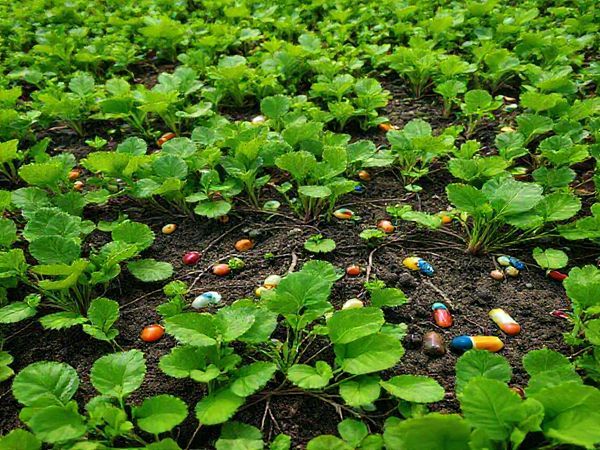
Study Reveals Pharmaceutical Contamination in Crops from Recycled Water and Fertilizers
Roots of Concern: A Journey into Contaminated Agriculture
In an era where sustainability reigns supreme, innovative techniques to recycle resources have transformed the agricultural landscape. The idea is both elegant and promising: reusing treated wastewater, animal manure, and biosolids to nurture our crops. By aligning with the principles of a circular economy, these practices reduce waste and support the planet’s well-being. Yet, as researchers like Santos, Rodríguez-Mozaz, and Buttiglieri uncovered, the reality is layered with complexities as interconnected as the roots beneath our feet.
The researchers embarked on a mission fueled by an urgent curiosity. What happens when our solutions introduce unseen problems? Concerned by whispers of pharmaceutical residues in food crops, the team delved deep into the labyrinthine pathways through which these substances travel, from soil to plant, and potentially onto our plates. Their comprehensive review not only traces the journey of pharmaceuticals in the environment but also illuminates a field ripe with consequences and questions.
Harvesting Information: Understanding the Complex Pathways
Navigating the journey of pharmaceuticals through the ecosystem reads like a detective novel. The intrigue lies in how these tiny substances traverse our fields and food. The researchers unearthed that pharmaceutical compounds, though significantly reduced in concentration as they move from wastewater to soil to plants, maintain a quiet, persistent presence. Fewer than 1% of the original pharmaceutical load may remain in crop plants, yet this fragment could carry implications.
The study underscores the role of various factors in influencing pharmaceutical uptake. This involves soil characteristics, plant species, and the chemical properties of the pharmaceuticals themselves. Leafy vegetables, for instance, revealed themselves as unexpected but tenacious collectors of these substances. In leafy greens, concentrations reached several thousand nanograms per gram dry weight, making an appearance that, although diluted, is not dismissible.
Seeds of Doubt: Unveiling Hidden Risks
Through their meticulous review, the researchers cast light on the enigmatic nature of how pharmaceuticals degrade into metabolites. These derivatives, attaching themselves to plant tissues, weave into a tapestry of unknowns. As few studies have ventured into assessing their toxicity and behavior, the urgency for understanding their impact on human health and ecosystems intensifies.
While minimal, the persistence of these contaminants summons broader discussions on food safety and public health. What might be acceptable levels? How do we ensure that the frameworks within which we operate are robust enough to safeguard us against unforeseen consequences? Crucially, as consumers, are we adequately informed about the journeys our food undertakes before reaching our tables?
A New Call to Action: Bridging Science and Society
The implications of Santos and colleagues’ study echo far beyond the academic world. As a science journalist immersed in the intricacies of research and its stories, this study resonates with a transformative call to action. It implores policy makers, farmers, and citizens alike to re-evaluate our approaches, to ask rigorous questions, and to pursue innovative solutions that balance ecological stewardship with scientific realism.
This study is a timely reminder of the sophisticated dance between innovation and vigilance. It prompts reflection on our current practices, urging us to fine-tune the harmonization between environmental sustainability and safety protocols. Bridging the gap between the cutting-edge work of researchers and real-world application is where we, the interpreters of science, provide crucial guidance.
The conversation surrounding pharmaceutical contamination is not an endpoint but a segue into broader dialogues on environmental health and food security. As we look to the future, it’s clear that the research by Santos, Rodríguez-Mozaz, and Buttiglieri is laying groundwork not only for better scientific understanding but for crucial, informed public and policy discourse.
Charting Our Path Forward
The study is more than a repository of data; it’s an invitation to participate in shaping an agricultural system that values transparency and safety. Balancing technological advancement with precaution necessitates collaboration across all sectors of society. As we cultivate new solutions, we must also cultivate a heightened sense of awareness and responsibility toward the interconnected nature of our world.
In the end, this research acts as both mirror and magnifying glass, reflecting our current practices while urging us to scrutinize them more closely. It serves as a poignant narrative of what modern-day agriculture faces – challenges that demand both scientific insight and societal engagement. Let us heed its findings with the curiosity and care they warrant.
Reference
Santos, L. H., Rodríguez-Mozaz, S., & Buttiglieri, G. (2025). Pharmaceutical contamination in edible plants grown on soils amended with wastewater, manure, and biosolids: a review. Environmental Chemistry Letters, 1-24.