Heroines of Heritage: a feminist review of Downton Abbey: The Grand Finale (2025)
Cinematic Splendor and Society’s Shadows
The 2025 conclusion to one of television’s most revered series, Downton Abbey: The Grand Finale, plunges us back into the sumptuous opulence of the Crawley estate, an English manor that has come to symbolize both the grandeur and the constrictions of an era. The film’s visual prowess remains unparalleled – intricate set designs capture the textured beauty of a bygone time while sweeping cinematography transforms the Yorkshire landscape into a character of its own, evoking nostalgia and a longing for elegance. Yet beneath the shimmering veneer, Julian Fellowes orchestrates a narrative dance that teeters between celebrating heritage and critiquing its burdens, particularly as they are shouldered by women.
Conversations and Character Agency
At the heart of Downton’s world lie conversations – elegantly phrased volleys that carry more weight than bulletins of political consequence. Here, dialogue wields power. Historically, the series has woven its narratives with strands of genteel discussions often centered on the familial and the quotidian, but now, in its cinematic closure, a noticeable shift occurs. Women, who in earlier seasons may have found their voices mediated through the men around them, now converse directly and decisively. The film crafts a space where Lady Mary and Lady Edith foster a dialogue that transcends the aristocratic veneer – joint conversations that unravel societal expectations and personal desires, subverting the quietude that historically stifles.
However, does the film genuinely grant these women the agency to steer the narrative finale, or are we left with an illusion of choice, a mimicry of empowerment? While Lady Edith steps more fully into her role as a progressive, working woman, tangibly influencing her own plotline, Lady Mary’s arc, though compelling, meanders with questions of love and loyalty that still tether her to the Crawley estate’s traditional framework. Though these familial lines pull taut, they do so with a velvet elegance that is both pleasing to behold and vexingly problematic.
Gender Roles and Ideological Rifts
The Grand Finale wages a fascinating battle between modernity and tradition, one where gender roles are continuously tested. The film poses intriguing questions: Can true equality be achieved within structures so fundamentally built upon inequality? Can women like Lady Mary truly cast aside their inherited roles, or do these ancestral expectations linger at the edges of their ambition? The narrative suggests both progression and stasis – women are portrayed as increasingly self-reliant and those who openly question patriarchal confines, yet the plot remains comfortably nestled within established matrimonial conventions.
Moreover, it is the film’s quiet celebratory moments, those tender glimpses of shared motherhood between Cora Crawley and her daughters, that resonate with authenticity, even as they reveal the gentle coercion of “familial duty”. As the narrative addresses the themes of legacy, it places maternal ties at the forefront, suggesting a continuity that is both a source of strength and a reinforcement of traditional femininity. Here lies the paradox – the representation of women caught at the crossroads of expectation and empowerment, caught between revolution and reminiscence.
The Craft: Art and Atmosphere
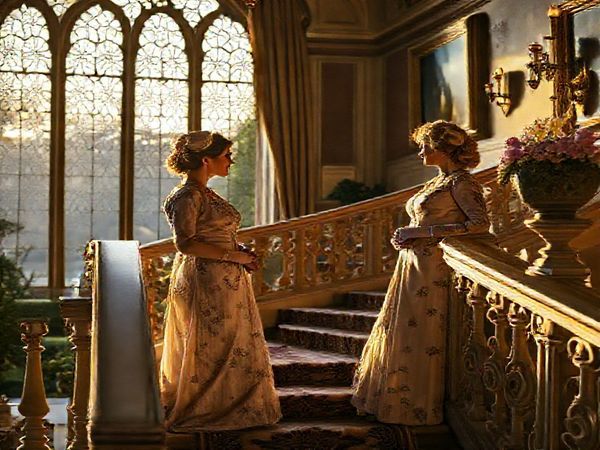
While Downton Abbey: The Grand Finale tackles the narrative with a precise social consciousness, it simultaneously enchants with its impeccable artistry. Maria Djurkovic’s production design achieves a cinematic richness that pulls viewers seamlessly into the fabric of the 1920s, while the costume design, luxuriant yet historically rigorous, underscores the eternal tension between personal expression and societal impression. The film’s visual language speaks in tandem with its characters – grand staircases echo the tensions of class divisions, while moments of solitude are framed with evocative pastoral imagery, each shot reinforcing themes of identity and legacy.
Julian Fellowes remains a master of emotional cadence, and the film benefits from his deft orchestration of ensemble performances. While the script at times flirts perilously close to melodrama, it is sustained by the sincerity and depth of its cast. Michelle Dockery’s nuanced portrayal of Lady Mary, in particular, combines poise with inner conflict, rendering a complex lens through which to question societal change. Her interaction with an equally enthralling Laura Carmichael (Lady Edith) dynamizes the narrative with a palpable tension – a sisterly rivalry transformed into solidarity, embodying the pursuit of individual agency.
Conclusion: A Feminist Reverie with Reservations
Downton Abbey: The Grand Finale offers a rich tapestry of visual delights and narratively embraces both its period specificity and its modernity-coated aspirations. As a feminist text, it excels in probing gender dynamics and upending the primacy of male-centered narratives. Still, its ideological roots occasionally bind it to conventional trappings, leaving a pivotal question unanswered: Can the elegance of tradition truly merge with the earnest call for gender equality without compromise?
In its sumptuous farewell, the film delivers not only a final chapter for its cherished characters but also an open-ended conversation about the nature of female identity and agency within historical and personal structures. Whether the Crawley women have transcended their heritage or simply adorned it in fashionable modernity remains an issue for audiences to carefully unwrap. This dance between grace and gravitas makes The Grand Finale a cinematic conundrum, one that is as visually satisfying as it is ideologically engaging, marking the intersection of love and critique in feminist film review.