The Rise of AI in Art: How Technology is Redefining Creativity
Art has been a fundamental expression of human creativity for thousands of years, evolving through endless styles and mediums. Yet today, we stand at the forefront of a revolutionary moment in artistic expression—the rise of Artificial Intelligence (AI).
The Intersection of Art and AI
AI’s influence in art transcends mere novelty; it challenges traditional notions of creativity and authorial purpose. Tools like Adobe’s Sensei, DeepArt, and RunwayML allow creators to utilize machine learning algorithms to produce stunning artworks that push the boundaries of innovation and design.
For example, the “Portrait of Edmond de Belamy,” created by a Paris-based art collective using AI, sold for a whopping $432,500. This artwork doesn’t only illustrate AI’s capacity to create but also questions who—or what—is behind art’s creation.
Breaking Down New Barriers
AI democratizes the creative process, enabling individuals without formal training to explore art. With platforms like Artbreeder, users can merge images into fantastical new compositions by simply adjusting sliders. Artists no longer need to grapple with the technicalities of paintbrushes and canvases; they can experiment through the ease of digital platforms.
Moreover, these technologies are providing fresh tools to seasoned artists. Well-established names like Refik Anadol and Sougwen Chung leverage AI to expand their work’s scope and complexity, producing interactive installations that respond in real-time to environmental stimuli or audience interactions.
Controversies and Ethical Considerations
However, the rise of AI in the art world is not devoid of controversy. Questions surrounding authenticity, originality, and authorship are hotly debated. Is a piece created by an AI truly the product of human creativity? And when an algorithm learns from thousands of existing artworks, where do we draw the line between inspiration and imitation?
Further, there’s the issue of potential job displacement. As AI continues to advance, some fear that it could overshadow human artists, generating art at a pace and volume that humans can’t compete with.
The Future of AI in Art
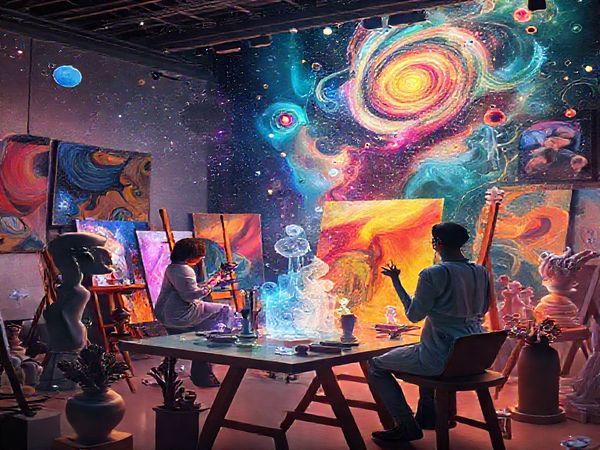
As AI becomes increasingly integrated into the art world, collaboration between AI and artists will likely become the norm rather than the exception. This partnership has the potential to cultivate new art movements and styles that we have yet to imagine.
As artists and technologists continue to explore AI’s role in creativity, questions about the essence of art and human imagination will persist. However, one thing remains certain: AI has already irrevocably changed the landscape of art, offering thrilling possibilities for the future of creativity.