Reimagining Gender Dynamics: a feminist review of Ek Chatur Naar (2025)
Captivating Visuals and Compelling Performances
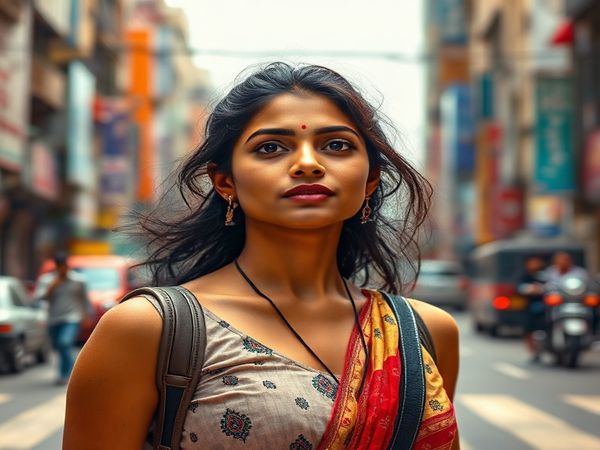
Ek Chatur Naar (2025) is a visual delight, where director Meera Varma harnesses the vibrant canvas of Indian urbanity to craft a rich tapestry of emotion and narrative depth. The film’s cinematography is both enchanting and poignant, framing each scene with an artist’s eye, capturing the emotional nuances and energy of its characters. Central to the film’s compelling power are the performances of its ensemble cast. Lead actress Priya Mehta delivers a powerhouse performance as Kavya, a character grappling with the expectations of familial duty and personal aspiration. Her portrayal is a masterclass in emotional subtlety and depth, drawing us into Kavya’s rich interior world with ease.
Delicately Woven Gender Dynamics
At the heart of Ek Chatur Naar lies its delicate yet incisive exploration of gender dynamics. The film sheds light on the oftentimes conflicting roles women navigate within the contemporary familial and societal framework. Kavya’s journey is deeply emblematic of these tensions – she balances her familial responsibilities with her own career ambitions. As she navigates her relationship with her husband Arjun, played by the exceptionally talented Rajiv Menon, the film reveals the nuanced interplay of gender roles. Arjun is refreshingly portrayed as a partner invested in shared parenting, a deviation from traditional gender constructs, thus subtly challenging the patriarchal scaffolding of domestic life. The dialogues between Kavya and Arjun are rich in nuance, demonstrating an equal partnership with mutual respect, a dynamic superbly captured by Varma’s astute direction.
Critiquing Social Norms and Expectations
The storyline that delves into Kavya’s ambitions against the backdrop of societal norms is more than just a subplot—it is the heartbeat of the film. Varma uses Kavya’s character to critique the deeply entrenched societal expectations that often pin women between their roles as caregivers and individual beings. A standout sequence involves a heated conversation among Kavya, her mother-in-law, and her mother, which addresses multigenerational attitudes toward motherhood and female ambition. The dialogue is astutely written, where each word seems to punctuate with historical weight, expertly dissecting the ideological shackles often imposed on women’s desires and priorities. It raises pertinent questions about individuality and communal responsibilities, inviting viewers to introspect on what it means to actualize one’s identity in the face of conformist traditions.
Evaluating Narrative Agency and Intimacy
Beyond its critique of societal norms, the film shines in offering its women characters true narrative agency. Kavya’s plot does not revolve solely around her interactions with male characters; she is constantly in dialogue and negotiation with other women. In these exchanges, Varma beautifully captures the spectrum of female relationships that are often reduced to stereotypes in cinema. The narrative agency is further reinforced by the script’s nuanced attention to the types of conversations women have. Unlike many films where women are limited to decorative dialogues, in Ek Chatur Naar, they are protagonists of their own stories. The film stands as a testament to the storytelling potential embedded within authentic, female-led narratives.
The Pervasive Power of Sound and Silence
The film’s sound design and score are worthy of mention, as they play substantial roles in deepening its emotional impact. Immersive and evocative, the music complements the film’s emotional gravitas, skillfully oscillating between silence and melody to echo the film’s atmospheres. In crucial scenes where Kavya finds herself at a crossroads, Varma’s decision to allow silence to speak is profoundly moving. The absence of sound amplifies Kavya’s introspection, creating a space for viewers to engage silently with her inner conflict, marrying the visual and auditory elements seamlessly to enhance the narrative.
Conclusion: A Landmark in Feminist Cinema
Meera Varma’s Ek Chatur Naar is a film that dances beautifully between the artistic and the ideological. It engages with feminist concerns in a narrative crafted with love and respect for its characters, offering a powerful glimpse into the possibilities of storytelling that subverts traditional gender roles. While not without its occasional narrative indulgence, the film stands out as a beacon of artistic craftsmanship enlivened by an unflinching feminist discourse. It is a must-watch for anyone who reveres cinema that challenges the status quo, sparking dialogue between what we see onscreen and what lies beneath the surface. Such films prove that progress in gender representation is about more than bringing women into the frame—it is about empowering them with voices that resonate and stories that transgress conventional boundaries.